


By Trimmel Gomes, Florida News Connection
In response to research confirming their collapse this fall, the National Oceanic and Atmospheric Administration has taken an unprecedented step, delisting elkhorn and staghorn corals native to Florida.
The change comes not because they are recovering but because they are now considered “functionally extinct” in the wild. The move lifts regulatory barriers to allow scientists to aggressively pursue genetic rescue after a 2023 heat wave caused a 98% mortality rate for those species of coral.
Carly Kenkel, associate professor of biological sciences at the University of Southern California and the study’s co-author, explained the grim reality on the reef.
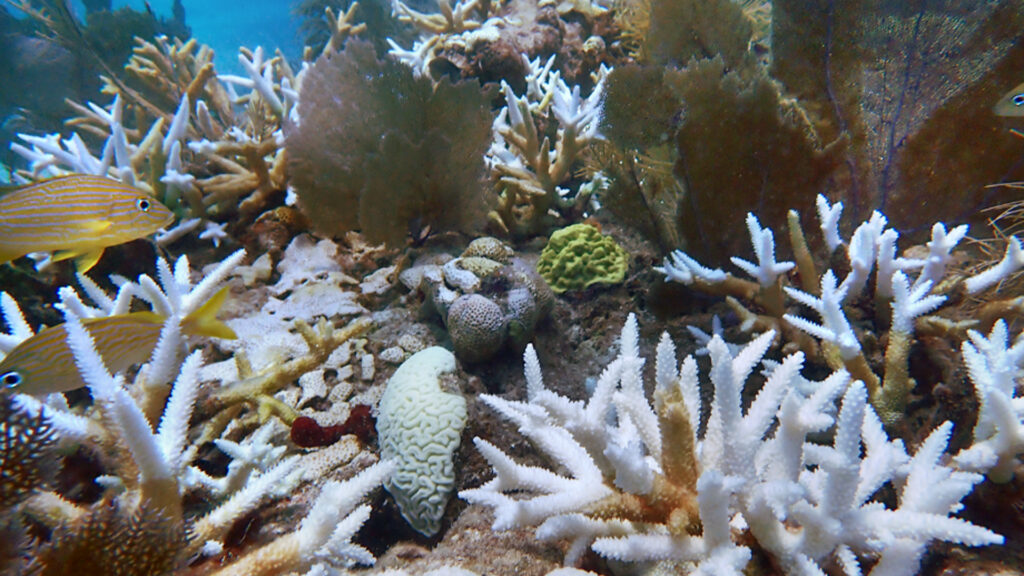
“There are so few of them left that they can no longer survive without help,” Kenkel outlined. “Basically, it’s in a very small population situation, where when you have so few coral, they’re so far away, they can’t reproduce successfully, nor are there enough of them to actually build the reef.”
NOAA officials said they will be “gardening corals” as a new approach to repopulation, by bringing them into captivity to breed and plant them in an effort to help them maintain a foothold in Florida’s waters. The research leading to the effort comes from a massive collaborative involving multiple Florida institutions, nonprofits and NOAA, which conducted urgent assessments during the 2023 bleaching event.
Kenkel believes intensive management of coral is the only path forward but it cannot succeed without parallel action to address the root causes of climate change.
“I think top priority is going to be managing that genetic diversity and there has been, just in the last few years, a genetic management plan developed,” Kenkel pointed out. “A lot of the restoration organizations are on board with this. They’ve been conducting exchanges of individuals very similar to what happens in zoos and aquariums, where we have endangered species and zoos will trade individuals back and forth and breed them very carefully.”
The reclassification pivots Florida’s world-renowned restoration program from simply repopulating reefs to a full-scale genetic rescue mission, a response to catastrophic losses echoing concerns raised during last month’s Climate Week.
Florida News Connection is a bureau of the Public News Service. Banner photo: Partially bleached corals on Molasses Reef. (Matt Kieffer, CC BY-SA 2.0, via Wikimedia Commons).
Sign up for The Invading Sea newsletter by visiting here. To support The Invading Sea, click here to make a donation. If you are interested in submitting an opinion piece to The Invading Sea, email Editor Nathan Crabbe at ncrabbe@fau.edu. To learn more about coral bleaching, watch the short video below.
