


By Angela Larck and Chelsea Henderson, republicEn.org
Last week, Bill Gates shocked the climate world — rocking both those for climate action and those against it — by making what the headlines portrayed as a reversal of position.
If you dig deeper into his memo, it was anything but a reversal of position on the importance of addressing climate change. “To be clear: Climate change is a very important problem. It needs to be solved, along with other problems like malaria and malnutrition,” he wrote. “Every tenth of a degree of heating that we prevent is hugely beneficial because a stable climate makes it easier to improve people’s lives.”
The statement was emphasized in bold font. Yet that didn’t stop the two sides of the political spectrum from interpreting his comments in ways that suited their best interest. In fact, the alarmist reaction that ensued was exactly what the Microsoft founder had warned against.
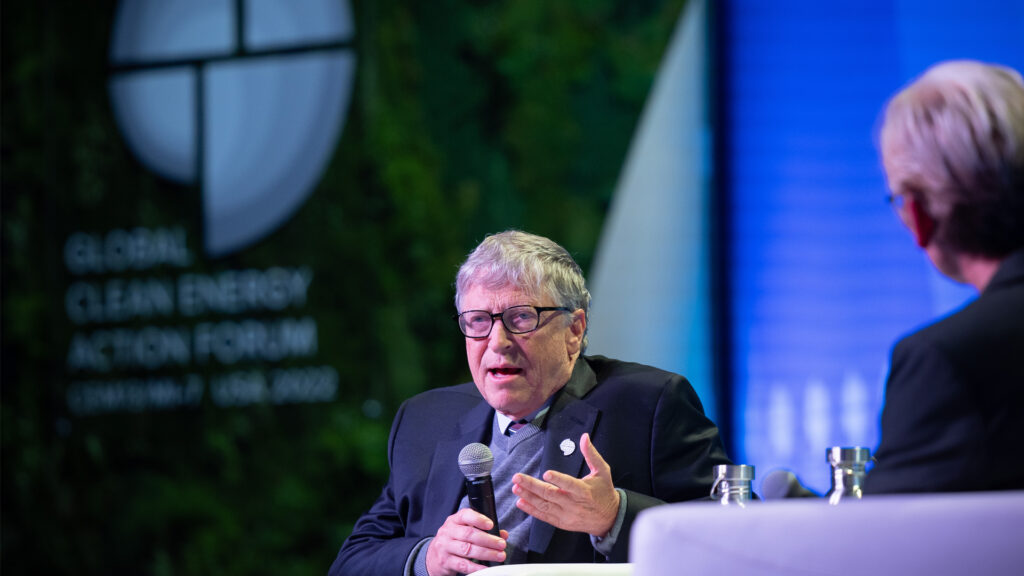
If you move beyond the headlines and into the subtext, Gates is stating some pretty obvious facts: The status quo isn’t working and innovation is key — not just to solving climate change, but to doing it in a way that allows for global prosperity. As he rightly notes, “with the right investments and policies in place, over the next ten years we will have new affordable zero-carbon technologies ready to roll out at scale. Add in the impact of the tools we already have, and by the middle of this century emissions will be lower and the gap between poor countries and rich countries will be greatly reduced.”
But nuance rarely survives the social-media churn. Within hours of publication, prominent figures were claiming victory over a “climate hoax.” A post from President Donald Trump declared, “Bill Gates has finally admitted that he was completely WRONG on the issue.” That’s not what Gates said — or even implied. His message was that climate change is serious but solvable, and that policy, innovation, adaptation and human welfare must advance together. Unfortunately, the sound-bite economy rewards outrage over understanding.
And one of the policies that can help achieve that is a carbon tax. If we make it revenue-neutral by using it to offset the payroll tax and ensure it is border adjustable so that other countries are bought in on the action, we can and will reap significant benefits. But in order to enact a carbon tax, we need bold, courageous leadership on both sides of the aisle, something that is often lacking, especially when it comes to the t-word.
If we can’t even say “tax,” we’ll keep missing the chance to use one of the most market-based and efficient tools available. A price on carbon would send a clear signal through the economy, letting innovation and competition — not regulation — determine the best path to lower emissions. Businesses that can cut pollution more cheaply will do so; those that can’t will pay, spurring the next wave of clean technology. It’s accountability through markets. That should be music to the ears of conservatives as much as having a solution in place should be something embraced by progressives.

Gates’ broader point deserves emphasis: Progress depends on pairing innovation with sound policy. We can’t innovate our way out of climate change, and we can’t regulate our way out — it has to be both. At the same time, investing in climate-smart agriculture, health and infrastructure ensures that the world’s most vulnerable people aren’t left behind as the planet warms. Development is adaptation.
For conservatives, this is familiar ground. Stewardship, responsibility and accountability are core values. A transparent, revenue-neutral carbon tax aligns with those principles. It rewards efficiency, empowers markets and strengthens America’s competitive edge while helping families and businesses plan for the long term.
The alternative is what we have now: policies that talk big but deliver little, a patchwork of subsidies and mandates that pick winners instead of letting innovators compete. Gates’ call to measure success by improved human welfare, not just by degrees Celsius, is a reminder that climate action should be judged by outcomes people can feel: more reliable power, lower costs, healthier communities and stronger economies.
In other words, when we think of climate solutions holistically — linking policy, innovation and human welfare — we all win.
Angela Larck is the engagement director and Chelsea Henderson is the director of editorial content for republicEn.org, a growing group of conservatives who care about climate change. Banner photo: Another image of Gates at the Global Clean Energy Action Forum in 2022 (Office of Gov. Tom Wolf, CC BY 2.0, via Wikimedia Commons).
Sign up for The Invading Sea newsletter by visiting here. To support The Invading Sea, click here to make a donation. If you are interested in submitting an opinion piece to The Invading Sea, email Editor Nathan Crabbe at ncrabbe@fau.edu.
