


By Daniela Ghelman, FIU News
In the early hours of Sept. 10, 2017, the turquoise waters of Biscayne Bay were mostly calm: herons and egrets worked the shallows, Miami’s skyline stretching across the horizon. Yet within the quiet, unease lingered. Winds grew heavier, clouds darkened and within hours Hurricane Irma and all its fury descended on South Florida. While residents braced for flooding and prayed their homes would hold, scientists, including Florida International University physical oceanographer Wei Huang, worried about the bay itself.
Beneath the surface, unseen by the city above, the bay’s currents swirl and shift during powerful storms, creating intricate patterns few have ever mapped. Filling this scientific gap, Huang uncovers these hidden movements and their long-term effects on the bay. Her work could help forecast future hurricane-driven flooding, giving rise to early warnings for residents and guidance for authorities on where to mitigate damage and whether to evacuate.
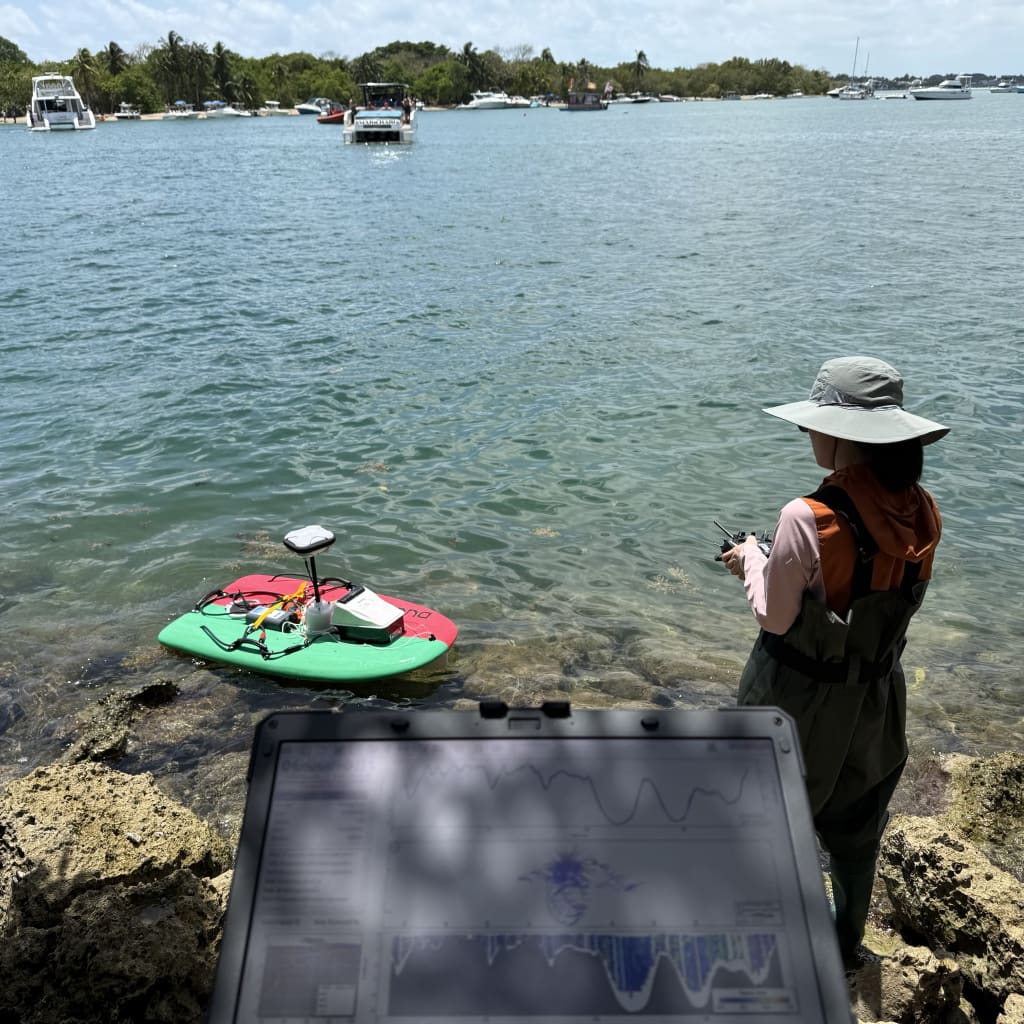
Her research also informs water management decisions, including how much freshwater should be released into the bay after extreme weather and what potential pollutants it carries. This information will help protect both the ecosystem and the communities that depend on it. Her latest findings were recently published in ScienceDirect.
Biscayne Bay is no ordinary waterway. With seven major inlets and a unique geography, it connects the land to the open ocean, fuels tourism, supports countless species and sustains the people who live along its shores. Stretching nearly the entire length of Miami-Dade County and bordering the southeastern Everglades, with its complex water management system, the bay has long been a focal point for scientists studying how nature and urban life intersect.
Huang explains that in Biscayne Bay and other multiple-inlet systems, water doesn’t simply flow in and out. It dances through, swirling and shifting in patterns that dictate everything from the survival of fish larvae to how nutrients and pollutants spread. During hurricanes, powerful winds twist these currents in unexpected directions, adding yet another layer of complexity to an already delicate ecosystem.
In South Florida, where water management can mean the difference between safety and disaster, Huang’s findings are crucial. As restored freshwater travels from the Everglades through the canals, it carries more than just water into the bay. Pollutants, including forever chemicals that persist and accumulate over time, are among the invisible passengers swept along with the currents.
“It’s a pathway to understanding coastal hazards to improve resilience and sustainability for South Florida coastal communities and ecosystems,” Huang said.
Huang is using cutting-edge computer modeling at FIU’s Institute of Environment to uncover how these powerful winds and catastrophic storms dictate the bay’s fate. She recently recreated Irma’s impact in remarkable detail, simulating water levels, circulation and sediment movement across the bay. The results, while striking, confirmed what she had long suspected — Irma’s fierce winds reshaped the bay’s circulation patterns, scattering marine life and carrying pollutants farther than expected.
Huang is now expanding the research, compiling observations from 12 additional storms. She hopes to uncover long-term trends and recurring patterns.
This piece was originally published at https://news.fiu.edu/2025/fiu-oceanographer-provides-rare-scientific-look-at-effects-of-storms-on-biscayne-bay. Banner photo: Lightning over Biscayne Bay and downtown Miami (iStock image).
Sign up for The Invading Sea newsletter by visiting here. To support The Invading Sea, click here to make a donation. If you are interested in submitting an opinion piece to The Invading Sea, email Editor Nathan Crabbe at ncrabbe@fau.edu.
