


By Lillie Pickens
When Daniel Hennege first fell in love with robots, he was 8 years old and staring wide-eyed at a galaxy far, far away.
“Star Wars probably did it,” Hennege said with a smile. “Robots just caught my imagination.”
Decades later, after leading startups that sent autonomous drones into mines and built driverless tractors for orchards, Hennege merged that lifelong fascination with a second passion: the ocean.
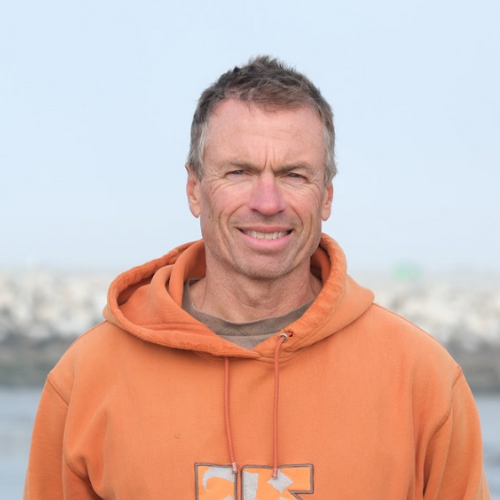
Today, as CEO and CTO of the San Francisco-based company Reefgen, he is helping build robots that plant coral, seagrass and mangroves directly into the seafloor at a scale humans simply cannot match.
The problem is stark. Near-shore ecosystems such as coral reefs, seagrass meadows and mangroves are disappearing. These habitats buffer storm surge, anchor coastlines and nurture juvenile marine life.
“As these ecosystems disappear, coastlines become exposed to flooding, storm damage and erosion,” Hennege said.
Restoration has relied largely on scuba divers working in low visibility and high currents, painstakingly planting fragments and seedlings by hand. It is noble work, but like farming with trowels, it cannot meet the magnitude of the challenge.
“The scale of the problem exceeds human capacity,” Hennege said. “We are giving restoration teams a better shovel.”
Reefgen’s “shovel” is a seafloor-capable robot designed not just to roam the sea floor but to touch down and plant. Where traditional marine robots glide above the bottom, Reefgen’s patented planter mechanisms are engineered for insertion: drilling for coral plugs, injecting seeds and staking seagrass shoots – a method also applicable to red mangroves.
The company has tested variants in Hawaii, North Carolina, Southeast Asia and Wales, finding that what they plant survives.
“For seagrass shoots we have seen 80% or higher survival,” Hennege said. “We are not claiming we are better than humans. We are claiming we can scale.”
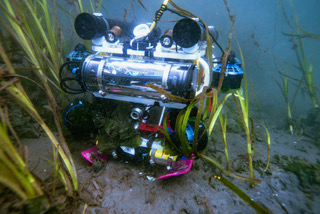
Scaling is where Reefgen’s model diverges from similar companies. Instead of shipping a robot with a manual, Reefgen delivers outcomes. Clients specify a target, such as the size of the areas to restore, and Reefgen provides trained operators with robots to do the work.
The approach reduces risk by keeping people out of the water, cuts costs because operators do not need to dive training or insurance, and – most importantly – significantly increases the rate at which the work can be done.
“A single operator can oversee multiple robots,” Hennege explained.
Reefgen’s system maps large coastal tracts, arranges work by area and pushes precise plans for each robot. In return, the robots stream data back to the cloud. Sponsors can see progress area by area, plant by plant.
The ocean remains in a harsh workplace. “Sensors are tough in low-visibility, high-algae environments. Cameras and sonar can both struggle,” Hennege said.
Reefgen is adapting its technology so robots can leave the seafloor, surface for GPS guidance and quickly navigate back to the boat to rearm.
The urgency is undeniable. Globally, seagrass is being lost at alarming and accelerating rates. Coral has already suffered double-digit declines, with projections reaching 90% loss by 2050 without dramatic action.
Restoration to date has covered only a small portion compared to the hundreds of thousands of corals lost. Reefgen’s five-year vision is to help expand the size of restoration projects, especially seagrass, where halting net loss may be within reach.
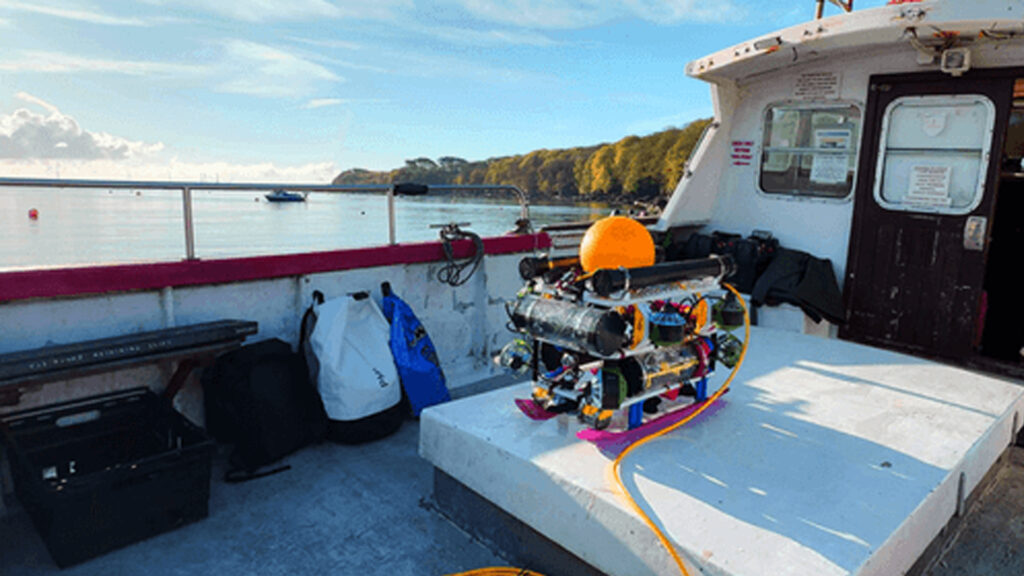
“You need both deep robotics and deep biology, to solve this,” Hennege said. “We are not trying to replace divers. We are trying to match their success and multiply it safely.”
For students eager to contribute to the blue economy, Reefgen offers a tangible on-ramp. The company relies on engineering, biology and business interns, and is cultivating a new role – robot operators.
Opportunities span on-site, remote and hybrid. Reefgen is headquartered in the San Francisco Bay area with an indoor lab and boat access, and it deploys globally to sites in the Red Sea, Bali and the U.S. East Coast, including Florida’s Indian River Lagoon.
Reefgen was a finalist in the 2025 competition for Ocean Exchange, a Fort Lauderdale-based nonprofit that aims to accelerate the adoption of innovative solutions for a healthy ocean and sustainable blue economy. With enough projects, the team is open to establishing a Florida base, and Hennege said a pilot there could be a great use of investment funding.
His advice to aspiring ocean innovators is simple and encouraging.
“Do not give up,” he said. “The numbers can look intimidating, but technology and smart conservation together can solve big problems. Do not get too down on how bad the world seems. There are real ways out of the hole we have dug for ourselves.”
Lillie Pickens is an undergraduate student studying Business Management: Entrepreneurship at Florida Atlantic University in her senior year. Students interested in internships, operator training or collaborative projects with Reefgen can contact Daniel Hennege at daniel@reefgen.io. Those with dual interests such as engineering, biology and business are especially encouraged to reach out. Banner photo: A Reefgen robot being deployed by boat near Morehead City, N.C, in 2024 (Photo courtesy of Reefgen).
Sign up for The Invading Sea newsletter by visiting here. To support The Invading Sea, click here to make a donation. If you are interested in submitting an opinion piece to The Invading Sea, email Editor Nathan Crabbe.
