


By Joseph Bonasia
Greenhouse gases from air travel grab headlines, but emissions from the maritime shipping industry are significantly greater. Last April, the world’s largest maritime nations, intent on reducing those emissions, agreed to impose a fee on carbon.
Recently, however, President Donald Trump, who ignores scientific consensus and calls climate change a hoax, was instrumental in derailing the plan for at least a year.
Meanwhile, he is vowing to send Americans $2,000 checks. These would be dividends from his tariff program, which the Tax Foundation projects cost Americans an extra $1,200 in 2025.
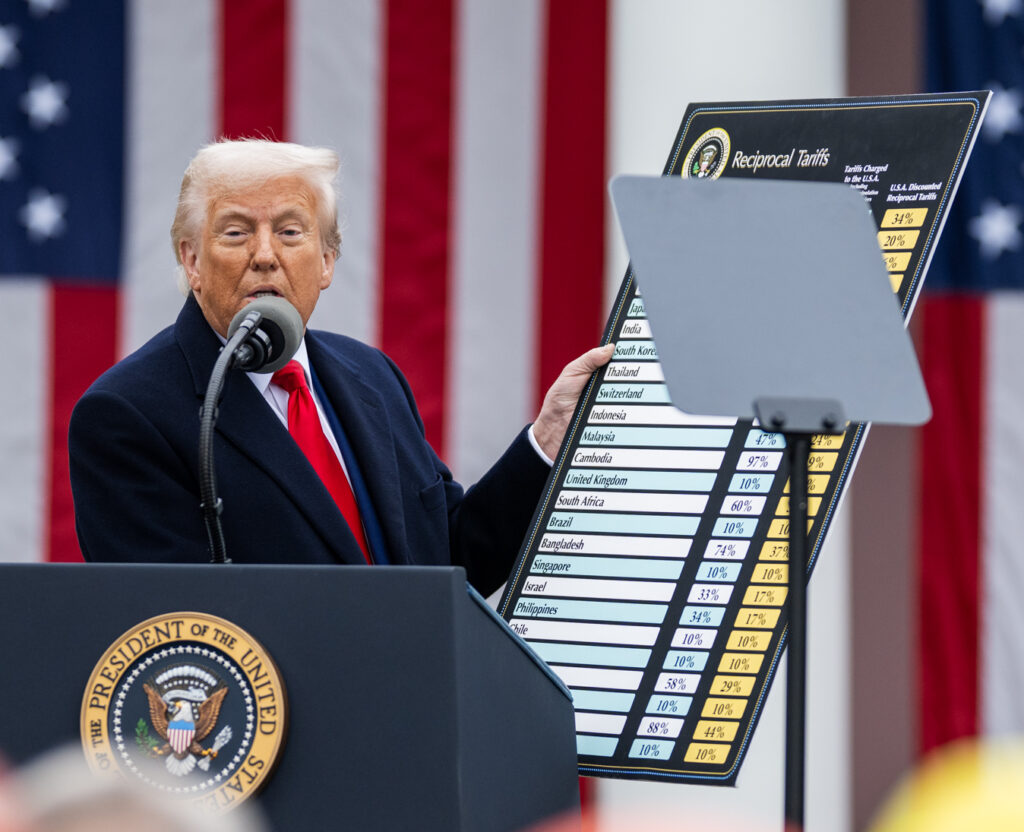
His dividend checks are meant to offset this rise in the cost of living, the affordability issue that he is also calling a hoax. But the Tax Foundation adds that a dividend of this size would cost the federal government as much as $606 billion, far exceeding the $158 billion in revenue raised through tariffs. These dividends will increase, not decrease, the federal budget deficit.
Americans could certainly benefit from a dividend program, but not the president’s. The best way to lower the cost of living for Americans, experts say, is simply to remove the tariffs. And we need a tax (or “fee”) on carbon.
Putting the two together — placing a price on carbon and returning this revenue to American households through dividends — can be our most cost-effective means to reduce carbon emissions while also putting money in people’s pockets.
That’s the opinion of thousands of economists, including Nobel prize winners, former chairs of the Federal Reserve, former chairs of the Council of Economic Advisors and former secretaries of the Treasury Department. Published in the Wall Street Journal in 2019, it is still the largest public statement in the history of the economics profession.
The beauty of pricing carbon is that it corrects a market failure regarding fossil fuels: Their prices do not reflect their environmental and health costs.
Who pays for the damage done by hurricanes made unnaturally destructive by global warming? Who pays for the medical care of the millions of peopled sickened and killed yearly by fossil fuel pollution? Not the fossil fuel industry. The market doesn’t hold it accountable for these costs.
Instead, they are borne by the public and, according to the International Monetary Fund, amounted to $5 trillion globally in 2022. Others place the yearly costs trillions higher.
A carbon tax commensurate with the social costs of fossil fuels simply ensures that their prices reflect their full costs. The price of everyday goods will rise, but the vast majority of Americans will receive more in dividends than they will spend on increased costs. Unlike the president’s tariff dividends, this program is economically sound.
Of course, there isn’t much talk these days in the United States about taxing carbon, but there should be.
Commenting on the recent COP30 climate summit — which acknowledged that current emissions reductions are inadequate — the Brookings Institute states, “Economists, rightly, view the absence of a price on greenhouse gases as a root cause of runaway global warming.”

Worldwide, unnaturally destructive storms, brutal heat waves, longer wildfire seasons and more frequent and intense droughts are inflicting personal and financial hardship upon people, and conditions will worsen the longer we fail to take effective action.
Level the playing field between fossil fuels and clean renewable energies by making all the costs of fossils fuels evident to consumers, and market forces will drive down greenhouse gas emissions. This is the conservative, fair and cost-effective way to address climate change, utilizing what is one of the most powerful global human forces on earth — our market economy — to solve a global environmental crisis.
In 2019, I spoke to the Fort Myers Beach Chamber of Commerce. As Citizens’ Climate Lobby’s (CCL) volunteer liaison to Sen. Rick Scott’s office, I was advocating CCL’s version of pricing carbon and distributing the revenue to American households.
Three years later, Hurricane Ian, supercharged by global warming, laid waste to Fort Myers Beach, killing people, destroying local businesses and washing away the character of the town forever.
Americans need a dividend program, one that makes economic sense, recognizes scientific reality, puts money in people’s pockets and protects the planet for ourselves and future generations.
Joseph Bonasia is a founding board member of the SWFL RESET Center. Banner photo: A container ship emitting smoke (iStock image).
Sign up for The Invading Sea newsletter by visiting here. To support The Invading Sea, click here to make a donation. If you are interested in submitting an opinion piece to The Invading Sea, email Editor Nathan Crabbe. To learn more about greenhouse gas emissions, watch the short video below.

Mr Bonasia is absolutely correct. Wish Congress would make it happen.
Well-written and spot on. We’ve known the truth of this for years, but our legislators are too controlled by fossil fuel interests to do the right thing on this policy.