


By Bob Norberg, Third Act Florida
Florida residents are about to experience a significant increase in electricity costs due to the unprecedented $7 billion Florida Power and Light rate increase recently approved by the Public Service Commission (PSC). Safe and efficient solar generation and storage technology currently exists that can give consumers relief from this increase, if policymakers eliminate unnecessary, antiquated and costly regulations that make this choice unattainable for Floridians.
The rate increase will not only impact Florida Power and Light customers, but it is likely to impact many more Floridians when other providers petition the PSC for increases in their rates. Residential consumers are already exposed to some of the highest rate increases in the country. According to Choose Energy, average Florida rates increased by 11% to 12% from 2024 to 2025, while the national average rate increase was 6% to 8%.
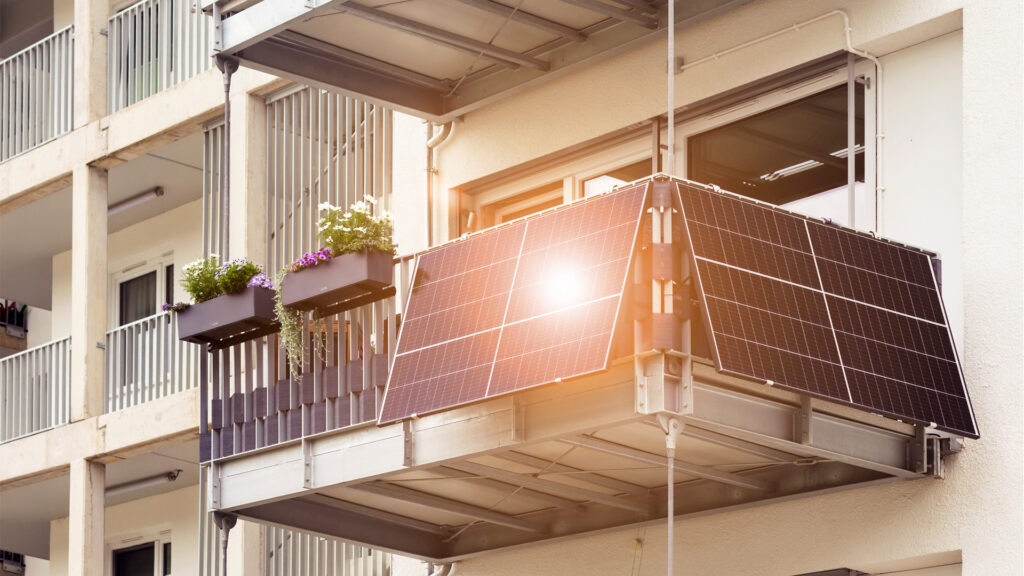
One way for residents to mitigate high and rising electricity costs in Florida is to generate their own electricity, safely sourced directly from the Sun. According to the Solar Energy Industries Association, Florida is ranked second in total solar capacity installed. That’s because the for-profit utilities are taking advantage of low-cost solar electricity generation. However, Florida ranked 17th in residential solar installations per capita. Something is not right when Massachusetts has almost 3 times more residential solar capacity per household than the Sunshine State.
Florida laws are constraining the choice of residents to install their own solar generation and storage capabilities. Current laws are not keeping up with the technology. Installing small-scale solar is estimated to cost 2-3 times more in the U.S. than other countries (Australia and Germany, for instance) due to excessive and costly permitting requirements.
The biggest expense comes from satisfying the requirements to enter into an interconnection agreement with the local utility. Florida law (Florida Statues 377.705(d)) currently mandates electric utilities’ control of any residential electrical installation. Requirements are defined in the Florida Building Code. These regulations do not envision the types of safe solar electricity generation technology currently available to residents.
Plug-in or small-scale solar systems (panels, inverters and batteries) that generate a limited amount of electricity should not require an interconnection agreement if they meet certain safety standards. Underwriter Labs is currently developing those standards for systems. Standards for the components already exist. According to a recent study by Bright Saver, a nonprofit group that advocates for small-scale solar, simplified permitting requirements will lower costs of installation by as much as 50%, providing a return on investment in 2-3 years. This type of economic benefit will exponentially increase adoption in the U.S., generating more competition and lowering system cost even further.
Florida has several laws that need to be amended (i.e., F.S. 553.791 Construction Regulations and F.S. 163.04 HOA Limits) or superseded for Floridians to be free to make their own electricity provision choices and take advantage of the new and improving technology. Utah has recently passed a simple, budget-neutral freedom of choice law (Utah H.B. 340) that sets easy compliance requirements for residents that want to install their own, albeit limited, electric generation and storage systems.
Several other states are proposing similar laws during the current legislative sessions. Manufacturers of these units have indicated it will take a minimum of five states for them to be motivated to provide custom systems that meet new U.S. requirements.
There are many benefits for passing new legislation to simplify the solar permitting process for residents. Not only will it provide lower electric costs for residents, but it will also provide new manufacturing jobs. Florida already has almost 500 companies and over 14,000 jobs in the solar industry.
Furthermore, these systems will provide back-up power for residents during a storm outage, reduce peak capacity on existing utility-scale power plants and reduce carbon pollution. It’s a win-win for consumers/residents, industry and utilities.
All solar electric generation methods (utility-scale, commercial, community, residential and small scale) are beneficial for Floridians. However, small scale may be more attractive to some residents due to the lower initial investment cost, location flexibility and the advantage it provides for the many renters and residents living in apartments and condos.
Florida should be leading the way in small-scale solar system adoption by passing regulations that give residents reasonable, less restrictive access to this safe and efficient technology. Contact your local policymakers about freeing residents to choose low-cost solar by simplifying or eliminating the solar permitting processes.
Bob Norberg is a retired economist who lives in Gainesville and served as a co-facilitator of Third Act Florida, a diverse community of Florida seniors working together to protest against the causes of climate change and protect our democracy. For more information, please contact him at florida@thirdact.org or visit BrightSaver.org. Banner photo: Solar panels are installed on a balcony (iStock image).
Sign up for The Invading Sea newsletter by visiting here. To support The Invading Sea, click here to make a donation. If you are interested in submitting an opinion piece to The Invading Sea, email Editor Nathan Crabbe.
