


By Sol Moyano, The Invading Sea
Florida Atlantic University professor Jeanette Wyneken said her students came up with a memorable way to describe the impact of beach temperatures on sea turtles: “hot chicks and cool dudes.”
The hotter the temperatures of the beaches where sea turtles lay their eggs, Wyneken said, the more likely female turtles are to hatch instead of males. As global temperatures have been rising in recent years due to climate change, female sea turtles have largely surpassed the number of male sea turtles hatched – with serious repercussions for the survival of endangered turtle species.
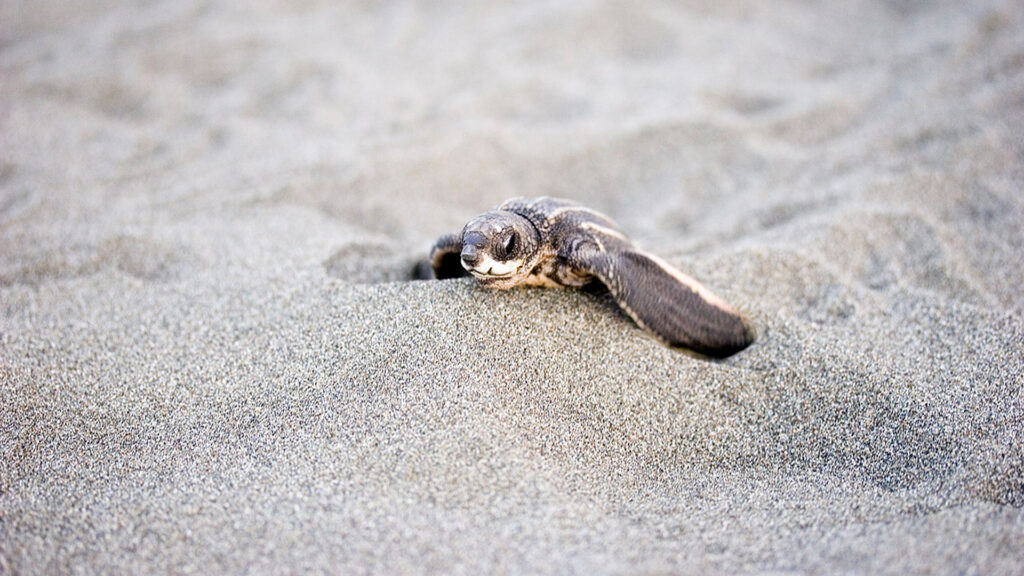
Wyneken, director of the FAU Marine Science Lab and a professor of biological sciences at FAU, spoke Wednesday at FAU’s Harbor Branch Oceanographic Institute as part of its annual John and Barbara Ferrera Ocean Science Lecture Series. She discussed how the changing climate is affecting sea turtle’s development, egg hatching and nesting habits.
“There’s not enough eggs, there are too few hatchlings being produced, not enough are surviving to adulthood or there’s not enough reproducing,” she said.
All sea turtle species are currently listed under the federal Endangered Species Act as either “endangered,” which means they’re in danger of becoming extinct, or “threatened,” which means they’re likely to become endangered within the foreseeable future.
Wyneken said she’s worried about the impact of beach temperatures on the sex ratios of turtles. All three of the main sea turtle species that she studies – loggerhead, green and leatherback sea turtles — have data indicating a female bias in their hatch rates, she said.
Sea turtles don’t have sex chromosomes, so their nesting climate determines the sex of their hatchlings. Sea turtle species already have a female bias in their sex ratio, Wyneken said, which will increase as sand temperatures rise.
“Temperature is a really important driver of the sex determination of sea turtles,” Wyneken said.
Wyneken’s research measures nest temperatures across the full season in which sea turtles lay eggs on Florida beaches. An increase in beach temperatures also means an increase in mortality rates, she said, as warming sand temperatures reduces the hatching success of sea turtles.
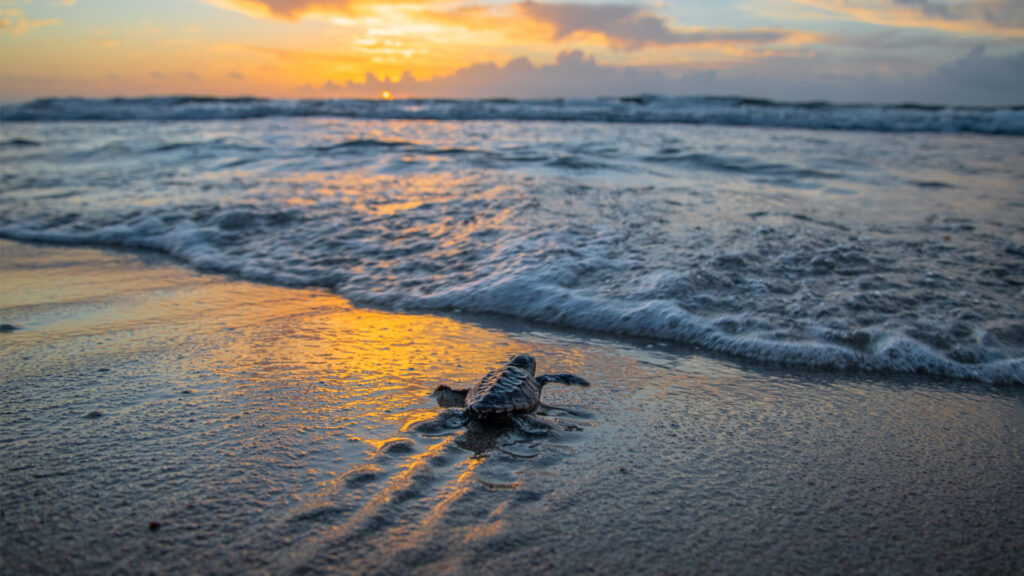
She showed one of her data logs to illustrate her findings: “18 of the 47 days in incubation, only 6.5% of the eggs hatched. That was a wake-up call.”
Wyneken said extreme heat also produces developmental anomalies in sea turtles that increase their mortality rate.
“Sometimes we see them – we have a turtle come out without flippers … Some of the anomalies are cryptic, and that means that they look fine but later on they’ll be a problem,” she said.
Wyneken and her Ph.D. student, Alex Lolavar, conducted an experiment to increase the number of male sea turtles hatching. They divided the eggs in half: one control group and one experimental group. The experimental nest was being watered daily.
“Adding moisture helped us cool the nests down,” Wyneken said.
They conducted this experiment for three years. The results found that adding a moderate amount of water to the nests increased the hatching success.
Adding a more extreme amount of water decreased the hatching success of the eggs, but produced more males than before.
“We had to sacrifice some hatching success to make males,” Wyneken said.
Sol Moyano is a senior majoring in multimedia journalism at FAU who is reporting for The Invading Sea in the spring 2026 semester. Banner photo: A loggerhead sea turtle returning to the ocean after nesting on a beach (iStock image).
Sign up for The Invading Sea newsletter by visiting here. To support The Invading Sea, click here to make a donation. If you are interested in submitting an opinion piece to The Invading Sea, email Editor Nathan Crabbe.
