


By Sol Moyano, The Invading Sea
Energy efficiency reduces carbon emissions while lowering customer bills, but the southeastern U.S. “lags behind the rest of the country in utility energy efficiency,” according to a new report from the Southern Alliance for Clean Energy (SACE)
SACE is a nonprofit organization that “promotes responsible and equitable energy choices to ensure clean, safe and healthy communities throughout the Southeast.” The group recently released the seventh edition of its annual “Energy Efficiency in the Southeast” report, which evaluates the energy efficiency records of utilities in the region.
To read the full report, click here. Here are some highlights:
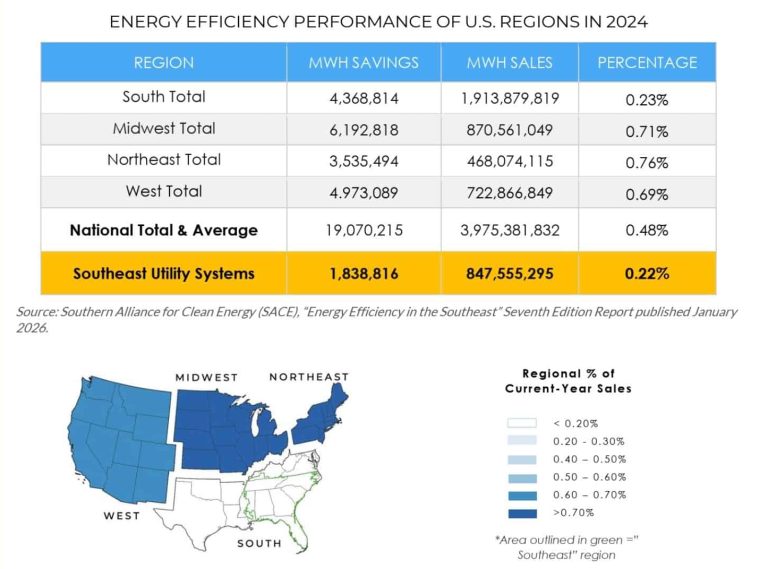
- The southeastern U.S. performs well below the national average in utility energy efficiency, meaning utilities save only a small portion of electricity through programs that help people use less power. This leads to higher energy demand than necessary, according to SACE.
- Energy efficiency reduces total energy consumption, lowers pollution and helps avoid building new fossil-fuel power plants. But SACE reports that energy efficiency is still a low priority for state regulators in the Southeast.
- SACE ranks Florida Power & Light (FPL), the state’s largest utility, below national and regional averages for energy efficiency savings. FPL is far below average in the group’s ranking of energy savings, dragging down Florida’s overall ranking in the Southeast.
- The report found that Florida’s energy efficiency policies haven’t been updated much since the 1980s, resulting in limited planning and investments compared to other states.
- SACE found that many southeastern state are slow to implement measures in the federal Inflation Reduction Act that provide billions of dollars for home energy efficiency programs such as whole-home retrofits, delaying environmental and economic benefits.
- Buildings in the Southeast typically have conditions, such as air leaks or inefficient heating and air conditioning systems, that make energy efficiency more impactful in these states, according to SACE.
Sol Moyano is a senior majoring in multimedia journalism at Florida Atlantic University who is reporting for The Invading Sea in the spring 2026 semester. Banner photo: A row of electric meters (iStock image).
Sign up for The Invading Sea newsletter by visiting here. To support The Invading Sea, click here to make a donation. If you are interested in submitting an opinion piece to The Invading Sea, email Editor Nathan Crabbe.
