


By David Vaina
In what some might say is an era of government retreat on protecting our environment, the Florida Springs Institute is pushing for an alternative politics of conservation that shifts power away from government and hands it to local communities.
Over the last four years, the springs institute has been organizing the process for Florida’s 1,000-plus artesian springs to be under the protection of the National Heritage Area (NHA) designation. This classification from the National Parks Service protects “places where historic, cultural, and natural resources combine to form cohesive, nationally important landscapes.”
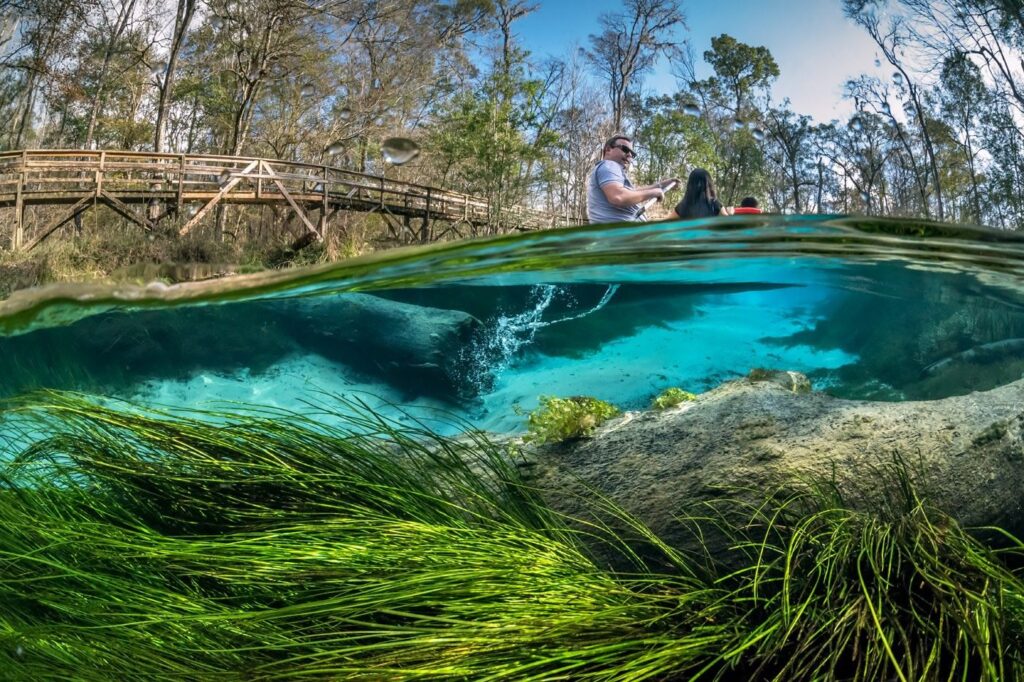
NHAs recognize a distinctive aspect of America’s heritages and are directly supported by the communities they’re based in. They aren’t national parks but lived-in places like Florida that are brimming with lots of people, buildings, roads and businesses.
There are currently 62 NHAs in the United States. While the entire state of Tennessee is an NHA, there are currently none in Florida.
“A National Heritage Area (designation) needs natural, cultural, historical and scenic reasons,” said Haley Moody, the Florida Springs Institute’s director. “We think the springs are all of those things.”
The journey to becoming an NHA is a multi-step one and the Florida Springs Institute is overseeing a critical first requirement – a feasibility study – that ultimately needs congressional approval before receiving formal designation. Moody told me that the study is now undergoing technical review by the National Parks Service and some revisions will need to be made to ensure the study is up to par.
Moody expects this phase to be wrapped up within the next six months. In the meantime, the springs institute is collecting additional letters of support from stakeholders around the state to include with its NHA proposal to Congress once the feasibility study is finalized.
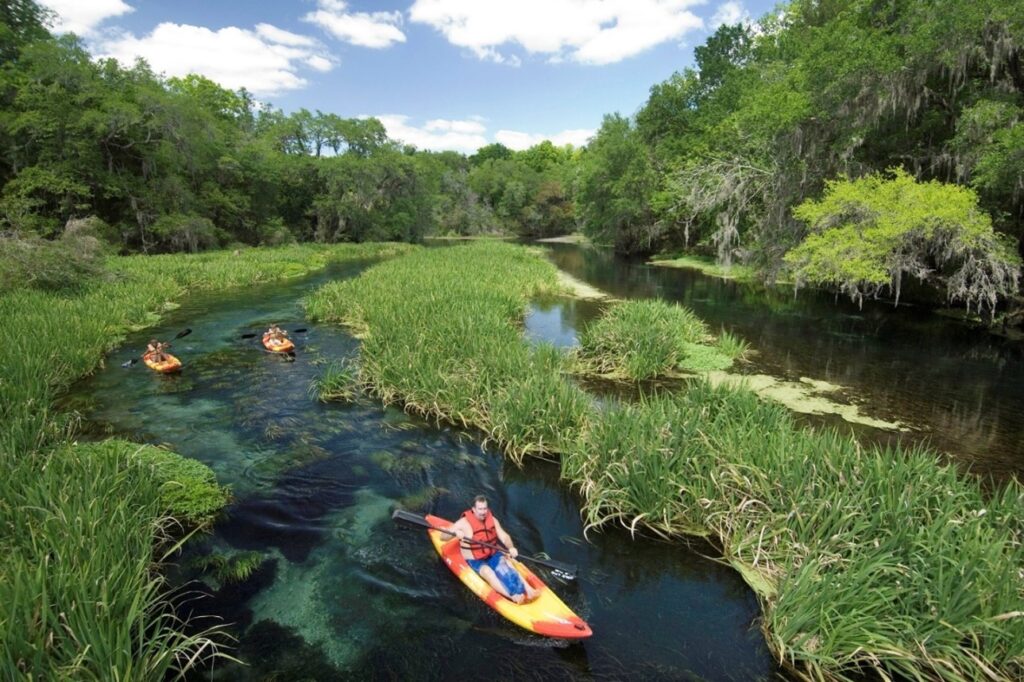
The term stakeholders is an expansive one, Moody said, as an NHA reflects the different, deep connections Floridians have to its freshwater springs. It can include county commissioners and other local government representatives, chambers of commerce, recreational outfitters, environmental organizations, land trusts, the Florida Museum of Natural History and – of course – any concerned citizen not necessarily affiliated with an industry or group.
A new NHA to protect Florida’s springs would cover 27 million acres north of Lake Okeechobee. Once in place, federal funding to advance the NHA’s development would be available for three years before the NHA becomes fully responsible for any operating expenses.
Moody compared the new springs NHA to how Florida’s five water management districts – once regarded as successful regulatory models for the country – are structured throughout the state. She said the NHA would be decentralized, with regional “hubs” facilitating public education opportunities for local stakeholders to gather and discuss the threats specific to each hub. Citizens and other stakeholders in each hub would then coordinate planning and stewardship solutions that make the most sense for that hub and its particular urbanization and agricultural patterns that affect springsheds in varying ways.
A springs protection zone is just one possibility, according to Moody. Other strategies include private land-use agreements and state park conservation easements.
“A National Heritage Area offers a diverse toolkit,” Moody said. “The point is to get people together to organize.”
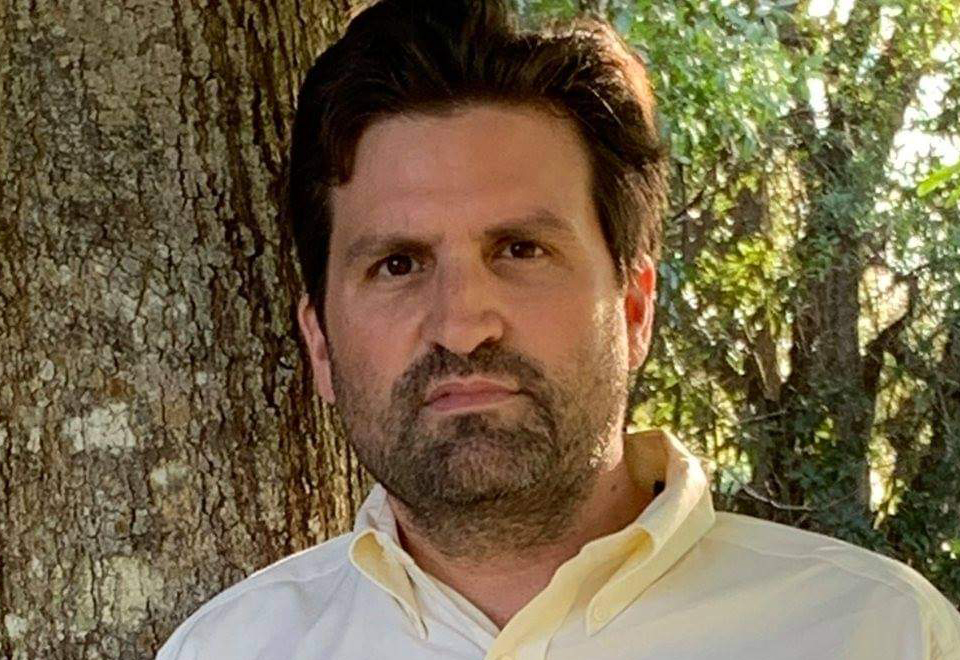
The political nature of this process makes a lot of sense. though I have concerns about how state preemption restricting the authority of local governments might undermine the capacity of a Florida springs NHA. Even so, most Floridians consider the springs a dying natural resource and certainly understand how overuse is contributing to their decline, alongside nutrient pollution and excessive groundwater withdrawal.
Many Floridians are skeptical of increased regulatory oversight at the state and especially federal levels – and are open to innovative instruments for protecting the springs and express an urgency to do something about it.
Indeed, an NHA represents the best in America’s long tradition of localized politics. And despite some setbacks and perceived headwinds opposing the kind of significant political change that’s needed to restore our majestic springs, there still appears – thank heavens – a hearty appetite in our state for harnessing people power.
To learn more about the proposed NHA in Florida, visit the Florida Springs Institute website’s page on the campaign.
David Vaina holds a Ph.D. in political theory and has published articles on social movements, political theory and climate change as well as a 2024 book (“On Ramps to a New Civil Society: Mutual Aid at the Edge of the Anthropocene,” Rebel Hearts). He lives in rural north Florida. Banner photo: Juniper Springs in the Ocala National Forest (iStock image).
Sign up for The Invading Sea newsletter by visiting here. To support The Invading Sea, click here to make a donation. If you are interested in submitting an opinion piece to The Invading Sea, email Editor Nathan Crabbe.
