


By Susan Carr, Putnam Land Conservancy
Florida’s conservation legacy is facing a deeply troubling moment. Three pending policy actions – two contained in the proposed state budget and one embedded in Senate Bill 290, dubbed the “Florida Farm Bill” – together amount to a sweeping rollback of Florida’s land protection framework and a direct threat to the Florida Wildlife Corridor.
Call it a “triple threat.”
First: Defunding Florida Forever, the state’s flagship land acquisition program. The Florida Senate’s proposed budget for the next fiscal year includes just $35 million for Florida Forever, while the House version eliminates funding for conservation land acquisitions entirely.
Second: Stripping Florida Forever of its authority to acquire land outright. The Senate proposal limits acquisitions to conservation easements only, eliminating the state’s ability to purchase land in fee simple, meaning outright ownership.
Third: Authorizing the sale of existing public conservation lands. Provisions within Senate Bill 290 would allow state-owned lands to be declared surplus if deemed suitable for “bona fide agricultural purposes,” enabling their sale into private ownership. The bill passed the Legislature this week and was sent to the governor.
Individually, each proposal is concerning. Together, they fundamentally undermine conservation in Florida.
Threat No. 1: Defunding Florida Forever
At its height, Florida Forever was funded at approximately $300 million annually. For decades, Florida Forever and its predecessor programs have protected springs, forests, wetlands, wildlife habitat and large-scale landscapes essential to water quality and biodiversity. Many of our most cherished state parks, state forests and conservation areas were secured through these programs.
Floridians have consistently supported land conservation in public opinion surveys and at the ballot box. Yet proposed funding is now a fraction of historic levels. Without meaningful investment, protection of priority lands will slow to a crawl or stop altogether.
Threat No. 2: Eliminating fee simple acquisition
The Senate’s proposal to limit acquisitions to only conservation easements would represent a profound policy shift and set a troubling precedent. Conservation easements are valuable tools, particularly for protecting working lands. But they are not a substitute for public ownership.
Fee simple acquisition (land ownership) allows the state to:
- Protect environmentally sensitive lands outright
- Secure critical in-holdings within state parks and state forests
- Create public lands for recreation and access
- Assemble and connect parcels necessary to build the Florida Wildlife Corridor
Many lands come on the market because landowners want or need to sell. Those sellers often do not wish to retain ownership under an easement. If the state loses the ability to purchase such lands outright, they will be sold for development.
For the Florida Wildlife Corridor, this restriction would be devastating. The Corridor depends on connecting fragmented landscapes and protecting key linkages between existing conservation areas. That requires flexibility. It requires both easements and fee simple acquisition. Removing one of those tools weakens the entire strategy.
Threat No. 3: Selling off public lands
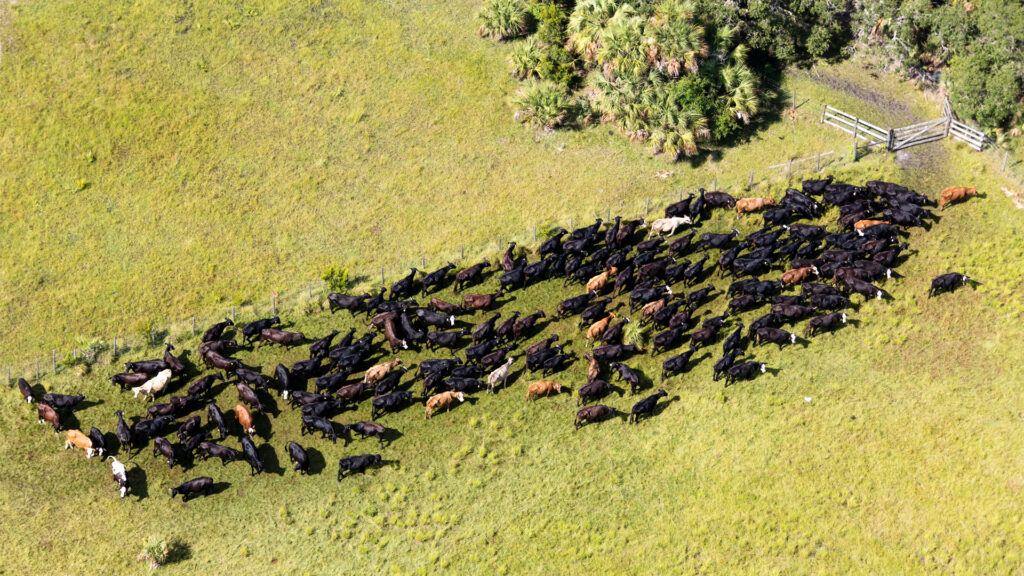
Perhaps most alarming are provisions within Senate Bill 290 that would allow the state to surplus public conservation lands deemed suitable for agricultural use. These lands, subject to agricultural easements, would be sold into private ownership, with proceeds directed to the Florida Department of Agriculture and Consumer Services to purchase more agricultural easements on private lands.
While agricultural easements prevent development, they allow conversion to agricultural uses at the discretion of new private landowners. Natural areas in public ownership could become privately owned row crops and cattle pastures.
State parks, state forests and wildlife management areas are exempted. However, roughly one-quarter of state-owned conservation lands are not, and future acquisitions would also be vulnerable. This provision represents a dramatic and unprecedented policy shift, enabling large-scale conversion of publicly owned conservation lands into privately owned agricultural lands.
What this means for taxpayers
Florida’s land conservation programs are funded by taxpayers. When the state acquires land in fee simple, it becomes public land available for hiking, paddling, hunting, fishing, wildlife viewing and quiet enjoyment. Conservation easements, though publicly funded, typically protect private lands that remain closed to the public.
If fee acquisition authority is eliminated and public lands are sold off, taxpayers will continue paying, but with fewer public benefits. The public will lose access, recreation opportunities will shrink and lands that belong to all Floridians will pass into private hands.
The stakes for the Florida Wildlife Corridor
The Florida Wildlife Corridor is more than a map. It is a long-term strategy to protect connected landscapes that enable wildlife movement, safeguard water resources, enhance climate resilience and sustain rural economies. As Florida’s blueprint for landscape conservation, the Florida Wildlife Corridor Act was approved with broad bipartisan support in 2021.
But it is simply not possible to build a connected conservation landscape while dismantling the tools that make it possible. We cannot protect corridors while defunding acquisitions. We cannot strengthen a system of public lands by selling it off.
What happens next
As of early March, the Legislature must still negotiate and approve a final budget. A vote is expected later this month or during a brief extension before the new fiscal year begins. The Legislature passed Senate Bill 290, but it still must be signed by the governor to become law.
If Floridians value clean water, abundant wildlife, working rural landscapes, and public lands that remain open and accessible, now is the time to speak. Tell your legislators that conservation is not expendable. Tell them Florida Forever must be fully funded and fully empowered. Tell them public lands should remain public.
Susan Carr, Ph.D., is senior conservation project manager for the Putnam Land Conservancy. Banner photo: A Florida panther at Florida Panther National Wildlife Refuge (George Gentry/U.S. Fish and Wildlife Service, Public domain, via Wikimedia Commons).
Sign up for The Invading Sea newsletter by visiting here. To support The Invading Sea, click here to make a donation. If you are interested in submitting an opinion piece to The Invading Sea, email Editor Nathan Crabbe. To hear more from Susan Carr and others about the Florida Wildlife Corridor, watch the panel discussion below hosted by The Invading Sea for Florida Climate Week in 2024.

Just viewed this panel discussion regarding Florida Wildlife Corridor, and it was extremely informative, and actually a bit encouraging. I live in Hillsborough County, a mega-booming area that has pro-active county government, but the numbers of new residents is staggering.
I became aware of the origins of the Florida Wildlife corridor with Carlton Ward’s lead at the beginning of these courageous efforts. I want to get involved with this important environmental drive to help save out State.
Appreciate all your fine articles and videos…keep up the good work! Nancy Johnson