


By Leslie Kemp Poole, The Marjorie
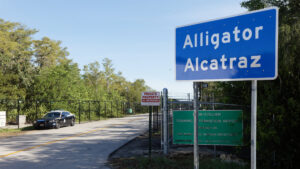
Watching and reading news accounts about the South Florida detention facility dubbed “Alligator Alcatraz,” I regularly wonder: WWMSDD?
What would Marjory Stoneman Douglas do?
It is safe to say she would be horrified at how a jet landing strip, constructed as part of the ill-fated Everglades Jetport project, has come back to “life” as a detention center for people rounded up by a federal government that claims they are a threat.
Back in the 1960s, the Dade County Port Authority schemed to turn the site, located in the remote heart of the Everglades system, into what might have become the world’s largest airport. It would have featured six runways to serve supersonic jets that promised faster air service around the world.
Of course, those flights would be accompanied with sonic booms. It might handle 50 million passengers and one million flights a year. But it wouldn’t have just been runways — a multitude of commercial and transportation services and infrastructure would be needed to get it up and running.
Local, state, and federal officials were giddy with the prospect of its success, figuring no one would object to its location away from urban centers. After all, Miami International Airport was once part of the “river of grass” that best defines the Everglades; the airport’s success left it hemmed in to future expansions. The jetport seemed the “perfect” solution.
That is, until a small group of people, eventually including Douglas, rose up to stop the project and protect the Everglades.
The earliest opposition was organized by Joe Browder, the Miami representative of the National Audubon Society, a group long concerned about the health of the unique ecosystem. Browder, a former television reporter, was tipped off in 1967 that the Port Authority was buying up Everglades land just six miles north of Everglades National Park. As historian Jack E. Davis notes, the airport initially was to be for training flights but quickly evolved into talk of a behemoth jetport.
“Jet travel was beginning to edge out propeller planes in the commercial airline industry, and the world jet placed Miami squarely within this novel age,” Davis writes. “The planned facility would be the largest in the world, larger than Miami itself and larger than the four largest airports in the country combined.” That meant a fast-paced shuttle corridor to Miami through wild areas. “It was bold, it was big, and, from the environmentalists’ perspective it was pure hubris,” Davis writes.
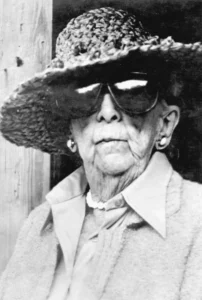
Browder and other like-minded groups, including the Sierra Club, the National Park Service and Native American tribes in South Florida, united to stop the project. The most important ally that Browder recruited was Marjorie Stoneman Douglas, whose best-selling book “The Everglades: River of Grass” had taught the world 20 years earlier of the importance of this freshwater system.
Douglas was late night shopping for cat food when she ran into Browder’s assistant, Judy Wilson, a longtime acquaintance. In her 1987 autobiography “Voice of the River,” written with John Rothchild, Douglas recounted that fateful moment:
“I met her one night in grocery store and I said, ‘I think you and Joe are doing great work. It’s wonderful.’ She looked at me square in the eye and said, ‘Yeah, what are you doing?’ ‘Oh me?’ I said, ‘I wrote the book.’ ‘That’s not enough,’ she countered. ‘We need people to help us.’ To get out of this conversation, I casually mumbled some platitude like ‘I’ll do whatever I can.”
The next day on her doorstep Browder “asked me to issue a ringing denunciation of the jetport to the press. I suggested that nobody could care particularly about my ringing denunciation of anything, and that such things are more effective if they come from organizations.” Browder suggested she start a group. “So there I was, stuck with a challenge that began as a polite rejoinder in the grocery-store line,” Douglas recalled.
While she mulled that idea, Browder took her to the jetport site, then under construction, and showed her the natural areas that would succumb to pavement and concrete should the project be completed. A sign marked the site, surrounded by an eight-foot chain-link fence. “He and I both knew we didn’t ever want to see a huge airport and industrial park in the Everglades.”
Douglas soon founded The Friends of the Everglades (FOE), which charged one dollar for membership and changed her life forever. She started a public speaking campaign, meeting with any group that would listen. After a year, FOE had more than 500 members which doubled in the next year, eventually reaching 3,000 from 38 states. And Douglas, the author, had recast herself as a powerful environmental activist at age 79, “about the time I lost so much of my eyesight I could hardly have seen the Everglades outdoors.” But that didn’t matter. Her eloquent speaking, tenacity at gathering facts, and wide web of contacts and friends became central to her efforts.
The jetport was stopped in 1970 through the efforts of FOE, Audubon, and many others who recognized that the environmental toll of a major public works project needed to be considered. The land surrounding it was preserved as the Big Cypress National Preserve in 1974, and the runway became an air training strip.
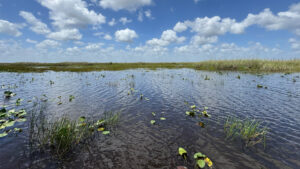
That story deserves more space than this column allows. Let’s just say by the time it was stopped, most Floridians understood that it would have created an environmental nightmare from which the Everglades could not have recovered. Since then, the state and federal government have partnered to spend billions of dollars to restore the Everglades system, a complete about-face from the jetport dreams. And laws since the 1970s have been enacted to protect our nation’s fragile flora and fauna.
Until early 2025 when Florida Attorney General James Uthmeier announced plans to turn the airstrip into “Alligator Alcatraz,” the state’s largest immigrant detention center. Soon the site filled with tents, facilities, and hundreds of detainees who state officials joked would never escape the area’s alligators and invasive pythons. They gave no thought to the environmental implications of the infrastructure needed to support it. And many questions have arisen about the financial deals that have created the facility.
But this is no laughing matter.
So, WWMSDD?
Certainly Douglas, who died in 1998 at age 108 after a long career as an author and environmental activist, would be enraged. Not that she would have been out at the site protesting – she said she didn’t need to go out into the humid bug-infested wetlands to appreciate their value. But she definitely would be burning news media and telephones to alert the public and chastise the state’s politicians. And she would support those folks who have spent their weekends protesting at the site and filing three federal lawsuits to close the facility, where detainees say they have difficulty contacting attorneys along with suffering plagues of insects and fecal waste on the floors. These activists include three modern “Marjories” – women who are making their voices heard.
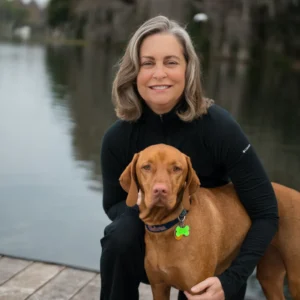
“Friends of the Everglades was founded by Marjory Stoneman Douglas in 1969 to stop harmful development at this very location,” FOE Executive Director Eve Samples told an internet newssite. “Fifty-six years later, the threat has returned — and it poses another existential threat to the Everglades.”
“The state and federal government have spent billions working to restore the Everglades,” said Melissa Abdo, Sun Coast regional director of the National Parks Conservation Association. “Now the government wants to spend millions on this atrocious plan that could undermine Florida’s national parks and the Everglades ecosystem people have worked so hard to protect. For decades, Floridians of every political stripe, including members of the Trump administration, have fought to make the Everglades the greatest environmental success story of all time. We must not risk all this progress for an inhumane facility like this.”
Betty Osceola, of the Miccosukee Tribe, has regularly led peaceful demonstrations and prayer protests at the site. In a June Facebook post she worried about its future: “They say temporary but we know how that goes, temporary can last numerous years, then lead to other developments. This goes against what the National Preserve was established for. This location is right in the middle of Western Everglades Restoration, which is a part of the over all Everglades Restoration Project which Millions into Billions of dollars have been spent. What’s next?”
Perhaps this fight is empowering a new generation of women to help fill Douglas’ shoes. That she would like.
Leslie Kemp Poole, Ph.D., is associate professor of environmental studies at Rollins College in Winter Park. She is author of “Saving Florida: Women’s Fight for the Environment in the Twentieth Century” and former executive director of the Marjorie Kinnan Rawlings Society. Poole is an editor of the recently released book “Tracing Florida Journeys: Explorers, Travelers, and Landscapes Then and Now.”
This article first appeared on The Marjorie and is republished here under a Creative Commons Attribution-NoDerivatives 4.0 International License. Banner photo: A sign pointing toward Alligator Alcatraz (iStock image).
Sign up for The Invading Sea newsletter by visiting here. To support The Invading Sea, click here to make a donation. If you are interested in submitting an opinion piece to The Invading Sea, email Editor Nathan Crabbe.
