


By Sol Moyano, The Invading Sea
Allergy seasons are growing longer and worsening due to warming temperatures, according to a new report from Climate Central.
The report found that U.S. cities are experiencing more freeze-free days since 1970, giving plants more time to grow and release pollen. The growing season lengthened in 87% of the 198 U.S. cities analyzed by Climate Central, a nonprofit group of communicators and scientists who research climate-related issues.
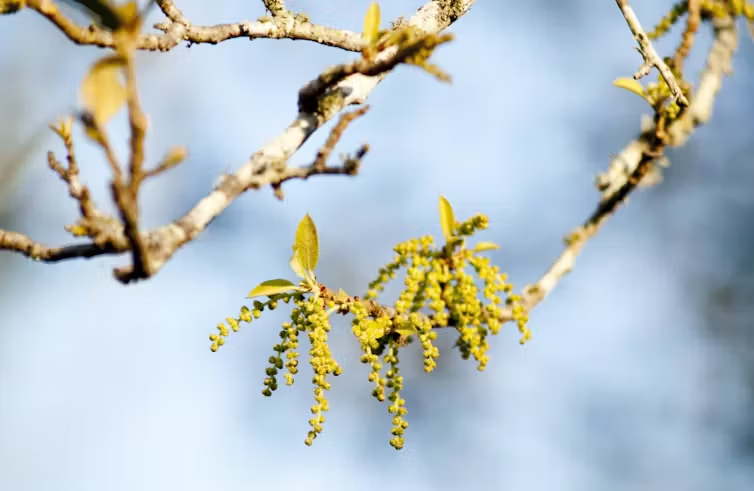
Seasonal allergies don’t just occur in the spring. Pollen is produced by different plants year-round: trees in the spring, grasses in the summer and ragweed in the fall.
“Warmer springs mean that vegetation will start to green up sooner, and this means earlier pollen as well,” said Allison L. Steiner, a professor of climate and space sciences and engineering at the University of Michigan. “For some weeds that flower in the late summer and fall, warmer temperatures are pushing the fall pollen season later than before.”
The growing season increased by 21 days on average from 1970 to 2025 in the cities analyzed in the report. While all regions of the U.S. experienced an increase of at least 14 freeze-free days, states in the Northwest regions saw the largest impact with an increase of 31 days.
“There are some regions that are experiencing larger changes,” Steiner said. “This depends on local meteorology as well as the mix of pollen-emitting vegetation in the area.”
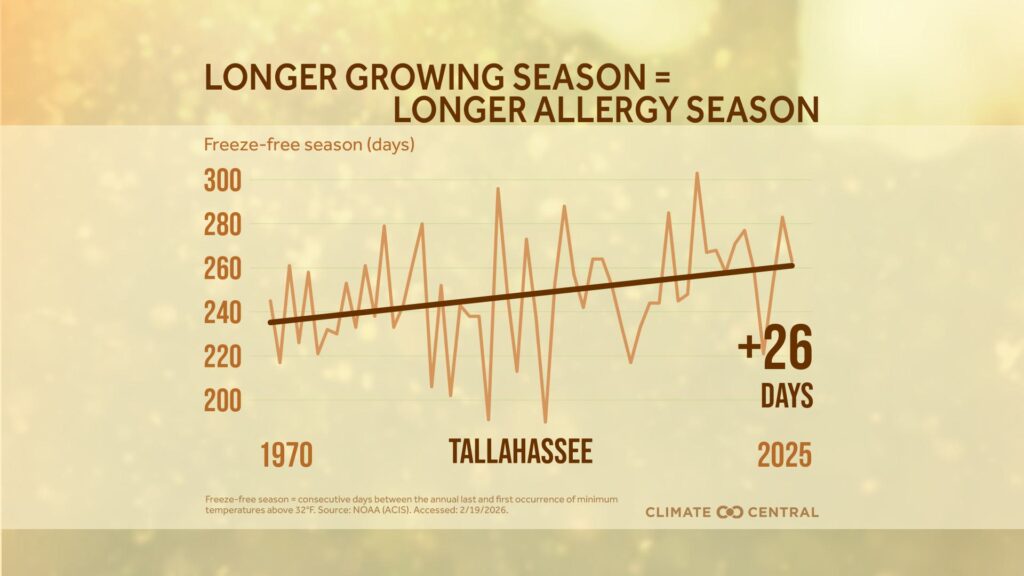
The Southeast saw its growing season increase by an average of 19 days from 1970-2025, according to Climate Central. In Florida, the report found that Tallahassee experiences 26 more freeze-free days than it did in 1970.
Plants often begin growing leaves in Florida as early as January, according to spring index maps from the USA National Phenology Network. Combined with the state’s large number of freeze-free days, this early start can extend the growing season, giving pollen-producing plants more time to release allergens into the air.
One-in-four adults and one-in-five children experience seasonal allergies in the U.S., according to the Centers for Disease Control and Prevention. Allergy symptoms can include coughing, sneezing, itchy eyes and more.
“The congestion and sneezing really affect my ability to focus, and headaches have become a symptom,” said Rosemary Aziz, a student at Florida Atlantic University.
Scientists have found that man-made climate change is driving this issue. Heat-trapping pollution from burning coal, oil and methane gas contributes to a warming climate.
A 2021 study linked worsening pollen seasons in North America to rising greenhouse gas concentrations. Steiner said the research found that climate change accounted for “about 50% of the lengthening season and about 8% of the increase in pollen concentrations.”
These factors don’t just increase allergy seasons; they also increase pollen production. Steiner co-authored a 2022 study that found the U.S. is looking at a 200% increase in pollen production by the end of this century with continued high rates of carbon pollution.
Worsening allergy seasons pose health risks to individuals who already have respiratory illnesses such as asthma. Children, in particular, are more likely to feel the most impact.
“I think it will necessitate taking more medication, which for me personally, I like to avoid doing,” Aziz said. “For students in the future, I hope they take it as a call to action to mitigate the symptoms the world faces as a result of climate change.”
Sol Moyano is a senior majoring in multimedia journalism at FAU who is reporting for The Invading Sea in the spring 2026 semester. Banner photo: A boy sneezes (iStock image).
Sign up for The Invading Sea newsletter by visiting here. To support The Invading Sea, click here to make a donation. If you are interested in submitting an opinion piece to The Invading Sea, email Editor Nathan Crabbe.

Any chance that climate engineering by atmospheric injection of toxic oxides or chemtrails has anything to do with allergy increase?