


By Eugene Kelly, Florida Native Plant Society, and Susan Carr, Putnam Land Conservancy
The Florida we love — the springs, forests, wild and rural landscapes — exists because we chose to protect it. Florida has long recognized land conservation as a cornerstone of protecting our economy, environment and quality of life. Voter-supported programs have conserved millions of acres to safeguard drinking water, mitigate flooding, support tourism, sustain agriculture and preserve nature.
After decades of unbridled growth, we are now the third most-populous state and we are losing what remains of Florida’s natural and rural lands. It is more important than ever that we invest generously in land conservation. Unfortunately, the Florida Legislature is now poised to invest less — a shortsighted choice that will have long-lasting economic and environmental impacts if allowed to stand.
Florida’s land conservation success depends on two programs: Florida Forever and the Rural and Family Lands Protection Program (RFLPP). Both rely on voluntary participation by landowners and there is no shortage of demand. The only impediment to more landowner participation is a shortage of funding.
Florida Forever is our flagship land conservation program, built on data-driven and science-based prioritization. Now in its 26th year, Florida Forever and its predecessor programs have protected more than 2.6 million acres, including many of our most cherished state parks, forests and wildlife management areas. Florida Forever’s mission is to protect environmentally significant lands that benefit wildlife, water resources, floodplains and other sensitive natural resources while also accommodating public recreation.
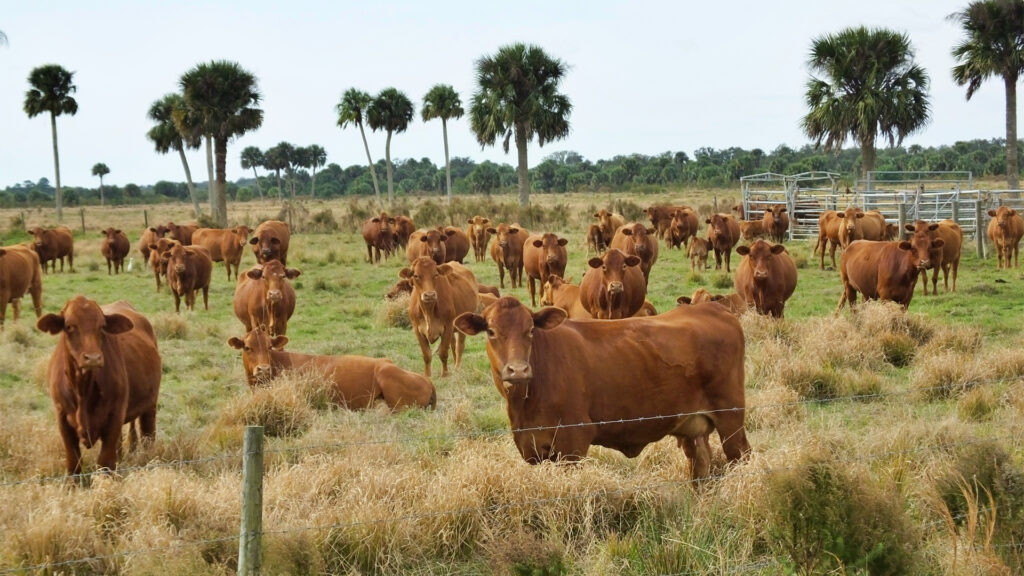
The RFLPP also protects land, but for a different purpose. It protects agricultural land, including ranches, timberlands and family farms, for the primary purpose of sustaining agricultural production. It does so by purchasing agricultural easements that prevent development while keeping land in private ownership. Conservation benefits that result from keeping the land in agricultural production are incidental and of secondary concern.
Florida Forever protects land through either outright purchase or by acquiring conservation easements. Land purchases allow the state to protect new parks, expand existing ones and provide public access. Conservation easements ensure a measure of protection while remaining in private ownership. Easement lands cannot achieve the same level of protection as outright public ownership, nor can they be accessed by the public.
It is important to acknowledge the fundamental differences between Florida Forever and RFLPP easements. Florida Forever’s easements permanently limit the landowner’s ability to alter the property to ensure its environmental values are preserved. Natural areas must remain natural, and semi-natural areas like pastures and timberland cannot be converted to more intensive uses. RFLPP easements, with some exceptions, allow natural areas to be converted to agricultural uses.
To help underscore the distinction, a Florida Forever conservation easement allows the landowner to voluntarily restore natural conditions to altered areas within their property. An RFLPP agricultural easement severely limits the landowner’s options to restore habitat. The purpose of the easement, after all, is to maintain or even increase agricultural production.
Florida Forever and RFLPP are both important programs — but they are not interchangeable.
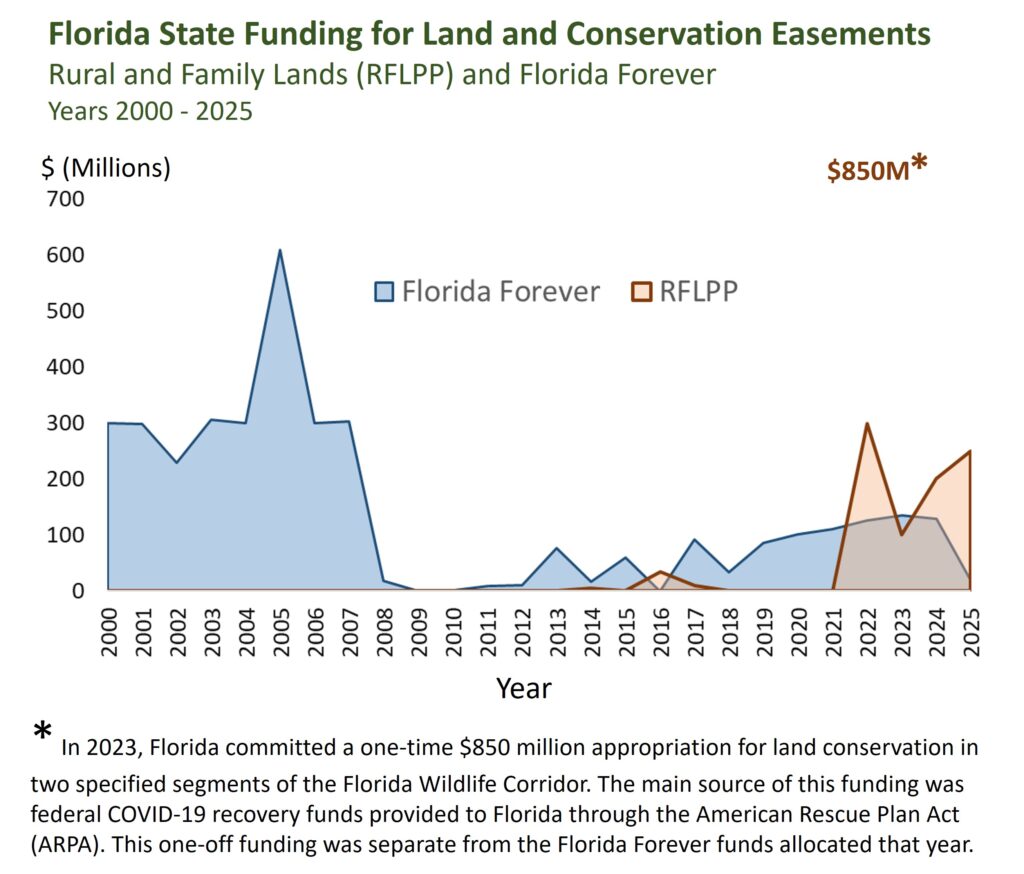
Historically, Florida Forever received approximately $300 million per year. In recent years, funding has declined far below that benchmark. In contrast, RFLPP funding has grown in recent years, with annual funding reaching $200–300 million.
The Legislature’s 2026-2027 budget proposals exacerbate this trend, with the Senate proposing only $35 million for Florida Forever and the House choosing to withhold funding entirely. In contrast, they propose spending $200 million and $300 million, respectively, on RFLPP agricultural easements.
Future headlines may announce big funding for land conservation; however, these budget proposals reflect a fundamental policy shift that favors the purchase of agricultural easements over the acquisition of public conservation lands.
Florida Forever and RFLPP are both valuable programs with different but complementary purposes. Neither should be mistaken as a replacement for the other. Florida Forever is necessary for protecting high priority natural areas, building the Florida Wildlife Corridor and providing public access to areas that feed our souls. RFLPP is necessary for protecting the lands that feed our bodies. Both are necessary for sustaining our economy and a healthy future.
The Florida Legislature will soon return to Tallahassee to pass a final state budget. We call on our lawmakers to:
- Restore robust, predictable funding for Florida Forever
- Maintain strong support for RFLPP without treating it as a substitute for Florida Forever
- Ensure a balanced investment in both easements and land acquisition
Florida does not need to choose between protecting nature or agriculture. We can, and must, do both.
Eugene Kelly is president of the Florida Native Plant Society and Susan Carr is senior conservation project manager for the Putnam Land Conservancy. Banner photo: A boardwalk in Myakka River State Park. Conservation lands have been added around the park through Florida Forever (iStock image).
Sign up for The Invading Sea newsletter by visiting here. To support The Invading Sea, click here to make a donation. If you are interested in submitting an opinion piece to The Invading Sea, email Editor Nathan Crabbe.
