


By Walter Duke III, Broward Workshop
For more than a decade, the real issue regarding sea-level rise was never awareness. Everyone understood the risk. The question was whether the business community — the people who ultimately shape markets — would take it seriously enough to act.
Ten years ago, I argued that nothing meaningful would happen until they did.
At the time, sea-level rise wasn’t priced into decisions. Development continued. Capital flowed. The issue was acknowledged — but not acted on.
By 2024, that started to change.
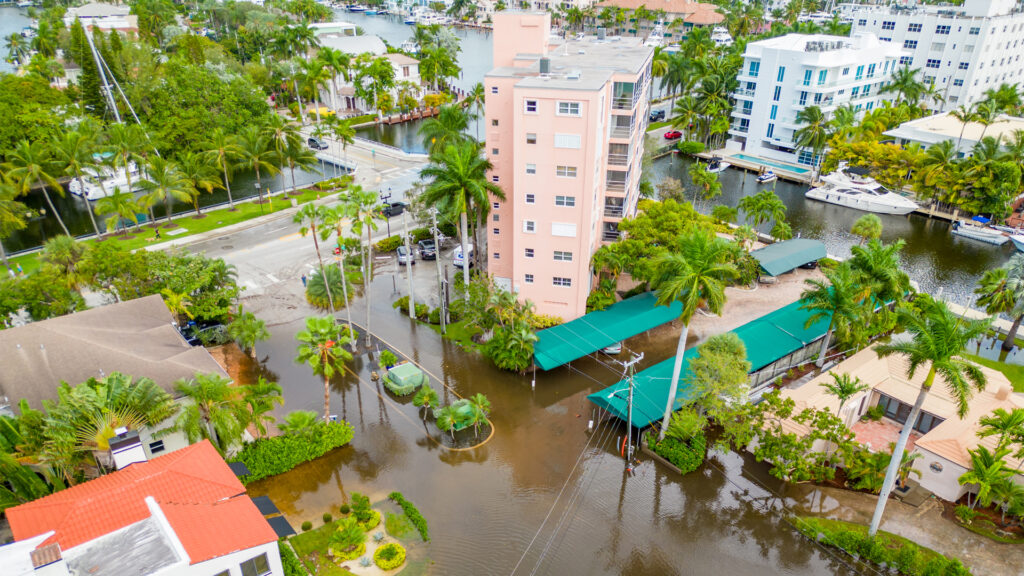
Insurance costs surged. Flooding became more frequent. Lenders and investors began asking harder questions. Sea-level rise moved from a theoretical concern to a financial one.
But awareness doesn’t fix infrastructure.
Action does.
Last week, Broward County took a step forward.
The Broward County Commission approved $20 million for canal repairs and drainage upgrades — real dollars for pumps, culverts and water management systems that directly affect flooding.
This is immediate risk mitigation, not long-range planning.
Just as important is how it happened.
The Broward Workshop — led by Chairperson Tim Petrillo — was vocal in pushing resilience to the forefront, signaling that the business community sees this as a priority. That effort, combined with Mayor Mark Bogen’s newly formed Mayor’s Business Council, helped bring the issue onto the commission’s agenda.
That’s a meaningful shift.
Ten years ago, the business community was largely on the sidelines.
Today, it is at the table and helping drive the conversation, because this isn’t just about flooding. It’s about the economic foundation of Broward County.
Sea-level rise now directly affects insurance costs, property values, infrastructure reliability and workforce stability. And increasingly, it affects housing affordability.
Broward County recognized that in 2024 when it adopted its Ten-Year Affordable Housing Master Plan, a long-term strategy to expand supply and improve accessibility.
But here’s the reality: You cannot solve housing without solving resilience.
If infrastructure isn’t reliable, construction costs rise. If insurance becomes unaffordable — or unavailable — projects don’t move forward. If long-term risk is unclear, capital looks elsewhere.
Over time, that means less supply and higher prices. The two issues are directly linked.
To Broward County’s credit, it is starting to address them that way.
In 2025, the county also adopted a Countywide Resilience Plan — a long-term strategy to strengthen neighborhoods, reduce risk and improve community stability. The plan includes a two-tiered adaptation approach with milestones for 2050 and 2070 and is expected to reduce flood-related property damage while supporting real estate values and economic activity.
The $20 million allocation is part of a broader effort. Broward and its municipalities have already secured nearly $66 million in Resilient Florida funding for infrastructure improvements, alongside a long-term investment framework that contemplates tens of billions of dollars in resilience spending.
Add in nature-based solutions such as wetland restoration, and this begins to look less like isolated projects and more like a coordinated strategy.
Is it enough? No.

But it’s progress, and it reflects a shift in mindset.
A decade ago, sea-level rise was treated primarily as an environmental issue. Today, it’s a financial one.
The risk is being priced by insurers, lenders and investors. And when that happens, behavior changes.
That’s why business community engagement matters.
It brings discipline, capital and urgency. Government cannot solve this alone. But when the public and private sectors align, progress becomes possible.
That’s what Broward County is beginning to show.
Walter Duke is co-chair of the Housing Affordability Committee of the Broward Workshop and a former mayor of Dania Beach. This opinion piece was originally published by the Sun Sentinel, which is a media partner of The Invading Sea. Banner photo: Flooding in Fort Lauderdale (iStock image).
Sign up for The Invading Sea newsletter by visiting here. To support The Invading Sea, click here to make a donation. If you are interested in submitting an opinion piece to The Invading Sea, email Editor Nathan Crabbe.
