


By Brian Henriquez, Suncoast Power Solutions
Florida has spent years preparing for the next hurricane. But some of the biggest resilience challenges facing our communities have little to do with a storm’s path and everything to do with the growing demands being placed on the systems we rely on every day.
As one of the nation’s fastest-growing states, Florida continues to welcome new residents, businesses and development at a remarkable pace. According to the U.S. Census Bureau, Florida is one of the fastest-growing states in the country and placing increasing demands on the infrastructure and services communities rely upon every day.
The reality is that Florida’s preparedness gap may be growing faster than its infrastructure.
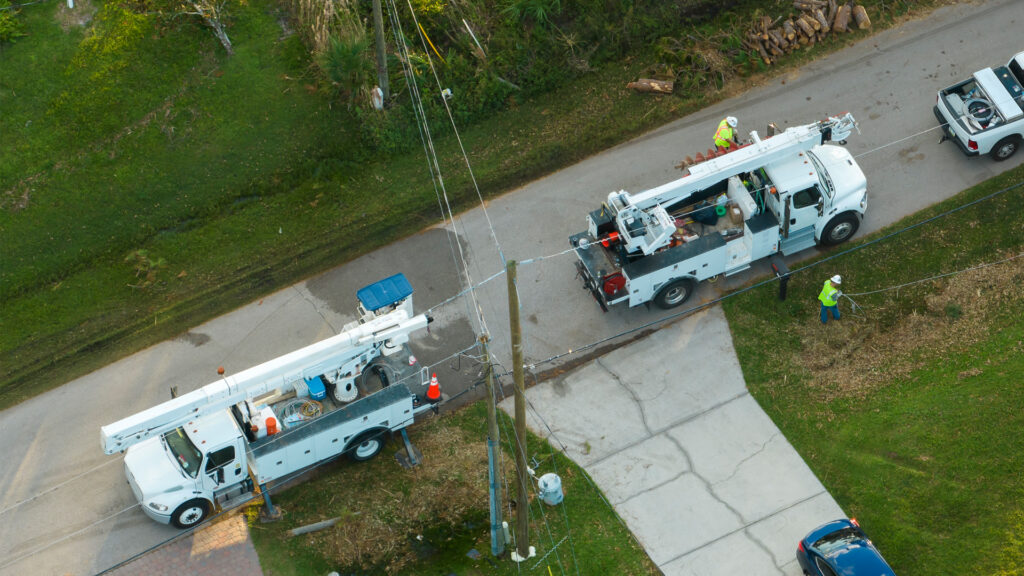
When most people think about resilience, they think about hurricane forecasts, evacuation routes and emergency supplies. While those are important, resilience is much broader than storm preparation. It is the ability of our homes, businesses, health care systems and communities to continue functioning when critical infrastructure is disrupted.
Through my work with homeowners, businesses, health care providers and community organizations across Florida, I have seen firsthand how dependent modern life has become on reliable infrastructure. Electricity powers far more than lights and appliances. It supports communication, health care, internet connectivity, security systems, refrigeration, remote work, education and countless other functions that many Floridians rely on every day.
As Florida grows, our dependence on these systems continues to increase.
At the same time, our communities face mounting pressures from population growth, aging infrastructure, increasing energy demand, extreme heat and more frequent weather-related disruptions. The National Oceanic and Atmospheric Administration continues to identify extreme heat and severe weather as growing risks for communities across the country, reinforcing the need for stronger local resilience planning.
One of the most overlooked aspects of resilience is how interconnected these systems have become. A disruption to one service often creates challenges across many others.
A power outage, for example, can affect internet access, cellular communications, refrigerated medications, medical equipment, fuel pumps, payment systems, transportation and business operations. For seniors aging in place, medically vulnerable residents and small businesses operating on tight margins, even a relatively short disruption can quickly become a serious challenge.
This reality is especially important as Florida continues to attract new residents from around the country. Many arrive seeking opportunity, affordability or a better quality of life. But they may not fully understand the role that preparedness and resilience play in a state where weather, infrastructure and population growth intersect so frequently.
Preparedness is often viewed as an individual responsibility. Yet the Florida Division of Emergency Management consistently emphasizes that resilience depends on coordinated planning among residents, businesses, nonprofit organizations, health care providers and local governments.
It also requires education. The more people understand how infrastructure systems interact during disruptions, the better equipped they will be to prepare for them.
The good news is that resilience can be strengthened long before a crisis occurs. Businesses can develop continuity plans. Communities can identify and support vulnerable populations. Local organizations can build partnerships that improve response capabilities. Families can better understand their own risks and prepare accordingly.
Florida has always demonstrated an extraordinary ability to adapt and recover. That spirit remains one of our greatest strengths. But resilience is no longer something we can think about only during hurricane season.
Preparedness is most effective when it happens long before an emergency. The strongest communities are not necessarily the ones with the most resources; they are the ones that take the time to plan, educate, communicate and identify vulnerabilities before disruption occurs. Resilience is built in advance, not in the middle of a crisis.
The question facing Florida is not whether we will continue to grow. We will. The question is whether our infrastructure, preparedness efforts and communities can keep pace with that growth.
The conversation about Florida’s future should focus not only on how we grow, but how we prepare. Because resilience is not simply about recovering from disruption. It is about being ready for it before it happens.
Brian Henriquez is the founder of Suncoast Power Solutions, a leading Florida provider of generator installation, backup power and energy preparedness solutions. Banner photo: Destruction caused by Hurricane Helene (Staff Sgt. Jacob Hancock/U.S. Air National Guard, via Defense Visual Information Distribution Service).
