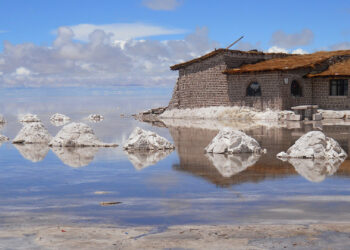
Rapid expansion of Bolivia’s lithium industry creating new problems for local communities
Activists are calling for increased transparency about the production of lithium facilities, and their water and electricity use.
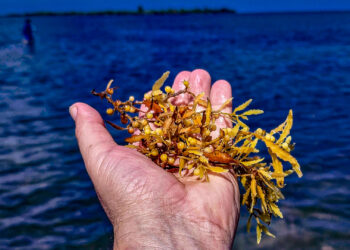
Sargassum is being turned into nutrient-rich biofertilizers and other organic products, but there are hurdles to scaling the industry.
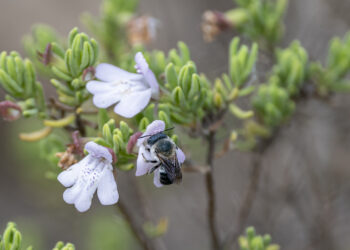
Nearly all scrub mints grow in areas that are being rapidly developed or converted to agricultural pasture.
As natural ecosystems are converted for agricultural purposes, the carbon storage capacity is decreasing.
The act represents a historic opportunity to transform Florida’s energy landscape and build a more resilient and sustainable future.
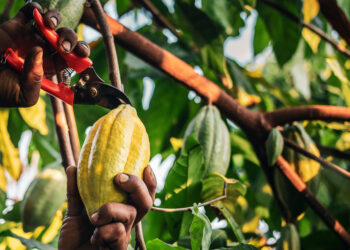
The demand for cocoa has resulted in mass deforestation and significant carbon emissions.
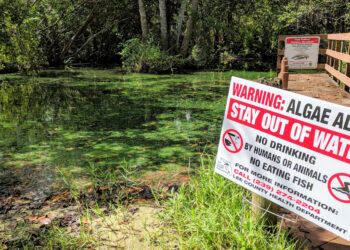
Despite millions in annual water-quality study, Florida Gulf Coast University was appropriated $25 million for another study.
Growers can use the new tool to track weather conditions and indicators in places where there isn’t a weather station ...
Project Alianza is working to close the education gap for children in rural Central American communities.
Scientists found that more than 3,000 river basins globally are at risk of water scarcity by 2050 in one future ...
The Invading Sea is a nonpartisan source for news, commentary and educational content about climate change and other environmental issues affecting Florida. The site is managed by Florida Atlantic University’s Center for Environmental Studies in the Charles E. Schmidt College of Science.
Sign up to receive the latest climate change news and commentary in your email inbox by visiting here.
We are seeking continuing support for the website and its staff. Click here to learn more and donate.
© 2025 The Invading Sea