


By Kimball Love
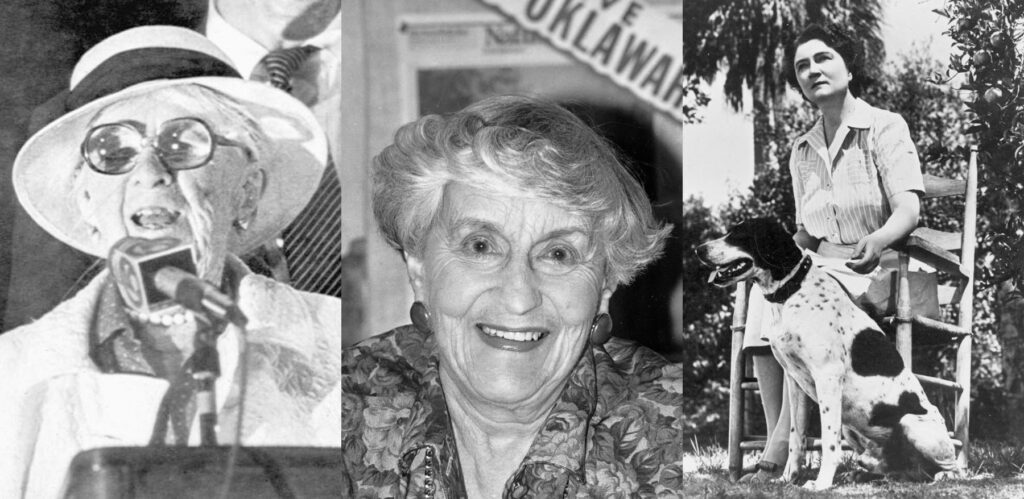
This summer, we are witnessing astonishing events that bring to mind Florida women who fought tooth and nail to protect our natural resources – and happen to share the same first name.
Marjory Stoneman Douglas wrote the incomparable book “The Everglades: River of Grass” and a host of short stories about her beloved wilderness. With this work, the tenacious journalist and advocate for the Everglades devoted her life to preserving the unique, sprawling ecosystem now protected by federal law. Or, so we thought.
Consider now the impacts from the transformation of a long-abandoned jetport into an immigration detention center in the Big Cypress National Preserve. The site is located in the heart of the Everglades and adjacent to Everglades National Park – the very designations Douglas fought for so valiantly.
The “center” is in the middle of one of the most dangerous and dark ecosystems on the planet. In February, Everglades National Park conducted a month-long Everglades Dark Sky Celebration. Three different locations around the park offered opportunities to relish that amazing dark zone.
As of the 4th of July, the area has been lit up and described to glow like Yankee Stadium. Considered a form of habitat loss, light pollution disrupts how critters like the Florida panther and the Florida bonneted bat find food, navigate and reproduce. This is nothing to celebrate and the lawsuits have already begun.
Ironically, in the state budget passed in June, Florida committed more than $1.4 billion to Everglades restoration and water quality improvements, including $550 million for CERP. That would be the Comprehensive Everglades Restoration Plan, considered the largest and, without question, the most expensive restoration program on the planet. Six billion of the $27 billion projected CERP costs have already been spent – your money.
Another remarkable environmental advocate in mind is Marjorie Harris Carr. She and her band of scientists (including her husband, Archie, famous for his work with sea turtles) opposed the Cross Florida Barge Canal.
The plan to move goods from the Gulf to the Atlantic Ocean cut deep into the karst topography and aquifer that provides the fresh water supply for the region. The incredibly destructive project started with a deep and wide canal near Crystal River, decimated forests and a pristine river – the Ocklawaha – being dammed up.
Carr was having none of this and worked with such determination that the project was finally stopped by President Richard Nixon. Unfortunately, the dam remains to this day.
The problem with the dam is as simple as it is controversial. Local fishing advocates have fought to keep the reservoir behind the dam in place. Carr and her associates made the case that the eventual loading of nutrients into the reservoir would diminish the ecosystem.
Then there’s the issue regarding the loss of the Ocklawaha’s natural flow that historically ranged 75 miles from Lake Griffin to the St. Johns River. It restricts access to the river by manatee; the natural distribution of all manner of species, terrestrial and aquatic; and covers a series of 20 or so springs.
The Florida Legislature finally passed legislation this year to begin the dismantling of the Kirkpatrick Dam on the Rodman Reservoir, only to have it vetoed by the governor. The project was deauthorized by Congress in 1986 with a formal end to it in 1990. But here we are decades later with no resolution for an improved system.
The advocacy will not stop and, in the meanwhile, the lands once part of the project have been designated as the Marjorie Harris Carr Cross Florida Greenway, in honor of her fight against the canal.
Last, but not least, of these courageous women is Marjorie Kinnan Rawlings. Unlike her sisters in name, Rawlings came late to Florida. She adopted the small village of Cross Creek in North Central Florida as her own.
“The Yearling,” her most famous novel, introduced the larger world to the struggles of “cracker” life in the inhospitable scrub landscape. Through her books and short stories, Rawlings provided a sense of place for this region comparable only to what William Faulkner did for the South or Ernest Hemingway for Key West. This region includes the Ocklawaha.
The effort to restore this linear and well-loved ecosystem goes on. Armed with science and determination, the Free the Ocklawaha Coalition for Everyone (FORCE) continues in the spirit of all of the Marjories who came before.
Their will, resolve and influence continue to support reconnection and restoration of the historic and pristine version of the Ocklawaha.
Kimball Love, a seventh-generation Floridian, has devoted the vast majority of her working life to public service. Her diverse career includes stints at the National Geographic Society; Florida-based local, regional and state agencies; and as an independent consultant. Her new book, “Florida Is Not For Sissies” is available at kimballlove.com. Banner photo: The night sky over West Lake in Everglades National Park (National Park Service, Public domain, via Wikimedia Commons).
Sign up for The Invading Sea newsletter by visiting here. To support The Invading Sea, click here to make a donation. If you are interested in submitting an opinion piece to The Invading Sea, email Editor Nathan Crabbe at ncrabbe@fau.edu.

Kimball Love’s article touches on aspects of issues otherwise ignored. Something I never considered? Lights blazing from Alligator Alcatraz destroying the night sky and habitat for nocturnal animals. Appalling.
I have been following Kimball Love’s incredibly diverse career for over forty years. Every bit of it has been with a passion and protection for the environment, especially for her beloved home state of Florida. Her recent book, “Florida is Not for Sissies” is a true work of environmental art and should become a textbook in all Florida colleges, required reading for any environmental science majors!! Make it happen, powers that be!! As for Kimball Love’s article, it was wonderful, reminiscing about our beloved Marjories, but bittersweet. The fight goes on!