


By Katie Carpenter, Everwild Media
It’s August and the weather report from Florida is hotter, steamier and more hazardous to your health than usual.
To soothe the anxiety caused by rapid changes in our world, therapists say we should write a healing letter to ourselves in the future. Like journaling, some say it can relieve the tension.
You might describe what you did this summer – swim in the ocean, grill lunch with the kids, go for a bike ride, all hot but bearable. Five years from now, people might be interested to know that, given the increasing humidity and insect population, those outdoor activities were even still enjoyable.
According to Time Magazine, Google searches “related to climate anxiety are at a record high,” after steadily increasing in recent years. Searches worldwide related to climate anxiety increased more than 4,000% over a five-year period, according to Google’s data. People are mostly searching for solutions, ways to alleviate the dread.
Some therapists recommend you reconnect with nature, or get involved in community activities. Writing a letter to the future is an easy first step you can take at home. Then mail the letter to yourself, or a family member, to be read five years from now, in 2030.
Globally, 2030 will be an important benchmark year. A recent study reported that artificial intelligence has predicted temperatures will cross the global warming threshold of 2.7 degrees Fahrenheit (above pre-industrial averages) by 2030. The threshold of 2.7 degrees was chosen in the Paris Agreement because it represents a critical point, beyond which climate impacts become more extreme and potentially irreversible.
Locally, 2030 is a big year too. That’s the year when the Southeast Florida Regional Climate Change Compact reports our seas will have risen between 6 and 10 inches above the recorded 1992 level – which means higher storm surges and longer king tides with deeper flooding.
The World Economic Forum reports that the “growing trend of climate distress will add a significant burden to already strained mental health systems in many countries.”
We all could use a little self-care. It could help to write a letter going in the other direction, too, imagining what someone in 2030 might have to say to us today.
Your future self might tell you a harrowing tale of the summer of 2030.
It’s feverishly hot, getting hard to breathe. Our kids want to go to the beach, but the sand is too hot to walk on – a tourist who lost his flip flops got third-degree burns on his feet.
You never know how high the water in the street will get at certain times of the year. We leave rubber boots by the door to put on in a pinch. Car insurance is getting more expensive, due to repeated damage to the undercarriage by salt water.
You know what’s thriving though? Mosquitoes and ticks. Also: malaria and Lyme’s disease.
Most people stay inside during daylight hours, blasting the air conditioning (except when the power goes out, which is often). If you do venture out, you have to prep like a warrior with zinc face paint (sunscreen), insect-shield hoodies and water bottles the size of oxygen tanks.
Can’t drive when the steering wheel will literally burn your palms. Can’t get into the ocean when the water temperature is so high it makes flesh-eating bacteria more deadly.
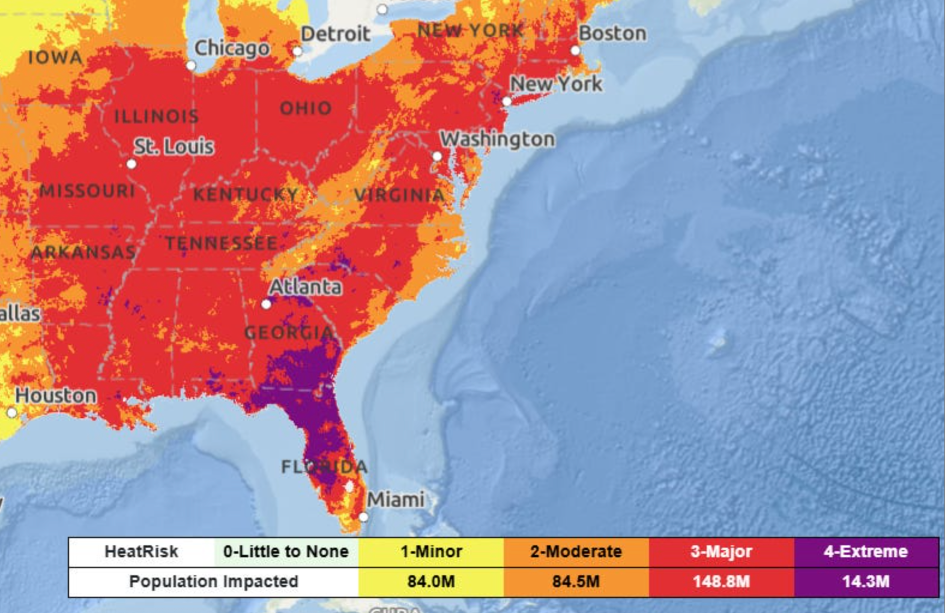
In the past few years, we’ve seen Florida highlighted in psychedelic colors on the weather maps, indicating extreme heat ahead. Don’t you wonder why Florida isn’t the U.S. state leading the charge, demanding action on the climate crisis? It’s embarrassing that chilly Maine and Vermont have been making more noise about the climate crisis than Florida.
In D.C., politicians shoosh the scientists, but don’t fall for their boosterism. Last week they illogically declared that greenhouse gases such as carbon dioxide and methane are no longer bad for us. We have “updated science,” they say!
Your future self, plagued by asthma and mosquito bites the size of quarters, urges you to wake up and show some skepticism, before letter-writers of the future are too hot to type.
In Florida, we need our ocean, our gardens and our healthy families with children who won’t grow up and write letters like this. More than almost anyone, Floridians need science to win over politics – or else, 2025 could be one of the coolest years of the rest of your life.
Katie Carpenter is a West Palm Beach-based filmmaker with Everwild Media (www.everwildmedia.com), producing documentaries about conservation, climate change and solutions. Banner photo: A sunset over dunes in Florida (Charles Patrick Ewing, CC BY 2.0, via Wikimedia Commons).
Sign up for The Invading Sea newsletter by visiting here. To support The Invading Sea, click here to make a donation. If you are interested in submitting an opinion piece to The Invading Sea, email Editor Nathan Crabbe at ncrabbe@fau.edu.
