


By Karen Dougherty, C-Change Conversations
Growing up, the mantra I always heard at my dinner table was “eat everything on your plate.” I was constantly reminded about starving children around the world, and that stuck with me. To this day, I hate to waste food, but now I have another reason: Preventing food waste helps reduce climate change.
Food waste and climate change
You might be surprised to learn that wasted food is a sizable part of the problem. How big? Food waste makes up around 8% of our total carbon-equivalent emissions (CO2 and other heat-trapping gases). To put it in perspective, that is roughly the same amount as the global tourism industry!
There are two main ways food waste contributes to climate change:
1. Methane emissions
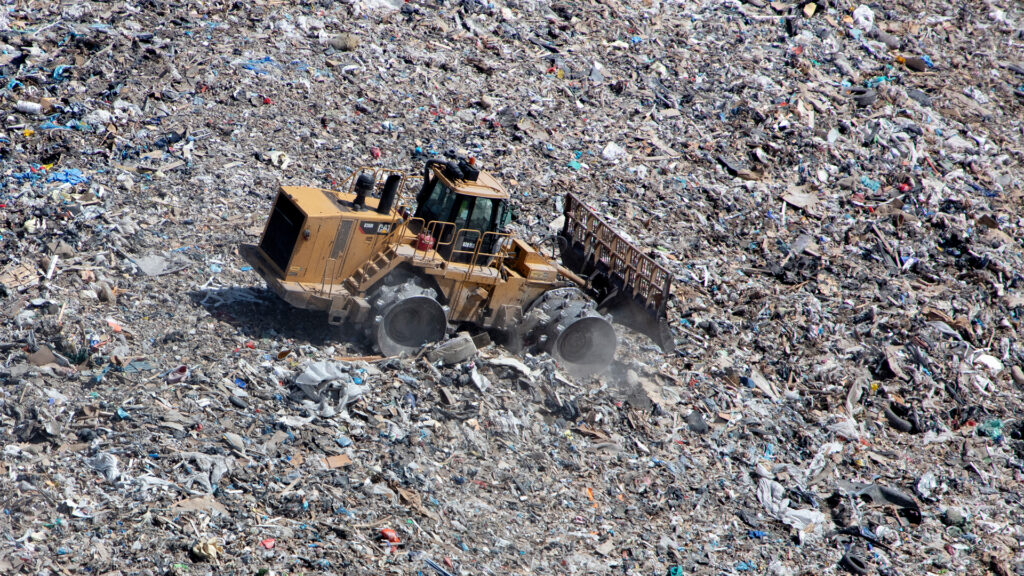
Food makes up almost 25% of the waste in our landfills, and when it decomposes, it releases methane. Although it doesn’t linger as long in the atmosphere as CO2, methane is more damaging while it’s up there. In fact, for 20 years after it is released, methane traps 80 times more heat than carbon dioxide.
2. Wasted energy and resources
Producing enough food to feed all of us requires a vast amount of energy, money and natural resources. But because around one-third of our food is wasted every year in the United States, we are squandering everything it took to produce, package and transport that food. We’re also creating unnecessary emissions. This hurts our environment and our economy.
To top it off, we are throwing away lots of our hard-earned money. The Environmental Protection Agency estimates that a family of four tosses away an average of $56 worth of food every week, adding up to $2,913 a year!
What can we do?
Reducing food waste is the one of the most impactful things we can do to solve climate change. So, what are some actions we can take?
1. Cut down on food waste at home
Here are some ideas:
- When feasible, make more frequent, smaller grocery trips.
- Plan meals ahead, and only buy what is needed.
- Make use of your freezer if you don’t plan to use food right away.
- Be more conscious about using leftovers.
- Compost if you are able – it can keep waste out of landfills and enrich your garden.
Here’s an interesting fact. One reason people toss food involves confusion about date labels. According to the U.S. Department of Agriculture, here are the common date labels and their meanings:
- Best if used by/before identifies when the quality and flavor will be highest.
- Sell by helps stores manage inventory by indicating how long to display an item for sale.
- Use by indicates the last date the item is expected to be at peak quality.
Notice that none of these are expiration dates. The USDA says food is generally safe to eat beyond these dates, unless it shows signs of spoilage like an “undesirable taste or odor.” The bottom line: the dates stamped on food have to do with quality, not safety.
2. Talk about food waste
Sharing factual information in person or on social media makes a big difference. It’s an easy thing to bring up in conversation with friends and family when you are out for dinner or while cleaning up after at a party. Most people dislike wasting food, but may not realize how much it contributes to climate change.

3. Donate or volunteer
Many communities have nonprofits that “rescue” donated food from commercial kitchens before it is thrown away and distribute it to organizations that feed hungry people. While mostly focused on fighting hunger, these groups are also inadvertently helping solve climate change. You can arrange to donate food or to volunteer your time to help.
Reducing food waste is a win-win
More than half of all food waste occurs at the industrial level, and that sector is largely out of our hands. Nevertheless, we can make simple household changes that add up to make a big difference. Wasting less food at home means buying more efficiently, and also using the food we have for as long as it is safe to do so.
Ultimately, reducing food waste is a win-win – it saves us money and helps solve climate change at the same time.
Karen Dougherty writes the B-Change Blog for C-Change Conversations, a national nonprofit that provides nonpartisan education on climate change, and also blogs about climate change at unheating.com. Banner photo: Food waste being collected in a bowl (iStock image).
Sign up for The Invading Sea newsletter by visiting here. To support The Invading Sea, click here to make a donation. If you are interested in submitting an opinion piece to The Invading Sea, email Editor Nathan Crabbe at ncrabbe@fau.edu.
