


By Cathy Cowan Becker, OtherWords.org
The nation’s largest home and auto insurance companies say we can trust them, but lately they’re behaving far more like villains than heroes.
As the climate crisis intensifies, big insurance companies are protecting their bottom line instead of policyholders. They’re canceling policies, raising rates and refusing to cover claims after major disasters — all while making huge profits from the causes of climate chaos.
Climate disaster damage in the United States has steadily increased, with costs totaling $187 billion in 2024. Yet instead of covering their customers, big insurance is abandoning them.
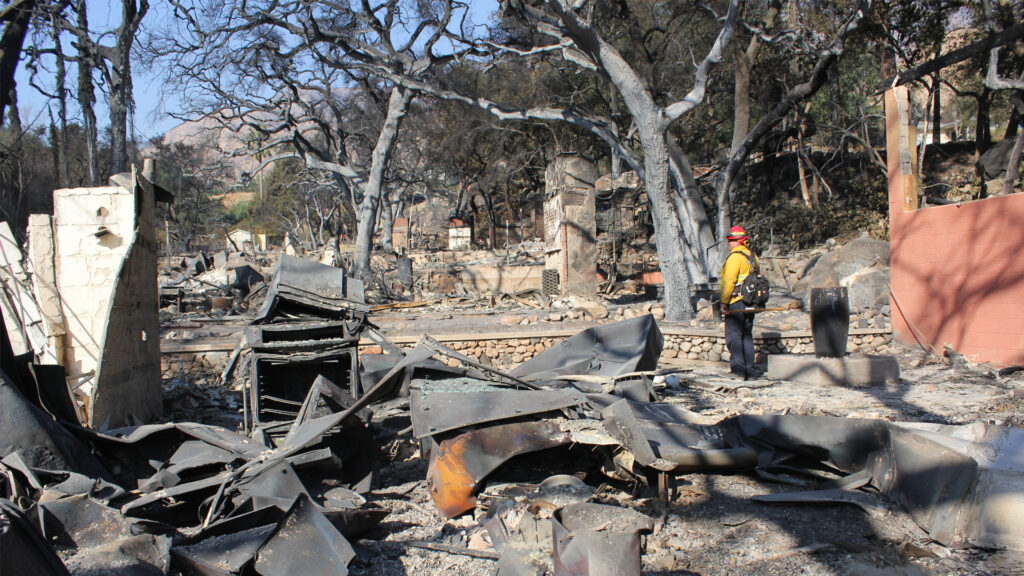
State Farm and Allstate have stopped accepting applications for home insurance in California, while Farmers pulled out of Florida and AIG curtailed sales in 200 zip codes across the country.
All told, insurers have dropped over 1.9 million home insurance policies nationwide since 2018, a congressional investigation found.
Elsewhere, big insurance is raising rates dramatically. Home insurance premiums have risen by over 40% across the United States over the past six years, according to Lending Tree. This year alone, State Farm raised rates 17% in California and 27% in Illinois.
Even as they raise rates, the same companies are facing mounting complaints for not paying claims months after a major disaster — when they’re needed the most.
State Farm is under investigation in California after hundreds of Eaton Fire survivors complained about delay and denial. “Trying to get them to answer our inquiries and reimburse for alternative living expenses is taking all my time and energy,” said one survivor who lost their home in January. “It should never be this difficult.”
In fact, major insurers are fueling the very climate crisis that’s destroying people’s homes.
Large insurance companies are also large institutional investors, investing their profits in stocks and bonds — including in the fossil fuel industry. Last year, the property insurance industry made $25.4 billion from underwriting, but $164.3 billion — over six times as much — from investments and capital gains, an analysis from Revolving Door Project found.
Even as the climate crisis renders much of the country uninsurable, the property insurance industry had $582 billion invested in fossil fuel companies driving the climate crisis in 2019, the most recent year for which aggregate data is available.
As of May 2024, State Farm had $20.6 billion invested in fossil fuels, according to the German nonprofit Urgewald. USAA, AIG, Nationwide, Allstate, Travelers, Liberty Mutual and The Hartford have all sunk billions into fossil fuels. By far the largest investor is Berkshire Hathaway, parent of Geico and General, with over $95 billion in fossil fuels — it’s actually the top investor in Chevron.
The resulting profits ballooned insurance executive compensation packages by 30% last year. Forty-two top executives at nine major insurance companies took home a total of $310 million, with Allstate CEO Thomas Wilson alone making $26.1 million.
By canceling policies, raising rates, not paying claims and investing in climate chaos, big home and auto insurance companies have revealed themselves to be anything but heroic.
Fortunately, they’ve never been our only option.
Local and regional insurance companies may not be household names, but they’re the real deal. They understand the needs of the people they insure and are often part of the communities they serve. These companies are just as financially sound as the big guys. Many have been serving their communities for decades.
Best of all, switching to a local or regional insurance company could save you money, since they don’t have multimillion-dollar advertising budgets.
Don’t know where to start? Green America, my organization, offers a Climate Smart Insurance Directory. It lists local and regional insurance companies in every state that invest little to nothing in the fossil fuel industry and have a rating of A- or above from AM Best. Find it at GreenAmerica.org.
We deserve better than villains investing in the same dangers they say they’ll protect us from. Buying local home and auto insurance may just help you find the real hometown hero you need.
Cathy Cowan Becker is the Responsible Finance Campaigns Director at Green America. This op-ed was distributed by OtherWords.org. Banner photo: Damage in Keaton Beach from Hurricane Helene (Staff Sgt. Jacob Hancock/U.S. Air National Guard, via Defense Visual Information Distribution Service).
Sign up for The Invading Sea newsletter by visiting here. To support The Invading Sea, click here to make a donation. If you are interested in submitting an opinion piece to The Invading Sea, email Editor Nathan Crabbe at ncrabbe@fau.edu.
