


By Rafe Pomerance, Upper Limit Project, and Kim Ross, ReThink Energy Florida
Floridians should take note because the fate of the Greenland ice sheet directly impacts sea level rise and the fate of the Florida coasts.
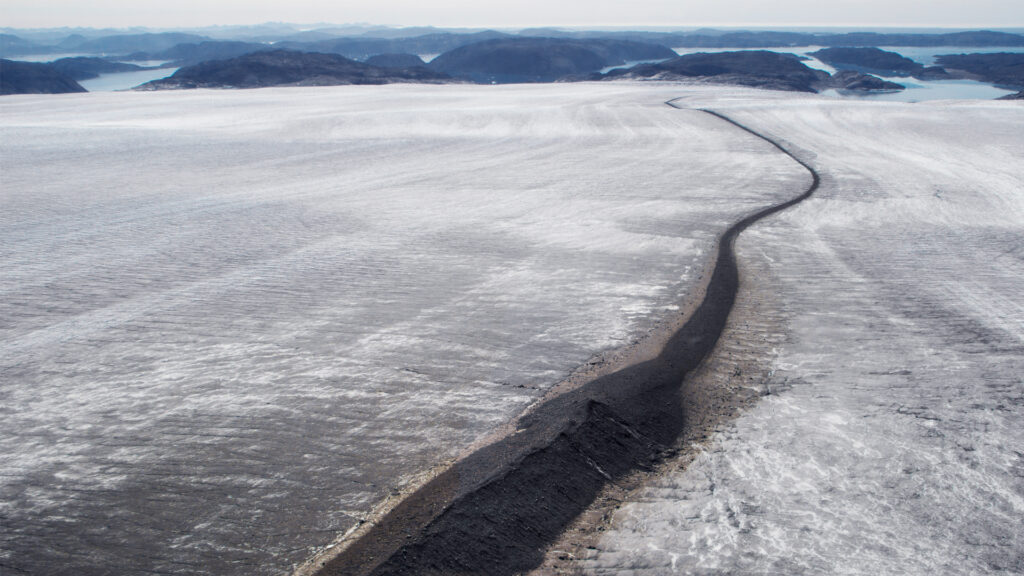
Greenland’s recent heat wave sent thermometers soaring on May 19 to 23 degrees F (or 13 degrees C) over the May average daily high, according to a World Weather Attribution analysis. Higher temperatures accelerate Greenland ice sheet melting and release ever-increasing amounts of fresh water into the oceans. A recent study found that the ice sheet is melting at a rate of 30 million tonnes per hour – a rate 20% higher than previously estimated.
An additional concern is that the influx of fresh water could be disrupting AMOC (Atlantic Meridional Overturning Circulation) ocean currents that move water up and down the Atlantic Ocean like a giant conveyor belt, circulating warm and cold water between the Arctic and the tropics. AMOC includes the Gulf Stream that flows around Florida, up along the east coast of the United States and on to the Arctic Ocean.
Some scientists are concerned that increased ice melt and fresh water flow into the ocean are pushing AMOC toward full-scale collapse. A slower AMOC may already be increasing sea level rise and amplifying extreme weather events, including heat waves, tropical storms and hurricanes. Impacts on the Florida coast have been dramatic and will likely become more severe and more frequent as AMOC weakens.
President Donald Trump has placed Greenland in the spotlight with his boasts that the U.S. would acquire Greenland “one way or the other” for national security reasons and access to critical metals. Clearly, he has not considered the real implications for his state of residence. The president’s anti-climate action agenda (e.g., withdrawing the U.S. from the U.N. Paris Climate Agreement for the second time, championing fossil fuels and putting a damper on clean energy development) will slow mitigation of climate change, accelerate Greenland ice sheet melting and risk putting coastal communities, including his adopted city of Palm Beach, underwater.
Floridians are no strangers to extreme weather, and NASA data points to a continuous rise in extreme weather events since 2020. The correlation between a warming planet and extreme weather is not new, but The Guardian reports that researchers are surprised by the rapid increase and intensity of weather events around the planet. If temperatures continue to rise from runaway climate change, the ongoing ice melt could collapse the AMOC and contribute to submerging the world’s coastlines, devastating coastal communities, economies, infrastructure and military installations.

The Paris Climate Agreement established the 1.5 degrees Celsius threshold as a global temperature rise limit that is vital but not widely understood. To spur more urgent action, we are calling for a second metric – establishing an upper limit to sea level rise – defined as limiting the rate of increase to the lowest possible level. Floridians can visualize the damage and destruction rising sea water is already causing to coastal areas, underscoring the urgency of reducing greenhouse gas emissions as envisioned by the Paris Climate Agreement.
To safeguard against worst-case scenarios of the direct collapse of the Greenland ice sheet and the possibility of an AMOC ocean current collapse – and the subsequent additional havoc it could wreak on Florida’s coastlines – it is time to set an upper limit on sea level rise.
Learn more at sealevelrise-upperlimit.org.
Rafe Pomerance is a former deputy assistant secretary of state and an advisor to the Upper Limit Project. Kim Ross is co-founder and co-director of ReThink Energy Florida. Banner photo: Part of the Greenland ice sheet (iStock image).
Sign up for The Invading Sea newsletter by visiting here. To support The Invading Sea, click here to make a donation. If you are interested in submitting an opinion piece to The Invading Sea, email Editor Nathan Crabbe at nc*****@*au.edu.
