


By Younes Ben Zaied, EDC Paris Business School; Haithem Awijen, INSEEC Grande École, and Nidhaleddine Ben Cheikh, ESSCA School of Management
The Trump administration is decreasing the attention federal regulators pay to pipeline leaks. But leaks from natural gas pipelines don’t just waste energy and warm the planet – they can also make the air more dangerous to breathe. That air pollution threat grows not just in the communities where the leaks happen but also as far as neighboring states, as our analysis of gas leaks and air pollution levels across the U.S. has found.
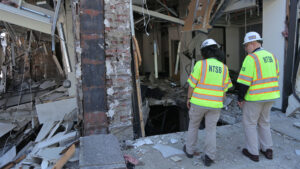
For instance, in September 2018 the Merrimack Valley pipeline explosion in Massachusetts, which released roughly 2,800 metric tons of methane, damaged or destroyed about 40 homes and killed one person. We found that event caused fine-particle air pollution concentrations in downwind areas of New Hampshire and Vermont to spike within four weeks, pushing those areas’ 2018 annual average up by 0.3 micrograms per cubic meter. That’s an increase of about 3% of the U.S. Environmental Protection Agency’s annual health standard for PM2.5. Elevated air pollution then showed up in New York and Connecticut through the rest of 2018 and into 2019.
In our study, we examined pipeline leak data from the U.S. Pipeline and Hazardous Materials Safety Administration from 2009 to 2019 and data about the state’s level of small particulate matter in the air from Columbia University’s Center for International Earth Science Information Network. We also incorporated, for each state, data on environmental regulations, per-capita energy consumption, urbanization rate and economic productivity per capita.
In simple terms, we found that in years when a state – or its neighboring states – experienced more methane leak incidents, that state’s annual average fine-particle air pollution was measurably higher than in years with fewer leaks.
Methane’s role in fine‑particle formation
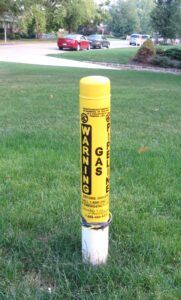
Natural gas is primarily made of methane, a powerful greenhouse gas. But methane also helps set off chemical reactions in the air that lead to the formation of tiny particles known as PM2.5 because they are smaller than 2.5 micrometers (one ten-thousandth of an inch). They can travel deep into the lungs and cause health problems, such as increasing a person’s risk of heart disease and asthma.
The role of methane in exacerbating air pollution is well researched. In short, when methane is released into the atmosphere, it reacts with other chemicals that are already there, such as nitrogen oxides and volatile organic compounds. Often, sunlight triggers these reactions, which then form a type of fine particulate matter called “secondary organic aerosols,” which make up between 20% and 50% of total ambient PM2.5 mass.
So, when natural gas leaks, energy is wasted, the planet warms and air quality drops. These leaks can be massive, like the 2015 Aliso Canyon disaster in California, which sent around 100,000 metric tons of methane into the atmosphere.
But smaller leaks are also common, and they add up, too: Because the federal database systematically undercounts minor releases, we estimate that undocumented small leaks in the U.S. may total on the order of 15,000 metric tons of methane per year – enough to raise background PM2.5 by roughly 0.1 micrograms per cubic meter in downwind areas. Even this modest increase can contribute to health risks: There is no safe threshold for PM2.5 exposure, with each rise of 1 microgram per cubic meter linked to heightened mortality from cardiovascular and respiratory diseases.
Preventing leaks to protect climate and health
The most direct way to reduce this problem is to reduce the number and quantity of methane leaks from pipelines. This could include constructing them in ways or with materials or processes that are less likely to leak. Regulations could create incentives to do so or require companies to invest in technology to detect methane leaks quickly, as well as encourage rapid responses when a leak is identified, even if it appears relatively small at first.
Reducing pipeline leaks would not just conserve the energy that is contained in the methane and reduce the global warming that results from increasing amounts of methane in the atmosphere. Doing so would also improve air quality in communities that are home to pipelines and in surrounding areas and states.
Younes Ben Zaied is a full professor in finance at EDC Paris Business School; Haithem Awijen, is a finance teacher at INSEEC Grande École and Nidhaleddine Ben Cheikh is an associate professor of economics at ESSCA School of Management.
This article is republished from The Conversation under a Creative Commons license. Read the original article. Banner photo: Pipes in a natural gas transmission network (iStock image).
Sign up for The Invading Sea newsletter by visiting here. To support The Invading Sea, click here to make a donation. If you are interested in submitting an opinion piece to The Invading Sea, email Editor Nathan Crabbe at ncrabbe@fau.edu.
