


Editor’s Note: Dispatches from a Sinking State is a contributor series from The Marjorie featuring first-person accounts of the environmental changes Floridians are witnessing across the state. This essay was funded by the Schooner Foundation.
On Feb. 27, I received the same email as at least 880 employees at the National Oceanic and Atmospheric Administration. The email arrived just before 4 p.m. from Vice Admiral Nancy Hann, NOAA’s acting administrator, informing me that I would be fired effective at 5 p.m. that day.
The last email I’d received from Vice Admiral Hann was just a few weeks prior, when she had congratulated me on being awarded the “2024 Team Member of the Year” for the Southeast Fisheries Science Center.
I was fired along with every other “probationary employee” I knew. To explain the term, all new federal hires serve a probationary period during which they lack most civil service protections. I was fulfilling my one-year probation because I’d been promoted.
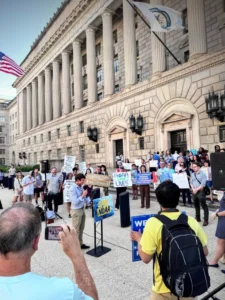
It took over 15 years of work to earn it, including a Ph.D., postdoctoral research and then years working at NOAA. I’d poured my life into my work. I didn’t just lose a job, I lost core pieces of my identity, my community and a sense of purpose.
Before I studied fish and fisheries with equations and computer models, I hunted them with a speargun.
After college, I moved to Key West, worked on boats and learned to spearfish. Later, I apprenticed under Captain Steve Park, who became like a second father, on the Native Diver II in Jacksonville. I could be trusted not to kill myself diving solo, and I’d gut fish and swap tanks and scrub the deck without needing to be asked, so I’d be invited on commercial trips. It gave me the opportunity to spend a lot of time underwater.
Fish have personalities. Red snapper are too curious for their own good. If you pick up sand from the bottom and throw it over you, they’ll come down from the water column to investigate. Hogfish are just dumb. If you miss one, which you’d never admit, it might stick around and let you try again. Gag grouper are smart. If you don’t have a speargun, they’ll follow you to see what you stir up. When you have a gun, you can’t be too eager. Pretend you’re doing something else until you’re ready to line up your shot.
My relationship with the ocean is deep and complex. I love studying it, the creatures that live in it and the people who depend on it. It’s an awe-inspiring bioenergetic system and a wilderness I hope to preserve for future generations. It’s also a resource that we rely on for food and livelihood. These worldviews share the same long-term goal: a healthy ecosystem.
But ocean ecosystems are changing. Within a relatively short time, I’ve watched coral reefs in the Florida Keys and on St. Croix be ravaged by marine heatwaves, bleaching events and diseases. Elkhorn stands that once teemed with fish sit bleached and barren, their skeletons fuzzy with algae.
Coral cover in the Florida Keys has reduced by over 90% over the last four decades. Today, in the summer of 2025, we are in yet another global mass bleaching event. This one has already affected 84% of the world’s coral reef areas. By 2050, these mass bleaching events could become an annual occurrence. By 2100, projections by the Intergovernmental Panel on Climate Change (IPCC) estimate that corals globally may decline by a further 70-90% under moderate warming scenarios and by more than 99% under extreme scenarios.
Many global fisheries are also in decline. Last summer, I dove with colleagues in the Mediterranean. The reefs were gorgeous, but in all my dives, I saw only a few fish larger than the size of my hand. Most of those were non-native species that had migrated through the Suez Canal.
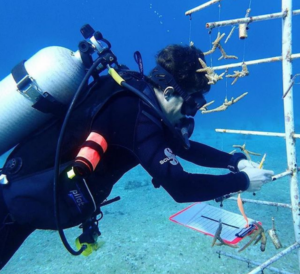
Overexploitation has drastically reduced populations of large predatory fish worldwide. The largest predators have been the most sought-after and exploited, including sharks, tunas, billfish and large reef- or rock-associated fishes. These large-bodied, longer-lived species are often the most challenging populations to rebuild, and their removal fundamentally alters the structure of marine food webs. Current data by the Fisheries and Aquaculture Organization of the United Nations shows that over 35% of global fish stocks remain overfished. In the Mediterranean Sea, more than 66% of their stocks are overfished.
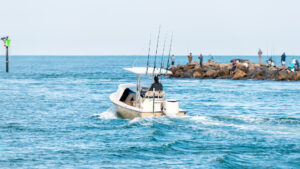
The loss of fisheries isn’t just ecological; it’s nutritional, economic and cultural. For billions of people, fish are a primary source of protein. In Florida, recreational and commercial fishing contribute over $30 billion to our economy. For many in our coastal communities, fishing is a way of life or a means of making a living.
For fisheries, it’s not all doom and gloom. Although the success stories in fisheries may not be as sensational as the collapses, many large stocks are sustainably managed with effective fisheries governance.
In the United States, eating American-caught seafood means consuming sustainably caught seafood. By law, the Magnuson-Stevens Fishery Conservation and Management Act requires that U.S. fisheries stocks be healthy as evaluated by the best available science. Since implementing fishery management plans over the past three decades, the U.S. has rebuilt over 50 fish stocks to the point where 94% of our fish stocks are not overfished.
The United States is a global leader in effective fisheries management. This has been built on decades of investment in science-based management, which relies on rigorous stock assessments. These involve statistical and mathematical modeling that integrates survey data, catch records and environmental information.
NOAA’s National Fisheries Service provides the science to support sustainable American fisheries, which are worth over $320B annually. Losing scientists specializing in quantitative modeling will lead to increased uncertainties in aquaculture development, food security and marine biodiversity. Less robust fisheries management will ultimately hurt American seafood production, which could increase reliance on foreign imports to meet our seafood demands.
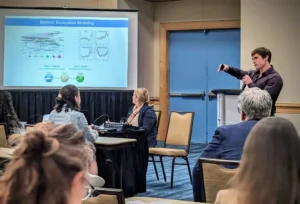
I worked at the Southeast Fisheries Science Center to support the decision-making needs of the Fishery Management Councils in the South Atlantic, Gulf of Mexico and the U.S. Caribbean.
My team’s research supported ecosystem-based management (EBM) for fisheries. This work enhances traditional fisheries management assessments, which use stock assessments to evaluate a single species.
Traditional fishery management works, but it can also be improved. EBM recognizes that the fish population being assessed is part of a broader ecological community, where they act as both predators and prey and are influenced by environmental changes to the ocean and its habitats.
Just as important, EBM integrates social and economic dynamics. For example, most of our southeastern fisheries have both commercial and recreational sectors, which can be optimized in different ways. The objective for the commercial fishery is to maximize profits, and the right management practices can help fishers increase revenues and lower costs. Meanwhile, recreational fishers may find higher value in having more opportunities to fish or having higher-quality fishing experiences, for example, catching larger fish rather than just more fish.
EBM also recognizes that fisheries are one of many ocean uses, alongside other recreational and industrial enterprises, such as tourism, offshore energy and shipping. We supported holistic management to optimize a sustainable “Blue Economy.”
Fishers and managers know firsthand that the physical, ecological and socioeconomic environments in fisheries have changed, and will continue to do so. The Fishery Management Councils, seeking science to make the best-informed decisions for their stakeholders, have and continue to request EBM research.
The science to support EBM is now possible due to recent technological advances. Today, we can collect and synthesize enormous amounts of data and run large computational simulations.
Our research integrated forecasts from NOAA ocean models into fisheries assessments to inform policy decisions. We were working to test future management scenarios and evaluate trade-offs: tools to guide proactive management.
In fact, our work directly aligned with President Donald Trump’s priorities for U.S. fisheries. The April 17 Executive Order for Restoring American Seafood Competitiveness instructs that “the Secretary of Commerce shall take all appropriate action to modernize data collection and analytical practices that will improve the responsiveness of fisheries management to real-time ocean conditions.”
The science of developing physical and biogeochemical oceanographic forecasts is expressly linked to future atmospheric conditions. Our work interfaced with climate science, which may have made us a target.
For fisheries, the impacts of climate change are not necessarily all dire. Some areas and fisheries will be more impacted than others, and not all impacts will be negative. My ecosystem modeling simulations, for example, examined both the “winners” and “losers” under future ocean conditions. While some species and fisheries may require a more precautionary approach, others may benefit from changing conditions and be able to withstand heavier fishing pressure.

As a former NOAA scientist, it’s thus particularly upsetting to see the agency portrayed as a climate alarmist, as NOAA science finds itself amid a culture war over climate change. Earlier this summer, the NOAA National Centers for Environmental Information stopped tracking the prevalence of billion-dollar weather disasters. All work on the next National Climate Report has now halted after all of its authors were dismissed. Although budgeting is still being worked out in Congress, a recent budget memorandum (known as a “passback”) ends support for the Regional Climate Data and Information and dissolves NOAA’s Office of Atmospheric Research.
Losing such research puts our fisheries, oceans and weather services at risk. We were using this science to inform proactive fisheries management decisions.
For the National Weather Service, it means losing the data and research enterprises that underpin weather forecasting. Without this research, significant data gaps will develop and worsen, leading to less accurate and less timely weather forecasts. This is already the case in regions with limited scientific infrastructure, where inadequate forecasting capabilities exacerbate the impacts of extreme weather events.
Across NOAA and the federal government, top-performing scientists were fired simply because they were easy to dismiss.
The dismissals have been labeled a wholesale assault on U.S. science. There was no review of our merits, how we contributed to our agency’s mission, nor of the impacts of the loss of our work to the American communities we served.
In a recent poll by Nature, about three-quarters of U.S. scientists reported considering leaving the country. My closest colleague at NOAA, a brilliant oceanographer and one of the hardest-working people I’ve ever known, has decided to move her family to work in Brazil. She’s among the other fired scientists I know who are being recruited by other countries.
We are losing expertise not only from elite employees, but also from future generations of talent. Unfortunately, the federal government is no longer a reliable employer for scientists.
Many will turn to the private sector, where their research may improve insurance companies’ risk analyses or forecasting for hedge funds. Their research will be proprietary and dedicated to increasing corporate profits, rather than improving American lives and communities.
A fisheries science quip is that “if the conservation groups and the fishing groups are all mad at you, you probably made the right decision.” Now, I’ve seen both groups from both sides, who are often very upset with us, aligned for the first time I’ve ever seen in asking the federal government to stop these cuts to NOAA.
We all want the same thing: a healthy ecosystem. In other words, lots of fish, now and forever, and the science to make that possible.
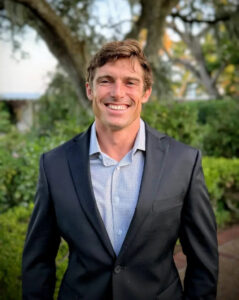
For those fired, we are now suddenly rebuilding our careers and possibly changing our paths. For me, on some days, I’ll feel that I’ve lost the purpose I’d spent 15 or more years working towards. My ethos aligned with the mission of NOAA: science, service and stewardship. I was proud to serve the American public and proud to conduct research that could improve people’s lives and livelihoods by stewarding our ocean environment.
The projects I led are ongoing, and I continue to work on them. I can’t let them go and am sometimes upset with myself for this. I should be focusing on the contract and consulting work that pays my bills. I should be sending out more job applications. But I often still find myself working on projects I no longer lead. It’s validating to know the science was valuable enough to survive and that the teams I built are resilient enough to continue. But it’s painful to watch it move on without me.
For society, the consequences may be long-lasting. Dismissing scientists across our government ultimately weakens America’s ability to make informed decisions in the face of pressing national and global challenges. It slows innovation and shrinks our foresight. And our ability to steward the ocean — to understand it, protect it and benefit from it — will be compromised. Some of these impacts may not be immediate or dramatic. They’ll be slow and quiet. They’ll compound. And they may last for generations.
Yet the ocean remains: vast and in need of understanding. Its life and systems are changing. And those of us fired, my friends and colleagues, we’re still scientists. Many are still trying to do research, still collaborating, still trying to protect marine ecosystems and the communities that depend on them. You can’t fire our purpose. Some of us will continue to study the ocean, how we can, for as long as we can.
Holden Earl Harris, Ph.D., is a quantitative ecologist and fisheries scientist. He was a research fishery biologist with NOAA’s Southeast Fisheries Science Center in Miami, FL. Along with several jobs, he currently conducts applied marine and coastal research at the University of Florida.
This article first appeared on The Marjorie and is republished here under a Creative Commons Attribution-NoDerivatives 4.0 International License. Banner photo: Fish swim in a coral reef near the Florida Keys (iStock image).
Sign up for The Invading Sea newsletter by visiting here. To support The Invading Sea, click here to make a donation. If you are interested in submitting an opinion piece to The Invading Sea, email Editor Nathan Crabbe at ncrabbe@fau.edu.
