


By Dennis McGillicuddy, Woods Hole Center for Oceans and Human Health
It’s been more than 50 years since I left Sarasota to pursue a career in marine science, but one thing hasn’t changed: In Florida, the ocean means business. And like any successful business, it thrives on knowledge, planning and investment.
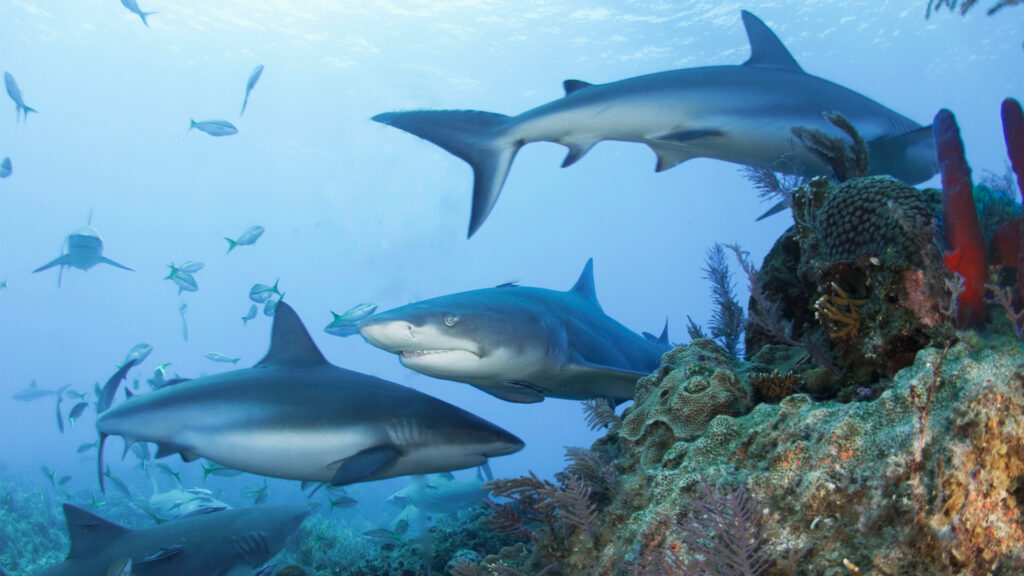
When I was a youngster fascinated by sharks, my mother arranged a meeting with David Baldridge at Mote Marine Laboratory. He had just completed a study for the U.S. Navy on shark attacks and gave me a copy, which I treasured. That meeting didn’t launch me into shark research, but it did lead to a lifelong career in ocean science.
Today, I work at the Woods Hole Oceanographic Institution, where I study phytoplankton and other forms of marine algae that are the foundation of the oceanic food webs — which are exhibiting changes that have implications for humans and wildlife alike.
From sharks to plankton, ocean life matters deeply to Florida, which is home to one of the nation’s largest marine economies. More than half a million Floridians work in ocean-related sectors, generating over $20 billion in wages and contributing nearly $40 billion to the state’s gross domestic product. The biggest piece of that is tourism — an industry that depends on healthy beaches, coral reefs, mangroves and offshore waters.
My own research focuses on marine algae that sometimes form harmful algal blooms, such as red tides that can kill fish, sicken people and devastate coastal businesses. I also study Sargassum, a floating seaweed, which has begun arriving in record amounts, creating smelly, costly messes on beaches from the Keys to Miami and beyond.
In 2018, a major red tide along the Gulf Coast was estimated to have cost Florida $2.7 billion — mostly in lost tourism. Coastal counties now spend between $35 million and $45 million a year each cleaning up Sargassum.
Managing these threats requires information that only science can provide. Satellite systems like NASA’s MODIS and algorithms pioneered by the University of South Florida’s Optical Oceanography Laboratory can spot and track Sargassum blooms before they make landfall.

Scientists at the Florida Fish and Wildlife Research Institute, with whom I collaborate, keep careful watch on critical parts of Tampa Bay and the West Coast for signs of red tides. And robotic sensors on drifters and moorings funded by the National Oceanic and Atmospheric Administration and U.S. National Science Foundation help track warm waters that fuel hurricanes. These tools provide resource managers with valuable information to predict and prepare for potential threats, such as deploying cleanup crews, alerting public health officials, or temporarily closing fisheries.
Many of these critical response systems are at risk. Reducing federal support for ocean science will make all Floridians more vulnerable — both environmentally and economically. Moreover, many state-funded programs rely on ocean observing systems sustained by federal funds, compounding potential impacts.
The ocean, and our ability to observe and predict its changes, will always have implications for Florida’s future. In a state where so much rides on (and under) the water, ocean knowledge isn’t a luxury. It’s a necessity.
Dennis McGillicuddy is the chief science officer of the Woods Hole Oceanographic Institution and director of the Woods Hole Center for Oceans and Human Health. This opinion piece was originally published by the Tampa Bay Times, which is a media partner of The Invading Sea. Banner photo: A Florida beach covered in Sargassum (iStock image).
Sign up for The Invading Sea newsletter by visiting here. To support The Invading Sea, click here to make a donation. If you are interested in submitting an opinion piece to The Invading Sea, email Editor Nathan Crabbe at ncrabbe@fau.edu. To learn more about Florida’s ocean economy, also known as the blue economy, watch the video below.
