


By Abigail Trachtenberg, genCLEO
Across the country, universities are racing to address climate change. They are designing greener campuses, investing in resilience efforts and educating the next generation of leaders to thrive in a warming world. In Florida, they’re being audited for it, not because these programs are wasteful, but because they’ve become political targets.
This spring, Gov. Ron DeSantis’ new effort to mimic the federal Department of Government Efficiency (DOGE) ordered public colleges to turn over six years of records in an attempt to cut what they consider “inefficiencies.” Led by Chief Financial Officer Blaise Ingoglia – who calls the effort the Florida Agency for Fiscal Oversight (FAFO) – their stated goal is to “ensure government efficiency, transparency, and accountability at all levels of government … including state colleges and universities,” according to a press release from the governor’s office.
As a sustainability studies major and lead organizer for genCLEO, a youth-led climate justice organization at the University of Florida, I am both concerned and exasperated by that statement. Auditing a public university under the guise of “government efficiency” becomes political the moment the programs targeted are those with “sustainability” and “climate” in their names.
State universities, while taxpayer-funded, are not partisan agencies. Their purpose is to prepare students for the future by giving them the knowledge needed to confront climate challenges and the skills to build a more resilient and efficient world. When initiatives in sustainability and climate justice are cut, our universities lose sight of their purpose.
There’s irony in insisting that sustainability and resilience are inefficient when they’re inherently about smarter spending. Sustainability reduces waste and saves money, while resilience prepares communities before disasters strike.
The U.S. Chamber of Commerce reports that “on average, for every $1 spent on resilience, communities save $7 on economic costs alone.” Gutting sustainability doesn’t make our universities “efficient” – it makes them weaker, more vulnerable and more expensive to run in the long term.
For almost 20 years, UF’s Office of Sustainability has been the backbone of campus climate action. It spearheaded the university’s Climate Action Plan, set green building standards and provided students invaluable internship and educational opportunities. Shutting it down not only stalls momentum, but signals that UF is stepping back from its responsibility to lead, leaving students and Gainesville without a crucial resource for resilience and innovation.
We cannot accept this rollback quietly. Students, faculty, alumni and community members must insist that sustainability is non-negotiable. Hurricanes will continue to increase in intensity. Heavy rains will keep flooding our streets. In a climate-vulnerable state, sustainability cannot be optional.
If higher education cannot stand up for the programs that prepare us for the realities of a warmer world, then we must ask: What exactly are we being educated for? Now is the time to speak up and hold power accountable. The next UF Board of Trustees meeting is on Dec. 4, but we cannot wait until then to raise our voices. Join genCLEO UF and follow us for ongoing updates on campus policy changes, involvement opportunities and learn more ways to take action for climate justice at UF.
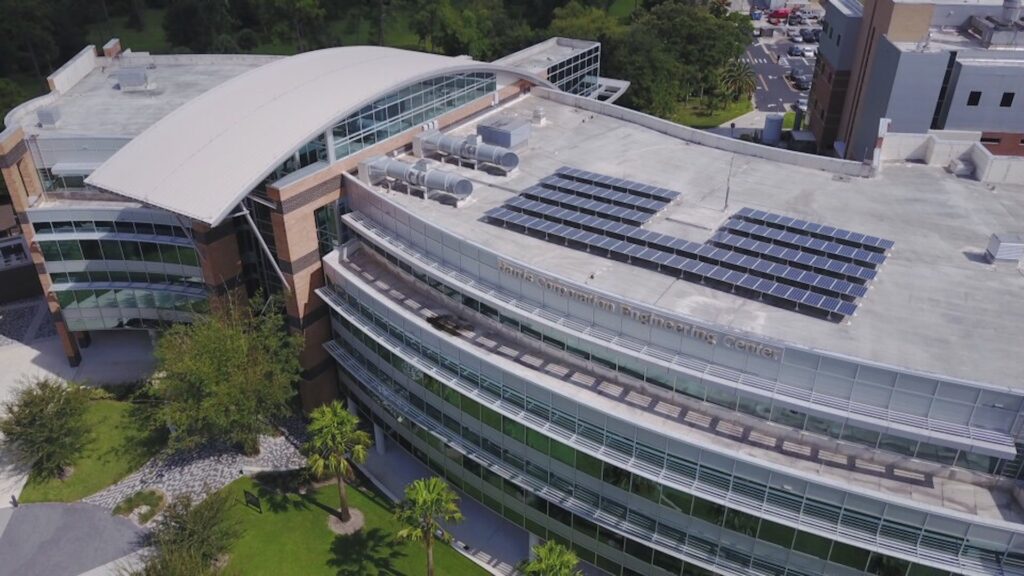
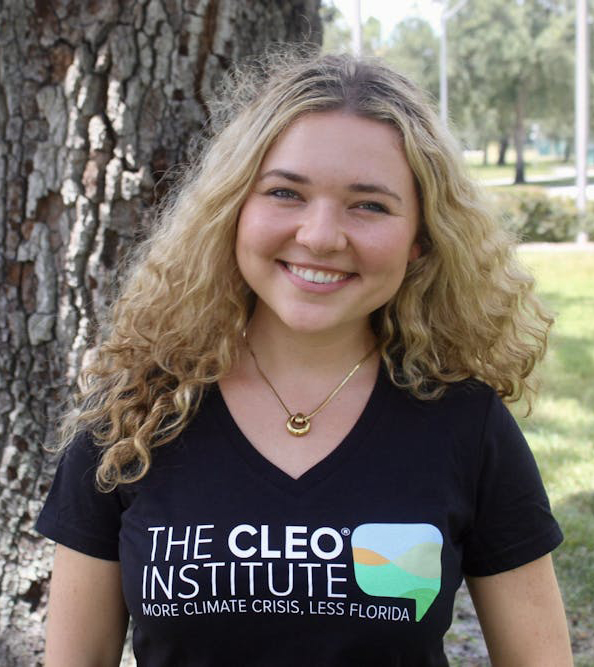
Abigail Trachtenberg is a sophomore sustainability studies student at the University of Florida and the Gainesville lead organizer for genCLEO, a youth-led climate justice organization. Banner photo: Another view of solar panels on the UCF engineering building (Michael Rathbun/U.S. Department of Energy, Public domain, via Wikimedia Commons).
Sign up for The Invading Sea newsletter by visiting here. To support The Invading Sea, click here to make a donation. If you are interested in submitting an opinion piece to The Invading Sea, email Editor Nathan Crabbe at ncrabbe@fau.edu.

Nice work, Abigail. I’m sorry that UF has lost its vision in this regard. Another irony is that solar power has become the affordable option, and placing panels on every building would make UF a leader instead of a follower of fossil fools.