


By Ed Chiles
I was born and raised in Florida, and from my earliest days I’ve been drawn to the land, the water and the life they support. That deep-seated connection has shaped my career and, now, my work today — whether through farming, the hospitality industry or projects that reconnect communities with the land and waters that sustain them. I believe that agriculture is one of the most undervalued and underutilized solutions to the climate and environmental challenges we face in our world today.
Here at Gamble Creek Farms in Parrish, Florida, we’ve spent more than a decade experimenting with regenerative and circular practices. An agricultural “circular system” is a farming method that reuses resources, like turning food scraps into compost or recycling rainwater to irrigate fields. By doing this, it ensures nothing is wasted, mimicking our environment’s natural systems.
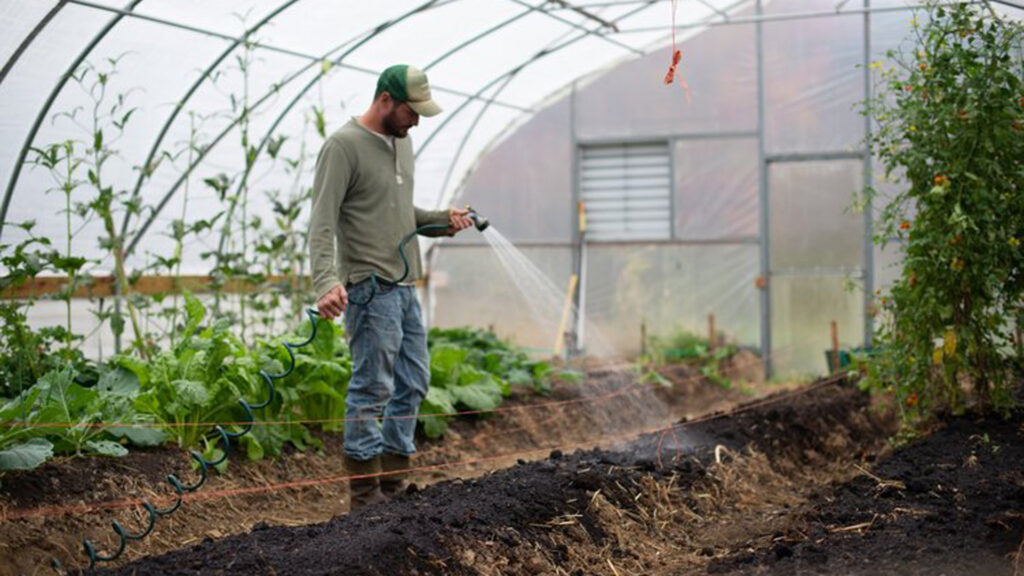
We live in a time when many farmers struggle to make even the smallest profit. These practices aren’t just about doing the “right thing.” It’s been a practical, bottom-line lesson for us on how circular systems pay off.
Circular systems can be the difference between red ink and resilience. We’ve seen firsthand how composting reduces excess waste while improving soil fertility, thus creating less of a need for tilling. Healthier soil holds more water and nutrients, cutting input costs for fertilizers and irrigation. Likewise, more resilient plants can withstand pests and disease, lowering chemical inputs that burden both our farm and waterways.
The result? Food that is more nutrient-dense, a more productive farm and healthier land that’s in it for the long haul, for both the environment and the farmer. Every one of these choices adds up to significant savings, helping farmers stay profitable while making their operations more sustainable.
This circular philosophy led me to partner with Shogun Farms, a Florida business tackling our state’s invasive wild boar problem. With more than half a million hogs spread across all 67 counties, these animals cause billions in damage by tearing up crops, destroying ecosystems, and undermining coastal projects.
While Florida relies on trapping, hunting and landowner control to manage the population, Shogun Farms takes a different approach. They humanely trap the pigs, feed them surplus food that would otherwise go to waste and transform the challenge into high-quality pork products — turning a costly problem into a sustainable opportunity.
This idea reflects what we do at Gamble Creek Farms: waste nothing, add value and find circular solutions. To me, farming and environmental care go hand in hand.

Likewise, our work also extends to the water. We’re restoring our state’s coastal health with oysters, clams and seagrass by partnering with the Gulf Shellfish Institute and the Blue Community Consortium.
For example, shellfish clean and recycle nutrients, while seagrass captures carbon, protects shorelines, and provides a habitat for marine life. Together, they boost fisheries, reduce storm surge, and show how working with nature benefits us all. This is just a small slice of what a circular system can do for our land.
But Florida must act. Too often, agriculture — both on land and in water — is left out of the environmental conversation as being a productive contributor. Yet agriculturalists were the first stewards of the land. With that being said, we face a harsh reality: Once farmland and waterfronts are lost to development, they’re gone forever. Protecting them is not just an agricultural issue — it’s a public one.
Florida has always been a place where people and nature are connected. If we support regenerative practices like circular systems, our state can lead the way for a more resilient and sustainable future for all.
Ed Chiles is a lifelong Floridian, entrepreneur, advocate for regenerative agriculture and a leader of Florida Smart Agriculture. He operates Gamble Creek Farms in Parrish, Florida, and partners with Shogun Farms, a project that transforms the invasive wild pig challenge into artisanal food products. Banner photo: Another image of Gamble Creek Farms (Image courtesy of Gamble Creek Farms).
Sign up for The Invading Sea newsletter by visiting here. To support The Invading Sea, click here to make a donation. If you are interested in submitting an opinion piece to The Invading Sea, email Editor Nathan Crabbe at nc*****@*au.edu.
