


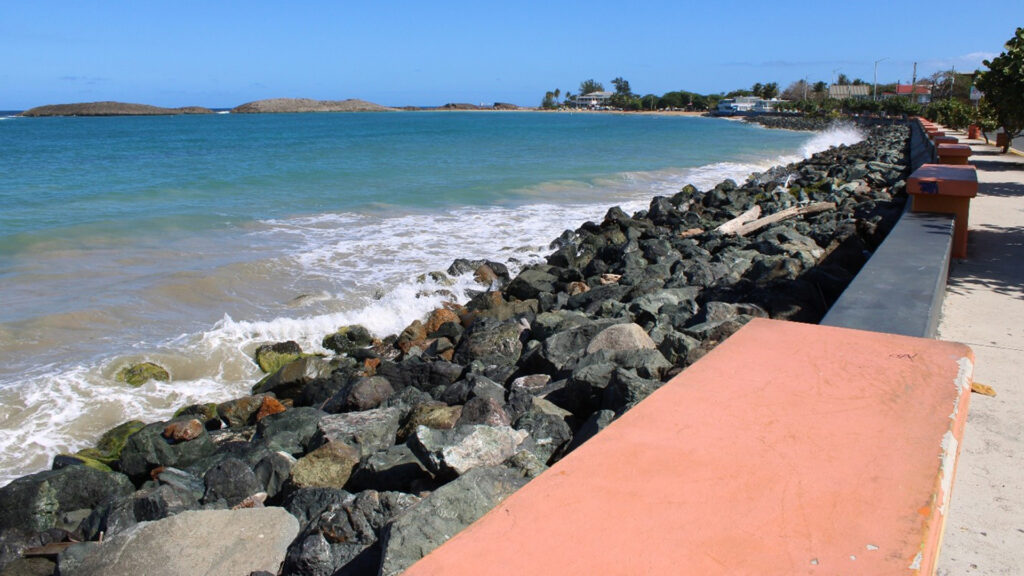
I took these photographs during a visit to Vega Baja, a coastal town in the central north of the main island of Puerto Rico, back in 2024. The promenade on the right edge of the photograph above faces the sea.
In the curve up ahead is the municipal beach, pictured in the photo below, which is very beautiful and pleasant.
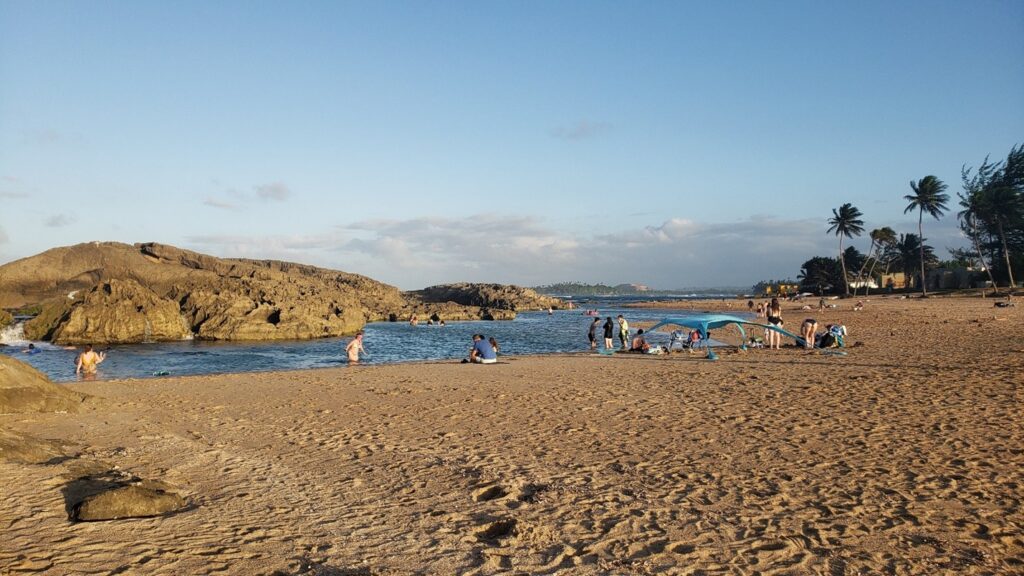
This area, known as Puerto Nuevo, is a combination of natural and constructed features designed by humans to shore up the beach and coastline for fishing and leisure. Over time, most of the plentiful sand has disappeared or been lost to the rising sea.
When I was a child, houses like the one in the photo below barely hung out over the sea. No doubt they were impressively cavalier in their design, but they weren’t dangerous. Now many of these homes and businesses are abandoned as the rising tides make their foundations increasingly unstable. Some have already crumbled into the sea.
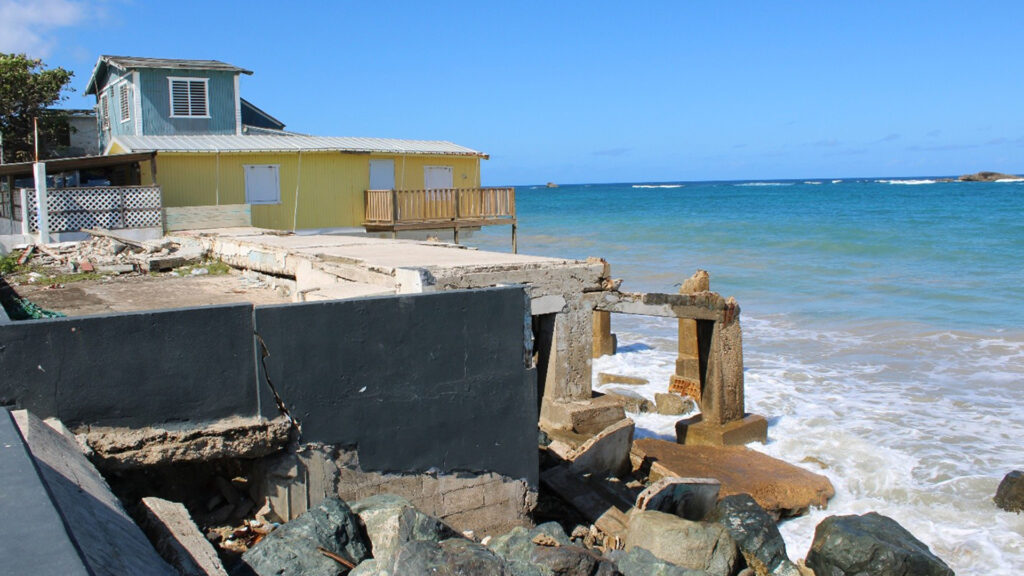
Some of these houses were restaurants. They represented a particular type of family restaurant that served seafood just fished from the water. People would go there to eat fresh fish with tostones on weekend excursions and dates. This version of local Puerto Rican life based on fishing cultures is just as threatened with disappearance by dispossession as are the structures themselves by rising sea levels.
At what point will there be a concerted governmental effort to retreat from and demolish decayed coastal structures so they do not become a dangerous nuisance, preventing safe access to the new beaches and coastal areas that will inevitably form when the sea rises another foot or two? What will these new beaches look like in the future? Where will Puerto Rican families without money to pay increasingly high housing costs go?
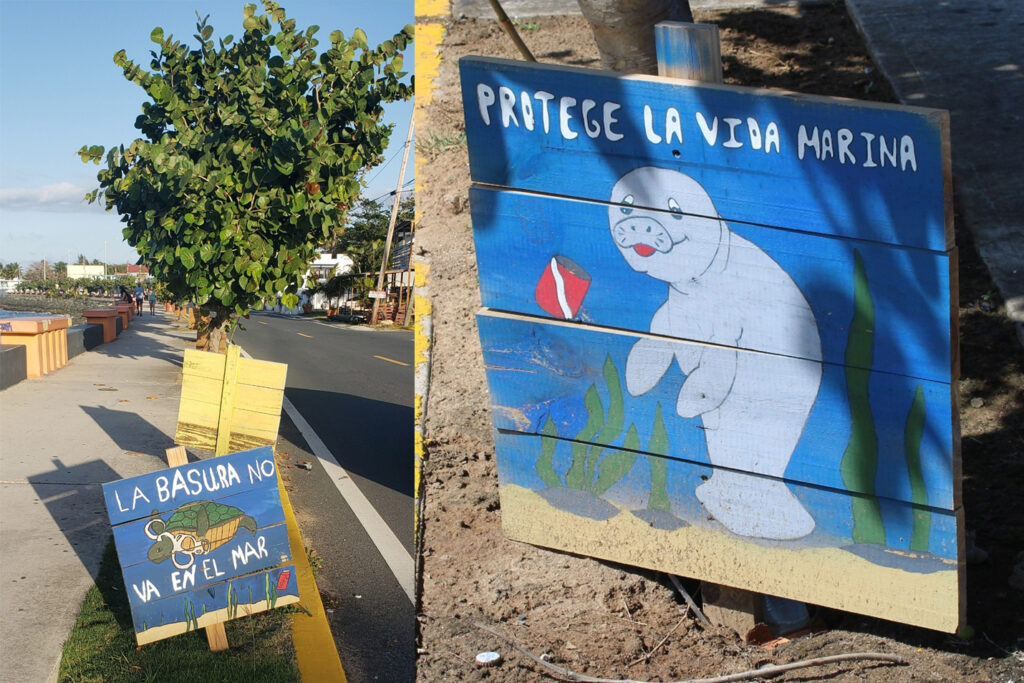
Signs like the those above (which translate to “Trash does not belong in the sea” and “Protect marine life”) educate visitors to the malecón, or coastal promenade, near the municipal beach about environmental concerns.
Seeing them lifted my spirits and brought joy to my heart as they give proof that residents in the community continue to care deeply about environmental issues and are organizing to raise awareness in the area about the fragility of marine life. Mobilizing art through community action can be an important part of protecting Puerto Rico’s natural resources.
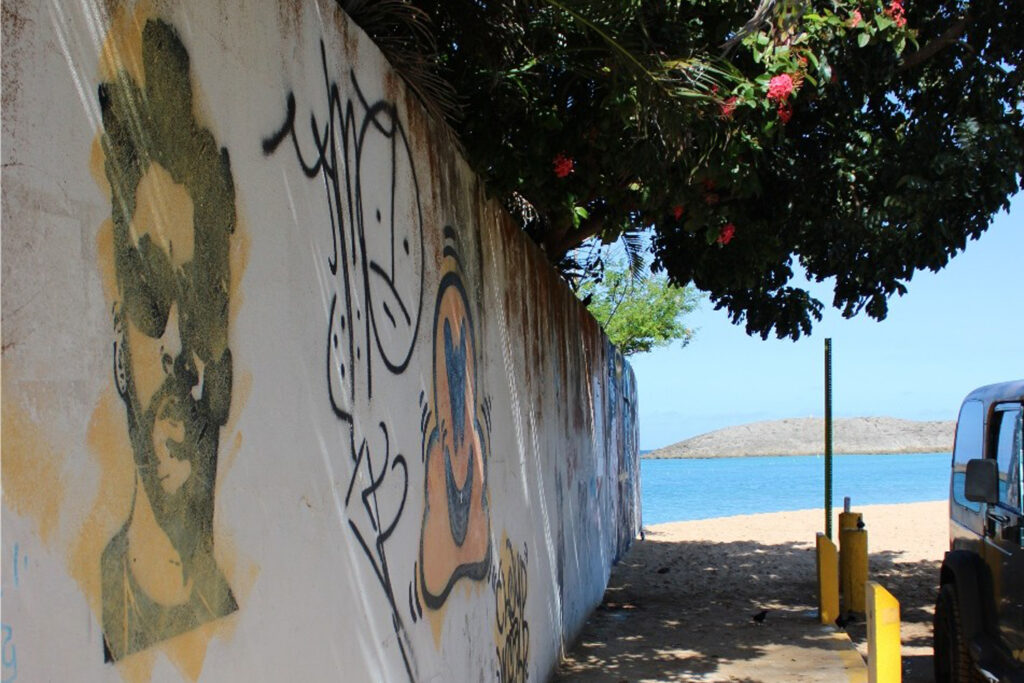
Vega Baja also happens to be the birthplace of one of the most famous contemporary musical artists in the world, Puerto Rico’s own Benito Antonio Martínez Ocasio, better known as Bad Bunny. In the photo above, a high-quality stencil of his likeness graces the walls leading from the parking lot to the municipal beach. No words are necessary to identify him as his sunglass-clad features are immediately recognizable to the locals.
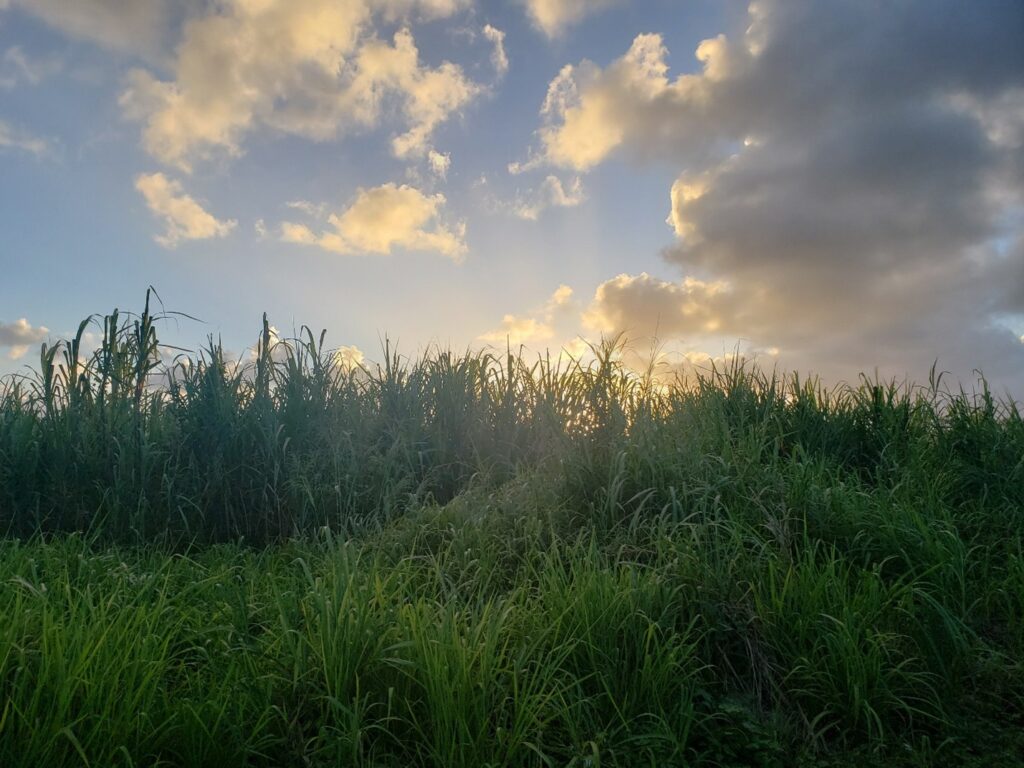
Driving with the windows down along the rural roads that lead away from Puerto Nuevo beach and the changing Vega Bajan coastline, remnants of massive sugarcane plantations evoke familiar ghostly presences in the crepuscular light while loud reggaetón music booms on the rental car stereo.
Puerto Rico’s history, present and future collide in a burst of awe-inspiring beauty.
Adriana María Garriga-López, PhD, is an associate professor of anthropology at Florida Atlantic University.
Sign up for The Invading Sea newsletter by visiting here. To support The Invading Sea, click here to make a donation. If you are interested in submitting an opinion piece to The Invading Sea, email Editor Nathan Crabbe at ncrabbe@fau.edu.
