


By Joe Murphy
I marvel at the power of language to change the world. Words can inspire us to the greatest heights or plunge us to incredible depths. Language can transform us. It can guide us to places within ourselves we did not know existed until words unlocked them for us. Language can truly be a guide to journeys of the mind and soul that change our lives.
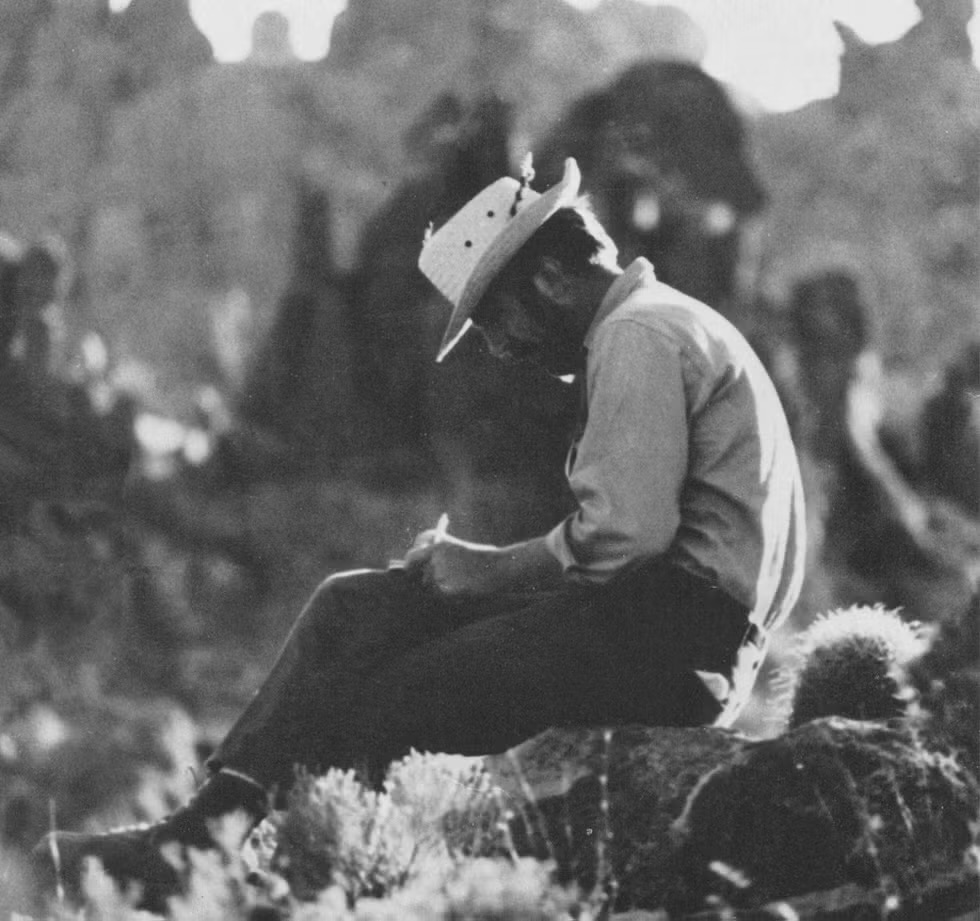
Famed nature writer Edward Abbey once wrote a book titled “Desert Solitaire.” I read it when I was about 18 and full of a burning desire to know a world larger than my own. Abbey gave voice to a growing movement to conserve wild places simply because they had their own right to exist, and their own value separate from us. It was powerful, poetic and transformative. I was hooked.
That book changed the course of many lives. That book led nature writer David Quammen to write: “A man wrote a book and lives were changed. That doesn’t happen very often.” I have reflected on that quote over the years and still marvel at the power of language to move us to new places. Indeed, language can inspire action and passion to save the natural world.
I read as many books by Edward Abbey as I could. That led me to authors like Rick Bass, Terry Tempest Williams, John Muir, Aldo Leopold, Dave Foreman, Barry Lopez, Anne Dilliard and Wallace Stegner. A young man from Brooksville, Florida, was soon exploring the amazing wilderness and landscapes of the American West in his mind. It was exhilarating. But there was one problem.
I was not a child of the American West. I had never been there. I was a child of the American South, of the Gulf Coast of Florida. My world was longleaf pines, coastal marsh, spring-fed and tannin-filled rivers, seagrass beds and cypress forests. I knew mosquitoes and alligators.
I was a child of hot, humid summers and mild winters, a child of the Gulf, from birth on. I started looking for nature writers who spoke to my natural world. And I found Jack Rudloe.
Jack Rudloe, famed naturalist, conservationist, marine researcher, advocate and writer, has written some magnificent books. But for me, “The Wilderness Coast: Adventures of a Gulf Coast Naturalist” will always be my favorite. He wrote of the natural world I was and am connected to. And he wrote with passion and as a clear voice for conscience and conservation.
Part of my sense of place, what grounds me to the Gulf Coast of Florida, I found in that book. I could take that book with me and read it as I explored St. Marks National Wildlife Refuge or St. George Island State Park. I could wander around Apalachicola and pause to connect places in Florida’s Big Bend to what I had read about. I could literally find “The Living Dock” (another great book by Jack Rudloe) in Panacea, Florida, and see these amazing, sublime creatures he described so well.
The “Wilderness Coast’ was my “Desert Solitaire.” The power of language was transformative and led me to want to try to conserve the wild places Jack Rudloe wrote about. We all owe it to ourselves to find language that so influences us.
Wild Florida, that magical place that lies just around the bend of the river or trail, that is home to all things fin, feather and fur, needs us to speak for it. And our voices and passions can be nourished by powerful language that inspires us. Language that grounds us in a sense of place, which connects us to our natural environments. We need it now more than ever.
Seek out Florida nature writers. We are blessed with wonderful voices, some well known and some emerging, who create a chorus for conservation. Buy their books, listen to their podcasts, follow them on social media. Immerse yourself in all things Florida and then use your voice and the power of your language to add to the chorus of voices speaking for nature. Be that powerful, transformative language that can save the natural world.
Joe Murphy is a native and lifelong Floridian who lives in the southern Nature Coast. Banner photo: A hiker reads in the woods (iStock image).
Sign up for The Invading Sea newsletter by visiting here. To support The Invading Sea, click here to make a donation. If you are interested in submitting an opinion piece to The Invading Sea, email Editor Nathan Crabbe at ncrabbe@fau.edu.
