


By Thais Lopez Vogel, VoLo Foundation
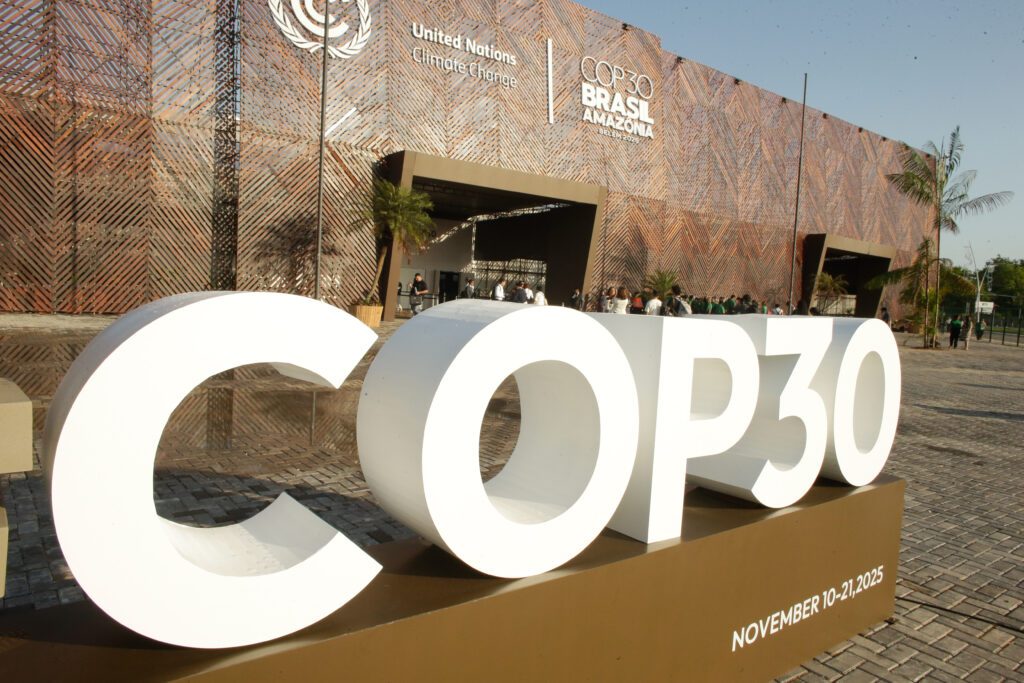
COP30 in Belém, Brazil, arrived at a moment when climate impacts are hitting harder than the world’s ability to respond. But this one mattered, and not only because Brazil hosted it in the heart of the Amazon, a living reminder of what is at stake.
It mattered because, despite political resistance and years of broken promises, the world left Belém with a clearer sense of direction. The direction points unmistakably toward a clean energy transition.
The climate crisis is accelerating faster than global diplomacy. Fires, floods, heatwaves and disasters of every kind are intensifying each year, yet the financing needed to address them continues to fall short. This is why one of the most meaningful signals from COP30 was the call to triple adaptation finance by 2035.
Yes, it is not binding, and countries still need to negotiate the details. But after years of hesitation, a political expectation of this scale matters. It sets the tone, the trajectory and the pressure for action.
Closing the gap is not optional
Current national climate commitments will not keep the world anywhere near the 1.5 C temperature limit. COP30 forced governments to confront an uncomfortable fact.
The Belém Mission to 1.5 and the Global Implementation Accelerator will not solve the problem on their own, but they do something the process has avoided for too long. They shine a spotlight on what countries must do now, not in some distant future. They create a mechanism to call out low ambition and support higher action. For a process often criticized for inertia, this is a welcome shift.
A real transition enters the conversation
One of the most consequential outcomes was the creation of the Belém Action Mechanism. For years, “just transition” has been a feel-good phrase politicians used without accountability.
COP30 changed this. The mechanism formally embeds the principal workers, communities and developing nations cannot be collateral damage in the rush to decarbonize. It could become the backbone of a fair global transition if countries choose to empower it.
A way to measure whether adaptation is happening
Another quiet but critical win was that countries finally agreed on indicators for the Global Goal on Adaptation.
It has taken years to reach this point, and the framework still needs refinement. But measuring resilience is how you build it. For the first time, countries share a common basis to judge whether the world is becoming safer on a warming planet.
Fossil fuels, the pending task
The most contentious issue, phasing out fossil fuels, did not make it into the final COP text. This is a disappointment, but not a defeat. In fact, the momentum outside the formal outcome was arguably stronger than what negotiations were able to deliver.
In the final days of COP30, Brazil launched a new process to keep fossil fuel phase-out at the center heading into COP31. Colombia and the Netherlands stepped up to co-host the first International Conference on the Just Transition Away from Fossil Fuels in 2026.
Twenty-four countries endorsed the Belém Declaration calling for an orderly fossil phase-out. Cambodia joined the Fossil Fuel Treaty initiative. The Journey Fund was launched to mobilize billions for the transition.
The private sector is showing up

Another important shift was the growing recognition that public funding alone will not finance the global energy transition.
Initiatives such as the Kinetic Coalition show private capital can be part of the solution. The coalition aims to use energy transition credits to help developing countries retire coal plants early and scale clean energy.
If scaled responsibly, these models could reshape energy systems in places where demand is rising fastest.
COP30 was a turning point. It delivered new tools, new political will and new spaces for cooperation. It put justice at the center, and it showed even when negotiations fall short, leadership can emerge elsewhere through alliances, financial innovation and bold national commitments.
Belém did not close the ambition gap, but it narrowed the excuses. Now it is up to countries to prove this momentum was not just a moment but the beginning of a transformation the world can no longer afford to delay.
Thais Lopez Vogel is the cofounder and trustee of VoLo Foundation, a private family organization that exists to accelerate change and global impact by supporting science-based climate solutions, enhancing education and improving health. VoLo Foundation is a financial supporter of The Invading Sea. This piece was originally published at https://volofoundation.org/news/belem-marks-a-turning-point-for-global-climate-action. Banner photo: An “Energy Transition” roundtable of world leaders at the COP30 climate summit (Lula Oficial, CC BY-SA 4.0, via Wikimedia Commons).
Sign up for The Invading Sea newsletter by visiting here. To support The Invading Sea, click here to make a donation. If you are interested in submitting an opinion piece to The Invading Sea, email Editor Nathan Crabbe.
