


By Christopher Neubert and Kathleen Merrigan, Arizona State University
With Congress back in session, legislators will take up a set of issues they haven’t comprehensively addressed since 2018 – the year the last farm bill passed.
Farm bills are massive pieces of legislation that address a diverse constellation of topics, including agricultural commodities, conservation, trade, nutrition, rural development, energy, forestry and more. Because of their complexity, farm bills are difficult to negotiate in any political environment. And as the topics have expanded since the first iteration in 1933, Congress has generally agreed to take the whole thing up once every five years or so.
However, the most recent farm bill’s provisions expired in 2023. They have been renewed one year at a time ever since, but without the comprehensive overhaul that used to accompany farm bills.
As former federal employees handling agriculture policy who now study that topic, it’s unclear to us whether a comprehensive, five-year farm bill can be passed in 2026, or ever again.
The July 2025 enactment of the so-called “One Big Beautiful Bill Act,” the Trump administration’s budget priorities in the tax and spending bill, revised funding levels for many programs that were historically handled in the farm bill. For instance, that law included a 20% cut in funding to the Supplemental Nutrition Assistance Program, known as SNAP, which helps low-income families buy food. And it doubled support for the largest farm subsidy programs.
Those changes and current divisions in Congress mean the nation’s food and agriculture policy may remain stuck in limbo for yet another year.
Cuts to SNAP used for farm subsidies
For decades, political conventional wisdom has held that sweeping federal farm bills are able to pass only because farmers seeking subsidies and anti-hunger advocates wanting increased SNAP dollars recognize the mutual advantage in working together. That’s how to build a broad, bipartisan consensus strong enough to garner the 60 votes in the U.S. Senate to avoid a filibuster and actually pass a bill.

But the One Big Beautiful Bill Act tax and spending law did not create a compromise between those competing interests. It slashed SNAP spending by $186 billion over the next decade. At the same time, it boosted price support for farmers who grow key crops like corn, soybeans and wheat by $60 billion, in addition to a $10 billion economic relief package passed at the end of 2024 to address high costs of seeds, fertilizer and other farming supplies.
Supporters of anti-hunger programs are furious that these funds for farmers are being paid for by cutting SNAP benefits to families.
In addition, about one-third of the SNAP cuts came by shifting the program’s cost to state budgets. States have always carried some of the costs to administer SNAP, but they have never before been required to fund billions of dollars in benefits. Many states will be unable to cover these increased costs and will be forced to either reduce benefits or opt out of SNAP altogether, dramatically cutting the help available to hungry Americans.
Groups that support SNAP are unlikely to help pass any bill relating to food or farm policy that does not substantially reverse the cuts to SNAP.
And farmers who receive money under the two largest farm subsidy programs are not even required to grow the specific crops those programs are meant to support. Rather, they must simply own farmland that was designated in 1996 as having grown that crop in the early 1980s.
Farmers have repeatedly said they would prefer federal farm policies that support markets and create conditions for stable, fair commodity prices. And evidence shows that spending more money on farm subsidies does little to actually improve underlying economic conditions affecting the costs of farming or the prices of what is grown.
And yet, in early December 2025, the Department of Agriculture released an additional $12 billion to help offset losses farmers experienced when Trump’s tariffs reduced agricultural exports. In mid-December, the National Farmers Union said that money still wasn’t enough to cover losses from consistently low commodity prices and high seed and fertilizer costs.
A regular five-year farm bill may be out of reach
The success of any bill depends on political will in Congress and outside pressure coming together to deliver the required number of votes.
Some leaders in Congress remain optimistic about the prospects of a farm bill passing in 2026, but major legislation is rare with midterm elections looming, so meaningful progress appears unlikely. It seems to us more likely that the ongoing stalemate will continue indefinitely.
In September 2025, Politico reported that instead of a complete five-year farm bill, the House and Senate committees on agriculture might take up a series of smaller bills to extend existing programs whose authorizations are expiring. Doing so would be an effective declaration that a permanent five-year farm bill is on indefinite hold.
Prospects for sustainable farm policy
By using financial incentives cleverly, Congress has shifted farming practices over time in ways that lawmakers determined were in the public’s interest.
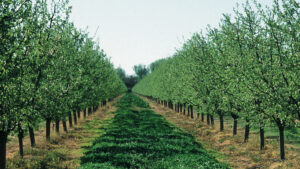
The 2022 Inflation Reduction Act, for instance, allocated $20 billion over four years to encourage farmers to reduce or offset carbon emissions, which the Agriculture Department calls “climate-smart agriculture.” Those funds, along with a separate Department of Agriculture initiative with similar aims, were well received by American farmers. Farmers applied for far more money than was actually available.
The One Big Beautiful Bill Act tax and spending law cut those funds and repurposed them for traditional Agriculture Department programs for farmers who want to implement conservation practices on their land.
But unexpectedly, the Trump administration’s “Make America Healthy Again,” or MAHA, agenda contains some ideas that climate-smart advocates have previously advanced. These include scathing indictments of the effects of conventional agriculture on Americans’ health, including concerns over pesticide use and the so-far-undefined category of “ultra-processed foods.”
The MAHA agenda could be an opportunity for organic farmers to secure a boost in federal funding. In December, the Agriculture Department committed $700 million toward “regenerative” practices, but that’s a trifling amount compared with the billions commodity farmers received in 2025.
And the administration’s allies who support conventional agriculture have already expressed concerns that MAHA efforts might reduce the nation’s agricultural productivity. The administration may end up caught between the MAHA movement and Big Ag.
Overall, in this new political environment, we believe advocates for changes in agriculture and food aid will likely need to rethink how to advance their agendas without the promise of a farm bill coming anytime soon.
Christopher Neubert is deputy director and Kathleen Merrigan is executive director of the Swette Center for Sustainable Food Systems at Arizona State University.
This article is republished from The Conversation under a Creative Commons license. Read the original article. Banner photo: A tractor spreads fertilizer on a field (iStock image).
Sign up for The Invading Sea newsletter by visiting here. To support The Invading Sea, click here to make a donation. If you are interested in submitting an opinion piece to The Invading Sea, email Editor Nathan Crabbe.
