


By Fabian Lenhard, Karolinska Institute
As headlines about heatwaves, floods and wildfires become more frequent, many people report a growing sense of worry about what climate change means for their future. Some recent media reports have even suggested that emotions like “eco-grief” could drive people toward unhealthy coping strategies, including increased use of alcohol or drugs.
But this framing misses the bigger picture. Research shows that climate change affects mental health in several ways – yet it also reveals something more hopeful.
Here is what the science tells us.
Direct effects: when extreme weather hits
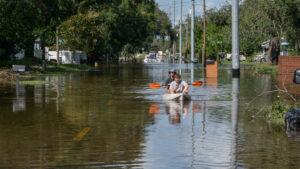
Experiencing a flood, heatwave or wildfire can have a major effect on mental health. Direct and often life-threatening experiences of extreme weather can markedly raise the risk of anxiety, depression and post-traumatic stress disorder.
Rises in temperature are associated with increased hospital visits for mental health problems, even on days that don’t qualify as an official heatwave. Hotter weather can disrupt sleep, increase agitation and risk-taking, and interact with common psychiatric medications in ways that make it harder for the body to regulate heat.
For people already living with conditions such as depression, psychosis or dementia, that extra physical stress can be enough to trigger a crisis. As the climate warms, we not only see more extreme events, but also more hot days overall and those background temperature rises are increasingly recognised as a direct stressor on mental health, not just a trigger for floods and wildfires.
Indirect effects: financial strain and disrupted lives
Climate change affects our daily life. Droughts are strongly linked with higher levels of depression and anxiety, especially among farmers and rural communities that face lost harvests, mounting debts and uncertainty about the future.
People who lose homes, livelihoods or community networks after extreme weather often experience emotional consequences that last for years. In Fiji, for example, climate-driven relocation, damaged infrastructure and unstable incomes are already placing strain on mental health at the community level.
Extreme weather can also intensify pressures at home. It may lead to more financial problems, housing instability and even domestic violence, adding significant psychological stress to families already under strain.
Psychological effects: worry, grief and climate-related distress
The ongoing awareness of climate change and its consequences can create many emotions, including worry, grief, frustration, anger and hopelessness. These reactions are increasingly understood as forms of climate-related distress, a broad category reflecting both concern for the future and emotional responses to current events.

International surveys show that most people in most countries now worry about climate change. This is a valid human response to what’s happening in the world, but these feelings can sometimes become overwhelming.
High levels of climate-related distress can affect sleep, mood and day-to-day functioning. Reaching out – whether to friends, family, peer groups or a mental-health professional – can help ease the burden.
Does “eco-grief” drive alcohol and substance use, as some recent media reports have claimed? There is little scientific support for a direct link between climate-related distress and alcoholism.
However, after extreme weather events, some affected communities have reported increases in substance use. Also, the risk of intoxication tends to be higher during hot weather.
This does not mean climate distress directly causes substance misuse. But together with the trauma, loss and practical problems brought on by extreme weather, it can make it harder for some people to cope in healthy ways.
The hopeful side: climate action can strengthen well-being
Feeling worried about climate change does not only create problems. It can also motivate people to take meaningful action. People who worry more about climate change generally do more for the environment – provided they have access to actionable solutions.
In other words, when people can see real, practical ways to make a difference, their worry can turn into positive action. But when no solutions are available, that same worry can start to feel overwhelming or hopeless.

Also, research consistently shows that taking climate-positive actions can improve well-being. For example, studies from the United Kingdom show that people in “greener” households – those who recycle, save energy and make sustainable choices – tend to report higher life satisfaction.
Other research finds that climate-friendly actions in everyday life can boost feelings of purpose, meaning and social connection.
Climate change is shaping our emotional lives, and solutions are needed at every level.
For health care systems, climate-related mental health problems represent a growing challenge. Traditional treatments such as cognitive behavioral therapy, trauma-focused talking therapies and scalable digital interventions can all play a role, particularly for those directly affected by extreme weather.
For society and policymakers, protecting mental health means reducing inequality and strengthening support systems — but also making it easier for people to take climate-friendly action.
When the structures around us support sustainable choices, worry becomes a driver for engagement rather than helplessness. And when people are supported to act, everyone wins: it boosts well-being while also moving us toward a more sustainable future.
Fabian Lenhard is a researcher in the Department of Clinical Neuroscience at the Karolinska Institute in Sweden.
This article is republished from The Conversation under a Creative Commons license. Read the original article. Banner photo: A woman holds her fists up to the sky (iStock image)
Sign up for The Invading Sea newsletter by visiting here. To support The Invading Sea, click here to make a donation. If you are interested in submitting an opinion piece to The Invading Sea, email Editor Nathan Crabbe.
