


By Sol Moyano, The Invading Sea
As climate change threatens corals, researchers are developing autonomous robots to monitor the restoration of reefs in Southeast Florida.
Coral reefs in Florida and worldwide have been devastated by coral bleaching, ocean acidification and other climate-related threats. The University of Florida’s RoboPI laboratory is working to develop the technology to track changes in reefs with Ocean Rescue Alliance International (ORAI), a nonprofit focused on restoring marine ecosystems.
“The pace of reef degradation is accelerating due to climate change and local stressors, and traditional methods alone are not keeping up,” said Shelby Thomas, CEO and founder of ORAI. “If we don’t integrate advanced technologies now, we risk falling further behind.”
A team led by Md Jahidul Islam, who directs the RoboPI lab, is building underwater coral robots that use cameras and sonar technologies to navigate through the waters around reefs. This allows them to explore and map reef areas even when the water is murky or hard to see through.
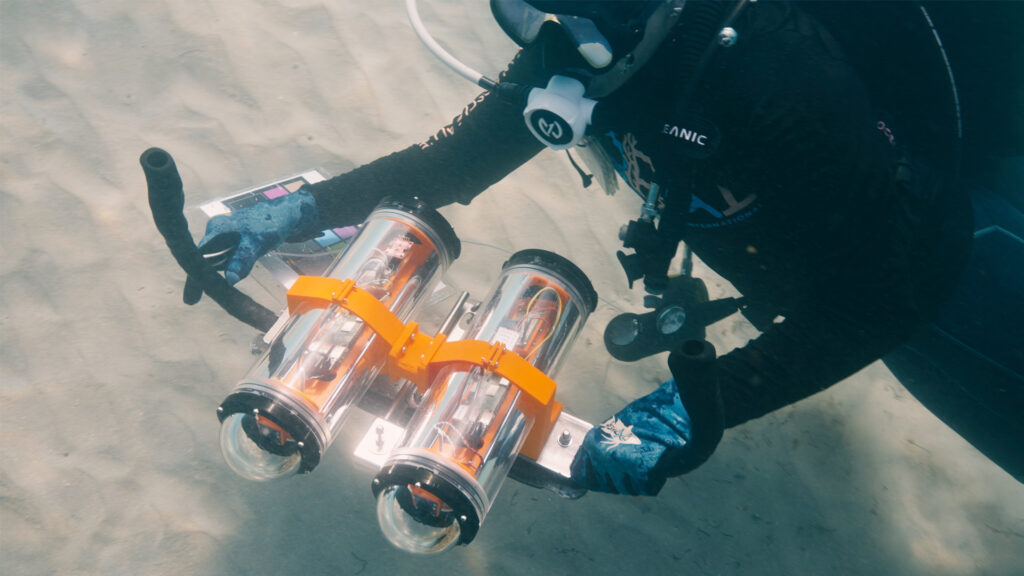
“Underwater robots enable us to see, understand and protect parts of the ocean that are beyond human reach – at a scale the future demands,” Islam said.
These robots are being used at active restoration sites. They can operate on their own, collecting detailed information on reef structures across large areas without requiring constant human oversight.
“The goal is not to remove humans, but to extend their reach. Robotics allows us to collect better data, more safely and at larger scales, while keeping humans in the loop for interpretation and decision-making,” Islam said, “In many cases, it enables work that would otherwise be too dangerous or simply impossible to perform.”
Because ocean conditions can make it difficult to use equipment, the robots reduce the need for divers to manually track changes in the reefs.
“With high-resolution, repeatable data, we have the capabilities to see micro-patterns in coral recruitment, structural complexity and habitat use that would have been easy to miss before,” Thomas said.
Climate change is the greatest global threat to coral reef ecosystems, according to the National Oceanic and Atmospheric Administration. Reefs play a crucial role in protecting coastlines from storms, while also generating jobs and tourism that support local communities. They provide food and attract activities like fishing, diving and snorkeling, which generate hundreds of millions of dollars for local economies.
Using underwater robots may bring about more in-depth observation of the reefs, expanding current research.
“With our autonomous systems, we can survey large areas quickly. This allows scientists to prioritize the response efforts, allocate resources more effectively and monitor recovery with a much higher temporal resolution,” Islam said.
Given the important role that reefs play, experts are concentrating on finding solutions to help corals.
“These tools allow us to scale restoration, improve precision and respond faster to stress events like bleaching,” Thomas said. “The sooner we adopt them, the better chance we have to protect and rebuild these ecosystems before reaching irreversible tipping points.”
Sol Moyano is a senior majoring in multimedia journalism at FAU who is reporting for The Invading Sea in the spring 2026 semester. Banner photo: Another image of Shelby Thomas with the photogrammetry device used to collect monitoring data (Photo credit: Ricardo Nascimento).
Sign up for The Invading Sea newsletter by visiting here. To support The Invading Sea, click here to make a donation. If you are interested in submitting an opinion piece to The Invading Sea, email Editor Nathan Crabbe. To learn more about coral bleaching, watch the short video below.
