


By Josie Strick
Last spring, I was given a pair of binoculars and a guide to Northeastern birds for my 27th birthday. It was gifted to me during a time of personal suffering due to an illness with unanswered questions. In an attempt to heal, I packed up my life in New York City and returned home to my family in South Florida. I didn’t know this decision would lead me to discovering the immense biodiversity of bird species and the recovering wetlands of South Florida, which seemed like hidden gems within a sea of rapid overdevelopment.
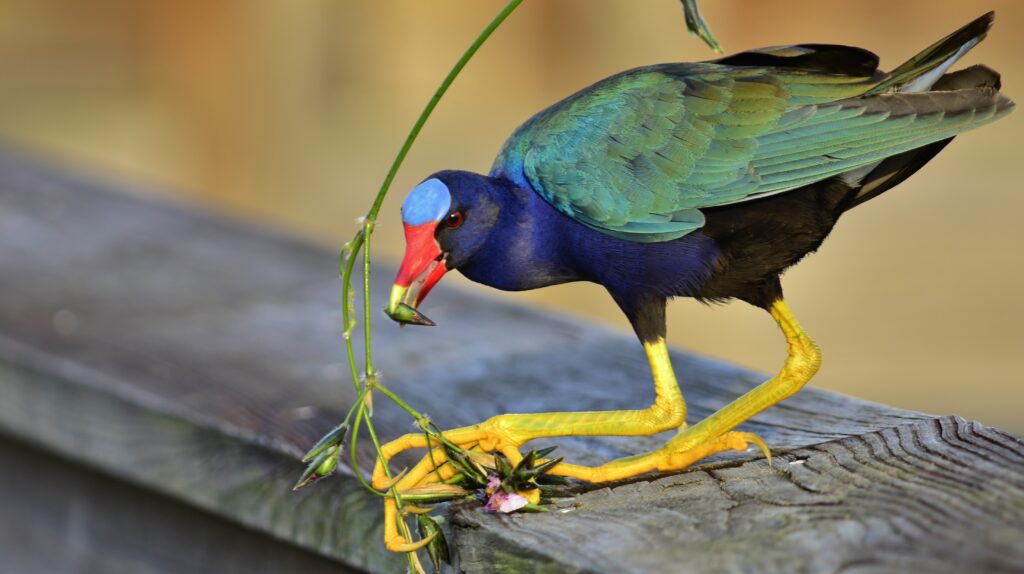
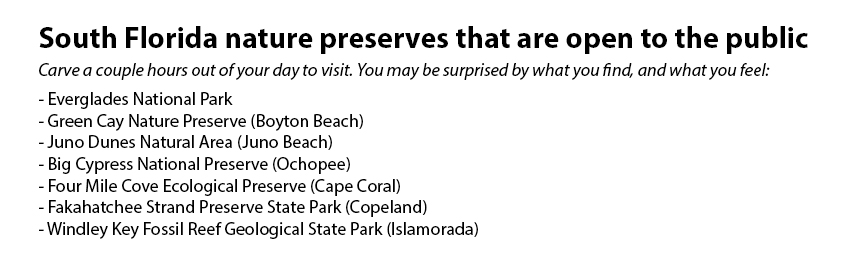
I couldn’t help but wonder if that gifted guide led me to these birds, and this place. One day, I stumbled upon what felt like a secret treasure: Green Cay Wetlands in Boynton Beach. The nature preserve includes 100 acres of constructed wetlands and is an important place for migratory species.
With my new binoculars, I witnessed the daily rhythms of the wetlands. I wanted to get to know the great blue heron, snowy egret, warbler, whistling duck, red-shouldered hawk, white ibis, purple gallinule, meadowlark, blue jay and screech owl intimately.
Slowly, after a period of burnout that led me there in the first place, I found a sense of belonging and healing within this world of abundant birdsong. It felt like uncovering a place within myself that had been long forgotten and I wondered, why had it been so long since I had known a natural habitat this well? Why was there such an intense disconnection in the first place?
Human connection to nature has decreased by 60% in the last 200 years, according to a study published last year in the journal Earth. Factors include the loss of wildlife in neighborhoods, issues of equitable access, habitat loss and more. Researcher Miles Richardson describes the decline in nature connectedness as a root cause of the environmental crisis at hand.
What if rekindling our relationship to the nature around us might actually be one of the most vital and integral tools we have in response to threats to the wildlife and ecosystems we cherish most? Or to the attempted rollbacks of environmental protections we’re facing?
The Trump administration recently proposed a new rule regarding the Clean Water Act that would make it harder for states and tribes to protect local water quality threatened by large-scale projects such as data centers, new highways and hydropower dams. Additionally, the U.S. Department of the Interior released a set of proposed changes to the Endangered Species Act that would deprive wildlife of integral protections from habitat destruction.
These potential changes would nonetheless impact an already vulnerable population of migratory birds and their habitats. North American birds have already decreased by 30% since 1970, and more than one third of bird species in the U.S. are of high to moderate conservation concern.
The current administration has also been working to weaken protections for migratory birds. They recently reinstated a reckless opinion that allows energy industries to be held unaccountable for the foreseeable killing of migratory birds during industrial activities.
One morning after a morning spent among the birds of Green Cay, my father shared with me a recent study showing there are 3 billion fewer birds in North America than 50 years ago. I closed my eyes and tried to process a future world without bird song. I wept.
It is our responsibility to prevent that future from happening and, in order to do so, we must work to spark a collective sense of stewardship and connection to the natural world around us that we are a part of. It has never felt more important at a time when many of the ecosystems and species we love are facing growing threats and uncertain futures.
With the constant influx of alarming news and increase of threats to the places and species we love most, it can be difficult not to feel profoundly overwhelmed. I began to discover that the balm for that feeling was immersing myself more in nature and learning about the local ecosystems around me.
We protect what we love, which is why nature connectedness is so important in fighting for endangered species and habitats. After months of immersing myself in the local ecosystems of Southern Florida, a hidden, and perhaps often forgotten, world came to life in front of my eyes. A world that needs all our eyes, ears and voices to protect it.
Josie Strick is a documentary filmmaker, writer and climate activist currently based in Ojai, California. She’s a recent graduate from the MA in Climate & Society program at Columbia University, and is passionate about storytelling as a tool and vessel for working toward positive social change. Banner photo: A tricolored heron at Green Cay Wetlands (Rhododendrites, CC BY-SA 4.0, via Wikimedia Commons).
Sign up for The Invading Sea newsletter by visiting here. To support The Invading Sea, click here to make a donation. If you are interested in submitting an opinion piece to The Invading Sea, email Editor Nathan Crabbe.

Feeling heartbroken or stuck in your relationship? You’re not alone. I’m here to help restore love, reunite families, and bring lasting happiness back into your life. Whether you’re dealing with separation, misunderstandings, or a third-party situation, there is a way forward. I offer guidance and support to help you heal, reconnect, and rebuild your relationship stronger than before. You deserve love that stays. You deserve peace of mind. Send me a message today and take the first step toward restoring your happiness. Don’t forget to follow—let’s build a community filled with love, trust, and positive energy ❤️
My WhatsApp on;
https://wa.me/message/53ZYI4BFSDUCJ1
Email; edanpsychic@gmail.com