


By Kathleen Biggins, C-Change Conversations
In one of the most ironic twists of his tenure, President Donald Trump’s military confrontation with Iran may end up with an unintended consequence: accelerating the world’s transition away from fossil fuels.

The president’s intentions are clear – boost U.S. fossil fuels and secure energy dominance in the world. In the short term, it is working: U.S. oil and gas exports are hitting record highs as countries scramble to find secure supplies.
But the cost and pain of the third energy crisis in a decade (including during the initial COVID recovery as demand outstripped supply and the Ukrainian war when Russian gas was sanctioned) is also driving home an important lesson: Oil and gas supplies are vulnerable and volatile, and their supply chains can be weaponized and cripple economies without warning. True energy security comes from a home-grown supply.
In the past, countries without significant fossil fuel resources were powerless to create energy within their borders. But today they are not, as solar, wind and batteries have dropped in price so rapidly that they can economically pick up bigger parts of the energy load. And unlike with fossil fuels, renewable energy costs aren’t volatile, and their fuel source – sunbeams and wind currents – can not be embargoed.
Even before the war, countries were beginning to pivot toward renewable technologies and electrify their heating, cooling and transportation sectors. In 2025, $2.2 trillion was spent globally on clean-energy deployment, more than double the investment in fossil fuels.
Renewables overtook coal to become the world’s largest source of electricity (in the U.S., they even surpassed natural gas in March 2026), and EVs accounted for 25% of new car sales globally. These EVs displaced 1.8 million barrels of oil per day – equivalent to 13% of U.S. oil production.
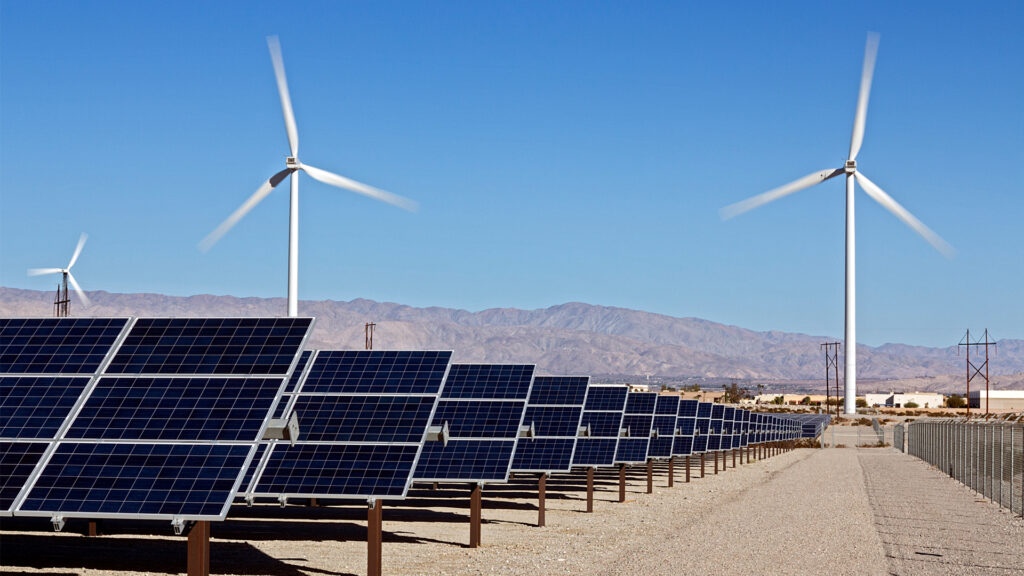
For the first time, renewables slightly cut into fossil fuel usage – with China, India and the European Union all decreasing coal use and lowering emissions. (In contrast, the U.S., the world’s second-largest emitter, increased its emissions.)
The Iranian crisis appears to be boosting the transition to warp drive.
The numbers are startling: In March, the first month reflecting the war’s impact, the world’s dominant clean tech manufacturer, China, increased exports of solar, batteries and EVs by 39% over the prior month. In fact, China dramatically expanded exports to more than 100 countries in March, with Africa up 176% and Asia doubling versus the prior month. Chinese battery exports rose 44% in March as well.
On the electrification front, interest in EVs has skyrocketed, with Chinese EV shipments up 140% versus March a year ago, and EV sales expanding beyond developed markets like Europe to a wide range of emerging markets like Brazil.
Even in the U.S., where cheaper Chinese EVs are not available, pre-owned EV sales rose 12% in March.
And once the initial effort and investment in the transition is made, renewable energy users don’t often revert to fossil fuels. In the past, consumers hit by an energy shock would jockey for a new oil or gas supplier. Today, many are looking to reduce their reliance on fossil fuels for good.

Let’s be real: Fossil fuels will continue to power a large part of our economies for a very long time, and the world needs a stable supply, which the U.S. can help provide. New technologies like enhanced geothermal, fusion and improved forms of nuclear energy are expected to play a big role in future decades as well.
Coal will get a short-term reprieve as countries scramble to find gas alternatives when supplies are disrupted. But renewable technology, coupled with electrification, is ready for prime time and has now commandeered a starring role.
The fallout from the Iranian war is ongoing, but it appears the shock to energy security could achieve something climate policymakers were struggling to do – accelerate the transition and blunt the cost and pain of future climate impacts.
So, while our fossil fuel-boosting, ardent climate-denying president may not want to be remembered as the climate president, the results may speak for themselves: His disruption of the old energy system is helping birth a new one, inadvertently triggering climate progress on a global scale.
Kathleen Biggins is the founder and president of C-Change Conversations. Banner photo: President Donald Trump speaks at the Andeavor Refinery in Mandan, North Dakota, in 2017. (Official White House Photos by D. Myles Cullen, Public domain, via Wikimedia Commons).
Sign up for The Invading Sea newsletter by visiting here. To support The Invading Sea, click here to make a donation. If you are interested in submitting an opinion piece to The Invading Sea, email Editor Nathan Crabbe.

what a 360 degree turn around and how wonderfully ironic!