


By the Orlando Sentinel Editorial Board
Earlier this year, the state of Florida showed up in court, demanding an acknowledgment that it has no duty under federal law to defend manatees. And now state environmental officials are on their way to appeals court, repeating that request in increasingly urgent tones.
You read that right: Florida officials believe they don’t have to follow the federal Endangered Species Act when it comes to protecting manatees. And having argued that once — only to be spanked with a stern ruling by Orlando-based U.S. District Judge Carlos Mendoza — they are at it again, taking their complaints to the 11th Circuit Court of Appeals.
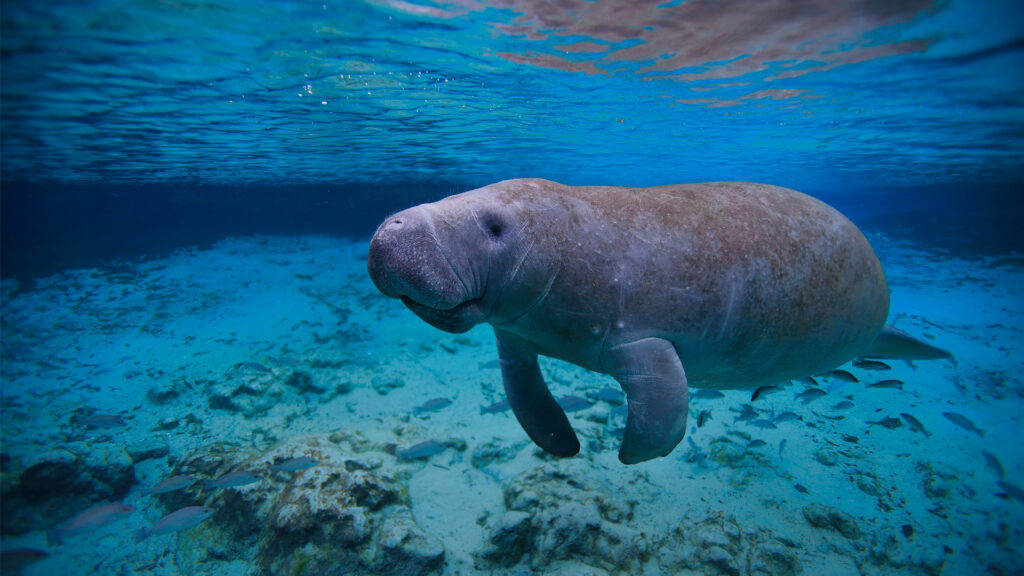
Manatees and Floridians alike deserve better. The beloved, ungainly mammals have been a signal species in Florida’s fight against environmental degradation. The danger to their survival is literally written on their hides: Blue Spring biologist Wayne Hartley has drawn and updated hundreds of charts that identify manatees based on the gouges across their broad backs and missing chunks of flipper (using a method invented by another scientist, Everglades biologist Joe Moore). They are scars left on manatees by propellers of fast-moving boats — and nearly every living manatee has at least a few. Now, those white scars combine with sagging skin and caved-in bodies of manatees starving to death in waters that once offered them abundant feasts.
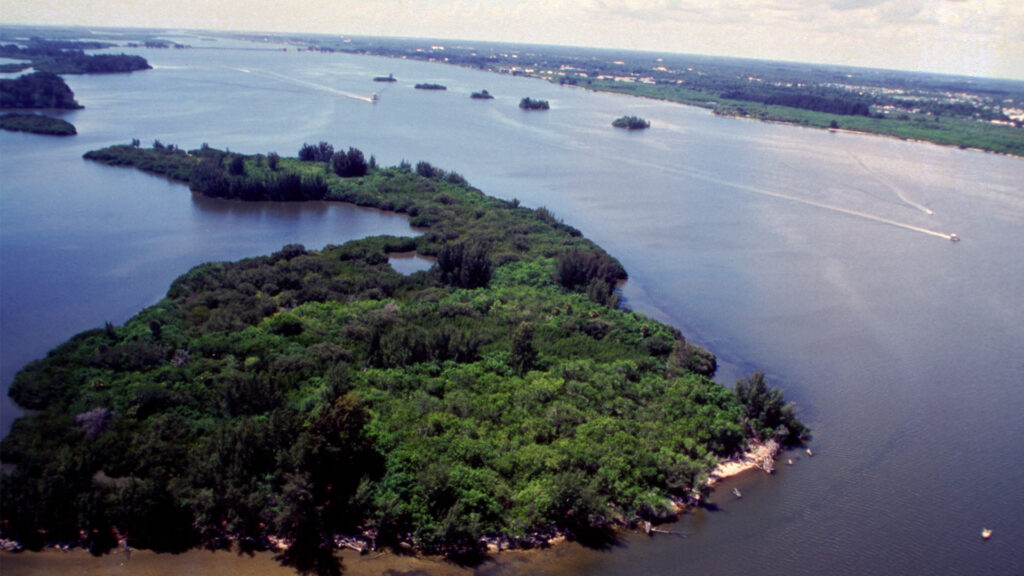
As important as manatees are to Floridians, the perils of their disappearance go far beyond the lost manatees crushed by boats, killed by infections from dirty water or wasting away for a lack of suitable food. Like many endangered and threatened species across the nation, manatees’ fates are intimately tied to the health of key water bodies — in this case, the Indian River Lagoon, which stretches along Florida’s east coast from Martin County north to Volusia County. The lagoon is considered one of the most diverse estuaries in the nation, an abundant breeding ground for fish, birds and aquatic plants.
But the seagrass beds that anchor its ecosystem are dying — choked and poisoned by water grown cloudy with runoff from busy roads, cow pastures and septic tanks leaching human waste. The manatees that rely on the seagrass for food are, in turn, starving — dying at such a high rate that state scientists have given up on attempts to necropsy most of the emaciated corpses.
Historically, the state has always worked hand in hand with the federal government to protect manatees. But as the plight of the lagoon worsened, attempts to clean it up seemed to paradoxically slow down. Gov. Ron DeSantis, who once campaigned on the banks of the lagoon with promises to address water quality with a warrior’s fervor, has seemed decreasingly enthused by cleanup projects, vetoing several over the past six-and-a-half years.
To his credit, however, DeSantis recently backtracked to his earlier ways: He’s spent the past summer highlighting cleanup projects including a press conference Monday, which celebrated the opening of a restoration structure in Brevard County that will filter billions of gallons of water as it flows from the St. Johns River to the lagoon.
But under both DeSantis and his predecessor Rick Scott, funding for water projects and other cleanup activities has lagged — as the state’s key environmental enforcement agencies, including the DEP and five water-management districts, saw their power seep away.
Last year, a Seminole County-based group, Bear Warriors Inc., went to court. They argued that the state was doing such a poor job of manatee management and environmental cleanup that it should be required to apply to the U.S. Environmental Protection Agency for an “incidental take permit” — tantamount to an official acknowledgement that state activities (or lack thereof) are leading to increased manatee deaths. In particular, the group objected to state-sanctioned discharge of treated sewage and runoff into the lagoon, raising nitrogen levels and sparking blooms of noxious algae.
It was a clever argument, but it would not have prevailed if Bear Warriors hadn’t brought solid evidence. They offered reams of data proving that the state had allowed water quality in the Indian River Lagoon to degrade, and that the state could have done a better job of cleanup if it only followed its own plans for lagoon restoration.
They also cited a close-to-home precedent: A 1995 ruling that required Volusia County to seek an incidental take permit because it permitted cars to drive on beaches where four species of imperiled sea turtles nested.
Judge Mendoza was convinced. And his ruling could serve as a model nationwide, tying a state’s failure to protect rivers, forests, streams, deserts, prairies and other natural systems to the deaths of beloved, endangered species that call those places home.
In this case, Florida leaders should have accepted Mendoza’s ruling, and put more funding into this year’s budget as earnest money toward a commitment to step up efforts to restore the lagoon. They had time — the state budget was approved months after Mendoza’s April ruling. In this case, taking an “L” would have been a win for manatees and all the other species that call the lagoon home — and for the Floridians who want to see the state’s natural treasures protected and preserved.
This opinion piece was originally published by the Orlando Sentinel, which is a media partner of The Invading Sea. The Orlando Sentinel Editorial Board consists of Opinion Editor Krys Fluker, Executive Editor Roger Simmons and Viewpoints Editor Jay Reddick. Banner photo: A manatee in Crystal River (iStock image).
Sign up for The Invading Sea newsletter by visiting here. To support The Invading Sea, click here to make a donation. If you are interested in submitting an opinion piece to The Invading Sea, email Editor Nathan Crabbe at ncrabbe@fau.edu.
