


By Courtney Lindsay, Emily Wilkinson and Vikrant Panwar, ODI Global
After years of disciplined reform and painful sacrifice, Jamaica had done what few global debt specialists thought possible. Through tough and sometimes controversial spending cuts and fiscal discipline, it slashed its debt from a staggering 150% of GDP in 2013 to just 62% by 2024.
By 2025, Jamaica was hitting its stride. One internationally recognized credit rating agency upgraded the country’s credit ratings from category BB- to BB (slightly less vulnerable in the near term to adverse economic conditions).
This gives the country more leeway to borrow on the international market. Unemployment and crime rates were falling. Jamaica’s economy was on track for one of its best years in decades.
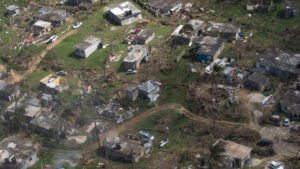
However, in late October Hurricane Melissa, a Category 5 storm, tore across the island, leaving catastrophic destruction in its wake. The island nation was prepared, but not protected.
Preliminary estimates put the damage at a staggering $7 billion – equivalent to 28-32% of last year’s GDP. Jamaica has a multi-layered financial safety net: a contingency fund, catastrophe insurance through the Caribbean Catastrophe Risk Insurance Facility – which will pay out $91.9 million, its largest ever payout – and a $150 million catastrophe bond.
But these buffers barely make a dent in the $7 billion recovery bill. There is a shortfall of more than $6 billion. Given the scale of the destruction, Jamaica will likely have to borrow to fund its recovery – deepening its debt, just as it had emerged from a debt crisis.
This loop of disaster, debt, recovery and the another disaster does not just affect Jamaica. Increasingly frequent climate disasters wipe out years of progress in small island developing states, forcing them into increasingly costly borrowing to fund their recovery.
One study shows that climate destruction is becoming more expensive for small island developing states such as Fiji, Guyana and the Dominican Republic, because these nations typically rely on expensive private external debt to cover their disaster recovery costs.
Our team at the thinktank ODI Global estimates that between 2000 to 2022, extreme weather events in small island developing states may have caused an estimated total of $141 billion in economic loss and damage, of which $53 billion (38%) could be attributed to climate change.
For severe tropical cyclones and hurricanes, the estimated total economic loss and damage during the same period could be as high as $122 billion. Climate change may have been responsible for $52 billion of that. This translates to a total loss of $5.3 billion from hurricanes, with $2 billion attributable to climate change each year.
For countries with fragile economies and limited fiscal space, these shocks are existential. Each dollar spent on rebuilding is a dollar not spent on healthcare, education or infrastructure. To meet their development goals, small island developing states would need to raise social spending by 6.6% of GDP by 2030.
Yet disaster recovery and debt repayments continue to consume their limited budgets. The ODI global study found that among 23 small island developing states, external debt service payments are now growing faster than spending on education, health and capital investment combined.
A wake-up call
Jamaica’s story is a preview of what’s to come if the world doesn’t change course.
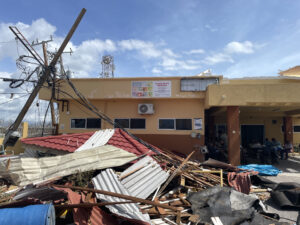
As global leaders gather for the UN climate summit, COP30, Jamaica’s devastation should be a wake-up call. The promise of the fund for responding to loss and damage, launched in 2023 to help developing countries pay for the damage from climate-related events caused by global warming, remains largely unfulfilled, woefully undercapitalized, and a low priority for developed countries.
Indeed, loss and damage issues are being currently sidelined at COP30, with the overall 2035 climate finance goal, national pledges known as nationally determined contributions, and adaptation indicators being top of the agenda. Small islands such as Jamaica, represented by the Alliance of Small Island States (a coalition of leaders of these most vulnerable nations), flagged concerns before the conference had even begun that loss and damage finance has fallen off the radar completely.
Developed countries can help ensure the viability of small island developing states in a harsh climate context by offering predictable and accessible grant finance for loss and damage to support recovery and reconstruction. By providing debt relief for climate-vulnerable countries after disasters, they can also ensure that rebuilding does not result in deeper debt.
Without these commitments, the loss and damage fund risks drifting into obscurity as a symbolic gesture rather than the lifeline small island developing states desperately need.
Hurricane Melissa’s impact on Jamaica, Hurricane Maria’s devastation in Dominica in 2017 and several other climate disasters demonstrate that even with fiscal discipline, prudent planning, strong institutions and improved governance, these small island nations remain just one storm away from fiscal collapse and unsustainable debt – the repayment of which diverts critical resources from health, education, and sustainable development.
Without decisive action, COP30 will fail the world’s most climate-vulnerable nations. Small island developing states need real systemic change, not unfulfilled pledges.
Courtney Lindsay is a senior research officer in global risks and resilience, Emily Wilkinson is a principal research fellow and Vikrant Panwar is a senior climate and disaster risk finance specialist, all at ODI Global.
