


By Bruce Kania and Madison LeBrun, Floating Island International
Historically, humans have targeted carbon dioxide as the primary agent of climate change. By now, literally trillions of dollars have been spent developing carbon dioxide reduction technologies.
At the same time, minimal dollars have been spent to reduce methane emissions, which we will likely see in the near future, is a great mistake. Currently, there is a lot of research around methane and how it is the emerging powerhouse of the greenhouse gases, since it has a heat-trapping capability of 80 times that of carbon dioxide!
Carl Pope, the former CEO of the Sierra Club, states that atmospheric methane accounts for 45% of climate change today. In fact, as wetland-based methane emissions continue to increase, methane is likely to supersede carbon dioxide as the primary agent of climate change this decade.
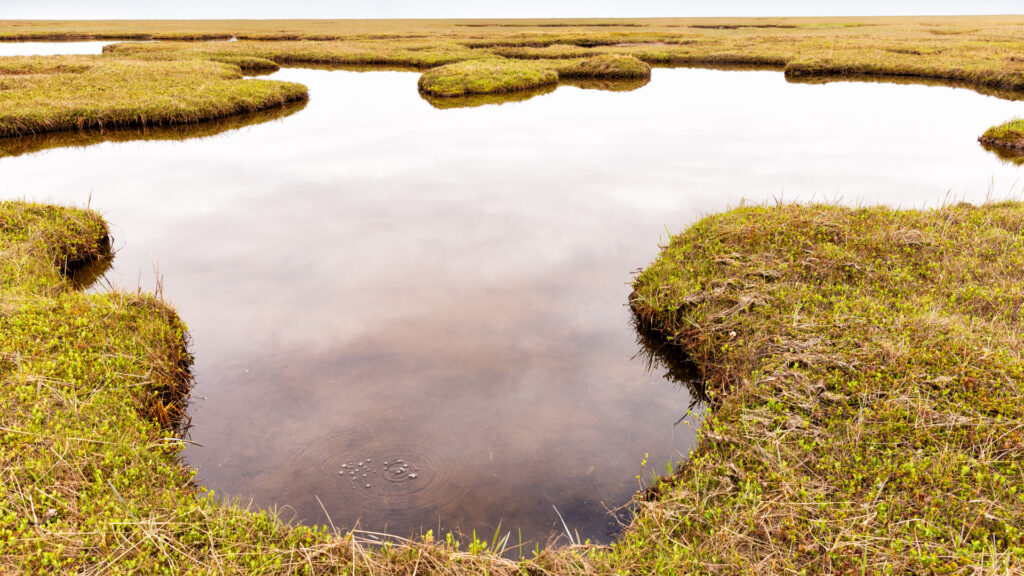
Do not be confused by the term “wetland.” It’s simply the current moniker of choice for inland water bodies. This form of methane occurs in all forms of freshwater bodies – from massive reservoirs to stormwater ponds, and absolutely in lakes that are nutrient impaired (containing excessive amounts of nutrients).
When nutrients, specifically phosphorus and nitrogen, are introduced into aquatic systems at high rates from agricultural, industrial, septic or urban runoff, combined with carbon from biological sources, oxygen demand in water can be extremely high. Add in some extra warmth, which the globe is experiencing, and this perfect storm robs the water of breathable oxygen.
When the aquatic ecosystem is lacking oxygen, methane-creating microbes run wild. As the water dies, these microbes thrive, and methane is created and released at unprecedented levels.
There are countless benefits to appropriate water stewardship, just as there are countless negatives when we don’t do anything. By following the nutrient thread, these benefits or negatives become clear.
For example, water containing high volumes of nutrients grows algae, an excessive form of aquatic vegetation, which then either dies naturally or is killed by chemical treatments introduced by humans. This unnatural introduction of large amounts of organic carbon is then digested by microbes and becomes sludge, the organic muck at the bottom of a water body, using up the environment’s dissolved oxygen in the process. The organic fraction of sludge is digested by methane-producing microbes, and the methane gets a free ride into our atmosphere.
Nature has developed a solution for this aquatic methane. The microbes living in the sludge that generate methane are referred to as “methanogens.” Methanogens thrive in water that is devoid of oxygen. The methane produced then ebullates, or forms a bubble, and floats its way up and into the atmosphere. But when there is dissolved breathable oxygen directly above the sludge in the water column, nature’s answer to this aquatic methane occurs.
An opposing form of microbe, known as “methanotrophs,” consumes methane. Both forms of microbes are ubiquitous in many environments. For nature’s answer to succeed, we must cater to these methanotrophs and maintain the habitat they require: an environment with breathable, dissolved oxygen.
Shallow water bodies, like Lake Okeechobee, are less likely to be methane factories. Wind and waves can introduce oxygen into these shallower systems. Deeper water, like in Lake Apopka and other lakes in that chain, or the thousands of water impoundments associated with phosphorus mining in west central Florida, are an entirely different story. Keeping such systems oxygenated is critical.
Along with the production of aquatic methane, the results of a lack of oxygen in a body of water can also have devastating consequences on aquatic populations, economies, human health and all of Earth’s inhabitants. Thankfully, there is hope. Keeping aquatic systems oxygenated is a relatively easy way to curb the continuation of these issues.
If we can stop aquatic methane from entering the atmosphere, we can slow the rate of near-term global warming, which just might save the world.
Bruce Kania is CEO and president of Floating Island International, which produces artificial islands that provide water quality and habitat benefits in lakes and waterways. Madison LeBrun is a biologist working as a research assistant for the company. Banner photo: Lake Apopka in Central Florida (iStock image).
Sign up for The Invading Sea newsletter by visiting here. To support The Invading Sea, click here to make a donation. If you are interested in submitting an opinion piece to The Invading Sea, email Editor Nathan Crabbe.
