


This story was originally published by Grist. Sign up for Grist’s weekly newsletter here.
By Miacel Spotted Elk, Grist
On Thursday, Republicans in the House failed to override President Donald Trump’s first two vetoes in office: a pipeline project that would bring safe drinking water to rural Colorado, and another that would return land to the Miccosukee Tribe of Indians in Florida. Their inability to block the president’s move signals their commitment to the White House over their prior support for the measures.
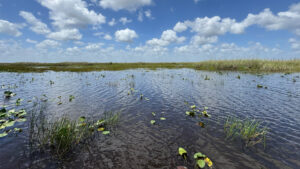
The Miccosukee have always considered the Florida Everglades as their home. So when Republicans in Congress voted to expand the tribe’s land base under the Miccosukee Reserved Area Act – legislation that would transfer 30 acres of land in the Everglades to tribal control – the Miccosukee were thrilled. After years of work, the move would have allowed the tribe to begin environmental restoration activities in the area, and better protect it from climate change impacts as extreme flooding and tropical storms threaten the land.

“The measure reflected years of bipartisan work and was intended to clarify land status and support basic protections for tribal members who have lived in this area for generations,” wrote Chairman Cypress in a statement last week. “Before the roads and canals were built, and before Everglades National Park was created.”
The act was passed on Dec. 11, but on Dec. 30, President Donald Trump vetoed it; one of only two vetoes made by the administration since he took office. In a statement, Trump explained that the tribe “actively sought to obstruct reasonable immigration policies that the American people decisively voted for when I was elected,” after the tribe’s July lawsuit challenging the construction of “Alligator Alcatraz,” an immigration detention center in the Everglades.
“It is rare for an administration to veto a bill for reasons wholly unrelated to the merits of the bill,” said Kevin Washburn, a law professor at University of California Berkeley Law and former assistant Secretary of Indian Affairs for the Department of the Interior. Washburn added that while denying land return to a tribe is a political act, Trump’s move is “highly unusual.”
When a tribe regains land, the process can be long and costly. The process, known as “land into trust” transfers land title from a tribe to the United States, where the land is then held for the benefit of the tribe and establishes tribal jurisdiction over the land in question. When tribal nations signed treaties in the 19th century ceding land, any lands reserved for tribes, generally, reservations, were held by the federal government “in trust” for the benefit of tribes—meaning tribal nations don’t own these lands despite their sovereign status.
Almost all land into trust requests are facilitated at an administrative level by the Department of Interior. The Miccosukee, however, generally must follow a different process. Recognized as a tribal nation by the federal government in 1962, the Miccosukee navigate a unique structure for acquiring tribal land where these requests are made through Congress via legislation instead of by Interior.
“It’s ironic, right?” said Matthew Fletcher, a law professor at the University of Michigan. “You’re acquiring land that your colonizer probably took from you a long time ago and then gave it away to or sold it to someone else, and then years later, you’re buying that land back that was taken from you illegally, at a great expense.”
While land into trust applications related to tribal gaming operations often meet opposition, Fletcher says applications, like the Miccosukee’s, are usually frictionless. And in cases like the Miccosukee Reserved Area Act which received bipartisan support at the state and federal levels, in trust applications are all but guaranteed.
On the House floor on Thursday before the vote, Florida’s Democratic Rep. Debbie Wasserman Schultz said “this bill is so narrowly focused that (the veto) makes absolutely no sense other than the interest in vengeance that seems to have emanated in this result.” The bill’s sponsor, Republican Rep. Carlos Gimenez of Florida, did not respond to requests for comment. In July last year, Gimenez referred to the Miccosukee Tribe as stewards of the Everglades, sponsoring the bill as a way to manage water flow and advance an elevation project, under protection from the Department of Interior, for the village to avert “catastrophic flooding.”
“What you’re asking is for people in the same political party of the guy who just vetoed this thing to affirmatively reject the political decision of the president,” Fletcher said.
The tribe is unlikely to see its village project materialize under Trump’s second term unless the outcome of this year’s midterms invites a Democratic-controlled House and Senate. Studies show that the return of land to tribes provides the best outcomes for the climate.
This article originally appeared in Grist at https://grist.org/indigenous/the-miccosukee-tribe-blocked-alligator-alcatraz-then-trump-blocked-a-bill-to-return-their-land/. Grist is a nonprofit, independent media organization dedicated to telling stories of climate solutions and a just future. Learn more at Grist.org. Banner photo: A sign outside Alligator Alcatraz (iStock image)
Sign up for The Invading Sea newsletter by visiting here. To support The Invading Sea, click here to make a donation. If you are interested in submitting an opinion piece to The Invading Sea, email Editor Nathan Crabbe.
