


By Nir Kshetri, University of North Carolina – Greensboro
The rapid growth of artificial intelligence has sharply increased electricity and water consumption, raising concerns about the technology’s environmental footprint and carbon emissions. But the story is more complicated than that.
I study emerging technologies and how their development and deployment influence economic, institutional and societal outcomes, including environmental sustainability. From my research, I see that even as AI uses a lot of energy, it can also make systems cleaner and smarter.
AI is already helping to save energy and water, cut emissions and make businesses more efficient in agriculture, data centers, the energy industry, building heating and cooling, and aviation.
Agriculture
Agriculture is responsible for nearly 70% of the world’s freshwater use, and competition for water is growing.

AI is helping farmers use water more efficiently. Argentinian climate tech startup Kilimo, for example, tackles water scarcity with an AI-powered irrigation platform. The software uses large amounts of data, machine learning, and weather and satellite measurements to determine when and how much to water which areas of fields, ensuring that only the plants that actually need water receive it.
Chile’s Ministry of Agriculture has found that in that country’s Biobío region, farms using Kilimo’s precision irrigation systems have reduced water use by up to 30% while avoiding overirrigation. Using less water also reduces the amount of energy needed to pump it from the ground and around a farm.
Kilimo is one example that shows how AI can create economic incentives for sustainability: The amount of water farmers save from precision irrigation is verified, and credits for those savings are sold to local companies that want to offset some of their water use. The farmers then earn a profit – often 20% to 40% above their initial investment.
Data centers
U.S. data centers consumed about 176 terawatt-hours of electricity in 2023, accounting for roughly 4.4% of total U.S. electricity use. This number increased to 183 TWh in 2024. This growing energy footprint has made improving data center efficiency a critical priority for the operators of the data centers themselves, as well as the companies that rely on them – including cloud providers, tech firms and large enterprises running AI workloads – both to reduce costs and meet sustainability and regulatory goals.
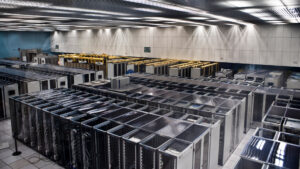
AI is helping data centers become more efficient. The number of global internet users grew from 1.9 billion in 2010 to 5.6 billion in 2025. Global internet traffic surged from 20.2 exabytes per month in 2010 to 521.9 exabytes per month in 2025 – a more than 25-fold increase.
Despite the surge in internet traffic and users, data center electricity consumption has grown more moderately, rising from 1% of global electricity use in 2010 to 2% in 2025. Much of this is thanks to efficiency gains, including those enabled by AI.
AI systems analyze operational data in data centers – including workloads, temperature, cooling efficiency and energy use – to spot energy-hungry tasks. It adjusts computing resources to match demand and optimizes cooling. This lets data centers run smoothly without wasting electricity.
At Microsoft, AI is improving energy efficiency by using predictive analytics to schedule computing tasks. This lets servers enter low-power modes during periods of low demand, saving electricity during slower times. Meta uses AI to control cooling and airflow in its data centers. The systems stay safe while using less energy than they might otherwise.
In Frankfurt, Germany, Equinix uses AI to manage cooling and adjust energy use at its data center based on real-time weather. This improved operational efficiency by 9%, The New York Times reported
Energy and fuels
Energy companies are using AI to boost efficiency and cut emissions. They deploy drones with cameras to inspect pipelines. AI systems analyze the images to more quickly detect corrosion, cracks, dents and leaks, which allows problems to be addressed before they escalate, improving overall safety and reliability.
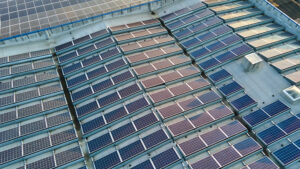
Shell has AI systems that monitor methane emissions from its facilities by analyzing methane concentrations and wind data, such as speed and direction. This helps the system track how methane disperses, enabling it to pinpoint emission sources and optimize energy use. By identifying the largest leaks quickly, the system allows targeted maintenance and operational adjustments to further reduce emissions. Using that technology, the company says it aims to nearly eliminate methane leaks by 2030.
AI could speed up innovation in clean energy by improving solar panels, batteries and carbon-capture systems. In the longer term, it could enable major breakthroughs, including advanced biofuels or even usable nuclear fusion, while helping track and manage carbon-absorbing resources such as forests, wetlands and carbon storage facilities.
Shell uses AI across its operations to cut emissions. Its process optimizer for liquefied natural gas analyzes sensor data to find more efficient equipment settings, boosting energy efficiency and reducing emissions.
Buildings and district heating
The energy needed to heat, cool and power buildings is responsible for roughly 28% of total global emissions. AI initiatives are starting to reduce building emissions through smart management and predictive optimization.

In downtown Copenhagen, for instance, the local utility company HOFOR deployed thousands of sensors tracking temperatures, humidity and building energy flows. The system uses information about each building to forecast heating needs 24 hours in advance and automatically adjust supply to match demand.
The Copenhagen system was first piloted in schools and multifamily housing, with support from the Nordic Smart City Network and climate-innovation grants. It has since expanded to dozens of sites. Results were clear: Across participating buildings, energy use fell 15% to 25%, peak heating demand dropped by up to 30%, and carbon dioxide emissions decreased by around 10,000 tonnes per year.
AI can also help households and offices save energy. Smart home systems optimize heating, cooling and appliance use. Researchers at the Lawrence Berkeley National Laboratory found that by adopting AI, medium-sized office buildings in the U.S. could reduce energy use by 21% and cut carbon dioxide emissions by 35%.
Aviation
About 2% of all human-caused carbon dioxide emissions in 2023 came from aviation, which emitted about 882 megatons of carbon dioxide.

Contrails, the thin ice clouds formed when aircraft exhaust freezes at cruising altitudes, contribute more than one-third of aviation’s overall warming effect by trapping heat in the atmosphere. AI can optimize flight routes and altitudes in real time to reduce contrail formation by avoiding areas where the air is more humid and therefore more likely to produce contrails.
Airlines have also used AI to improve fuel efficiency. In 2023, Alaska Airlines used 1.2 million gallons less fuel by using AI to analyze weather, wind, turbulence, airspace restrictions and traffic to recommend the most efficient routes, saving around 5% on fuel and emissions for longer flights.
In short, AI affects the environment in both positive and negative ways. Already, it has helped industries cut energy use, lower emissions and use water more efficiently. Expanding these solutions could drive a cleaner, more sustainable planet.
Nir Kshetri is a professor of management at the University of North Carolina – Greensboro.
This article is republished from The Conversation under a Creative Commons license. Read the original article. Banner photo: An airliner with contrails flying across the sky (iStock image).
Sign up for The Invading Sea newsletter by visiting here. To support The Invading Sea, click here to make a donation. If you are interested in submitting an opinion piece to The Invading Sea, email Editor Nathan Crabbe
