


By Jon Paul “J.P.’’ Brooker, Ocean Conservancy
If it is Blue Origin’s mission to “build a road to space for the benefit of Earth,” one has to wonder why they are applying for permits to dump nearly 500,000 gallons of untreated industrial wastewater into Florida’s marine environment every single day.
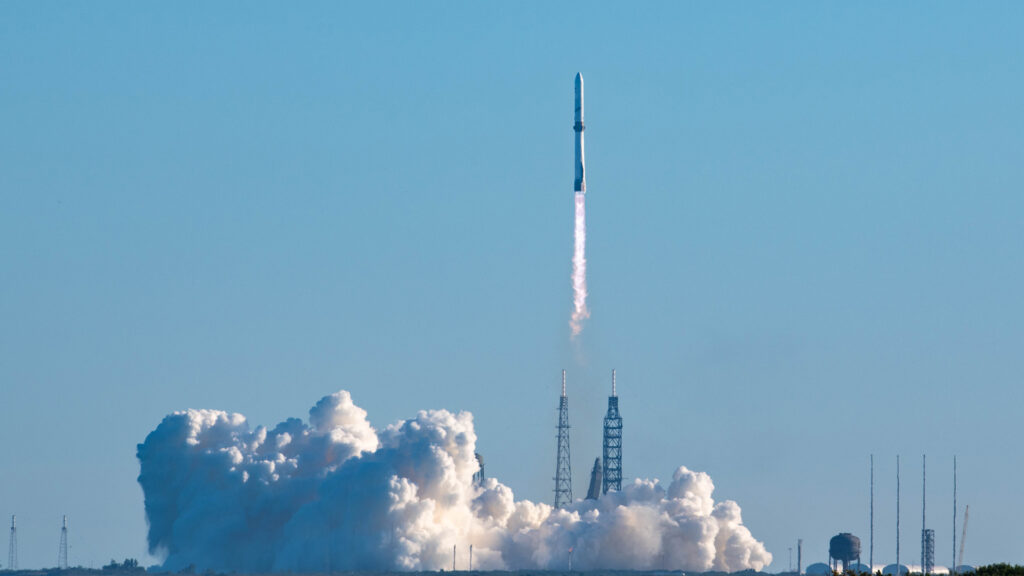
I raise this as a genuine lover of space exploration and research. My dad left the U.S. Air Force to work on the Apollo missions at the Kennedy Space Center in the 1960s. In fact, growing up on the Space Coast of Florida, nearly every family in my community of Merritt Island relied on some aspect of the space program for high quality jobs that put food on the table. That persists to today, as we see businesses like Blue Origin and SpaceX investing billions in the Space Coast to keep driving American space ingenuity.
But this investment cannot come at the cost of Florida’s ― and the planet’s ― most treasured resource right here on earth: the ocean.
One of the signature features of the Space Coast is that it is perched alongside a crown jewel of the Sunshine State’s coastal environment, the Indian River Lagoon. Nestled roughly halfway between Jacksonville and Miami, the lagoon is a 156-mile estuary where saltwater from the Atlantic Ocean and freshwater from the mainland merge to create a diverse breeding and feeding area for sea turtles, hundreds of species of fish and seabirds, and thousands of species of other animals and plants.
Designated an Outstanding Florida Water and an Estuary of National Significance, the Lagoon is fringed with protected state and federal lands like the Canaveral National Seashore, Merritt Island National Wildlife Refuge and Archie Carr National Wildlife Refuge. Over the decades, it has survived hurricanes, algae blooms and other natural and man-made challenges.
But now this national treasure ― one of the most biodiverse estuaries on the planet ― is facing a completely preventable threat.

Blue Origin has an incredible opportunity to be a good neighbor to the Space Coast and work with partners in the aerospace industry to limit their impacts on the precious Indian River Lagoon. Instead of merely dumping their untreated wastewater into the ocean, the company could work with state leaders to pave the way for advanced wastewater treatment technology in the northern Indian River Lagoon system, treating not only their own discharge, but potentially the discharges of local governments that should be shifted away from septic and onto public sewer systems with advanced wastewater treatment anyway. In doing so, they could transform the water quality of the Indian River Lagoon and accelerate the lagoon’s ecological recovery for the benefit of residents and businesses alike.
It is my hope that the company sees and understands that this is not just about Florida’s waters. Our ocean spans the globe. In fact, Blue Origin was named for our blue planet — blue because of the ocean that encircles us. I urge them to remember that, and urge investors, local residents and Florida tourists alike to hold them accountable to their lofty mission. As the brilliance of our space industry endeavors to explore the skies, they should also remember to protect our blue home.
Jon Paul “J.P.’’ Brooker is Ocean Conservancy’s director of Florida conservation. He lives in St. Petersburg. This opinion piece was originally published by Florida Today and other USA Today Network-Florida newspapers, which are media partners of The Invading Sea. Banner photo: Blue Origin’s rocket factory in Merritt Island (iStock image).
Sign up for The Invading Sea newsletter by visiting here. To support The Invading Sea, click here to make a donation. If you are interested in submitting an opinion piece to The Invading Sea, email Editor Nathan Crabbe.
