


By R.J. Lehmann and Kristian Stout, International Center for Law & Economics
The global AI race won’t be won in Silicon Valley alone. It may hinge just as much on whether places like Florida can keep the lights on after a hurricane.
The United States is pouring hundreds of billions of dollars into the infrastructure that will power artificial intelligence, cloud computing, advanced wireless networks and immersive technologies. But too much of the debate treats data centers as self-contained fortresses — as if the story ends at the server rack.
A data center is only as reliable as the grid that powers it, the fiber that connects it, the roads that reach it, the water systems that cool it and the surrounding community’s ability to recover after a disaster. That broader infrastructure picture matters enormously in Florida, where explosive growth now collides with mounting climate and resilience risks.
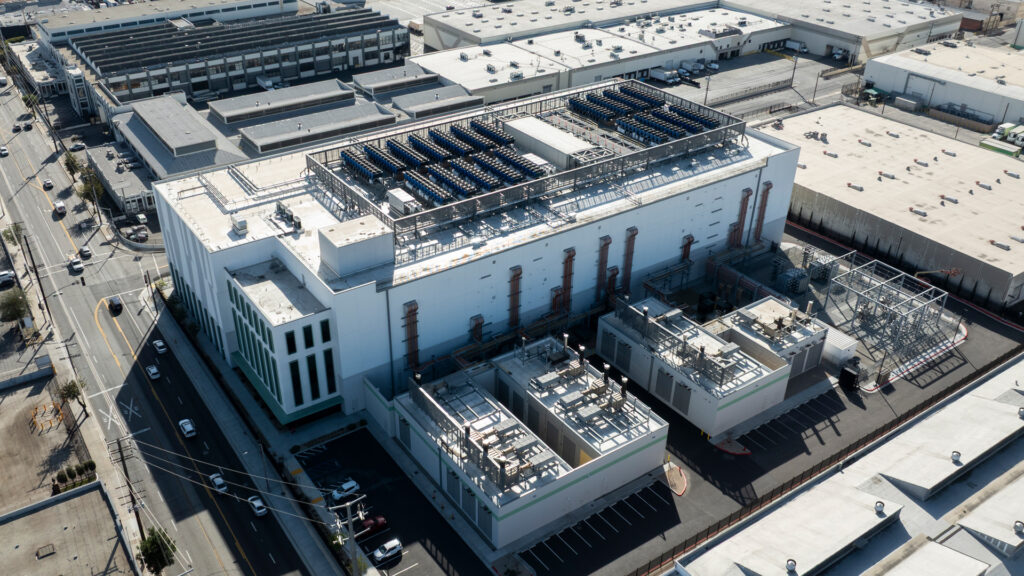
A new MS Amlin analysis found that 56% of planned U.S. data centers — representing nearly $800 billion in investment — are in states highly exposed to hurricanes, severe storms, earthquakes or winter storms. Much of that development is shifting toward southern states, where land and power are often cheaper and more available.
Florida sits squarely in that trend. The state’s population surpassed 23.4 million this year, according to the U.S. Census Bureau, after years of rapid in-migration. More residents mean more demand for cloud services, hospitals, logistics systems, broadband, wireless capacity, financial services and AI-enabled tools that increasingly underpin daily life. That demand makes Florida a logical place for digital-infrastructure investment. It also makes the state unusually vulnerable when critical systems fail.
This is why disaster mitigation is no longer separate from technology policy. In Florida, they are becoming the same thing.
AI infrastructure is especially sensitive to disruption. Training advanced AI models requires enormous, uninterrupted computing power. Consumer-facing AI services also depend on low-latency connections and constant uptime. Storms that flood roads, knock out substations, sever fiber routes or disable cooling systems can ripple far beyond a single facility. A major outage no longer just means inconvenience. It can disrupt hospitals, emergency response systems, communications networks, banking platforms and the broader digital economy.
Florida also faces a less glamorous but equally important challenge: heat. Data centers generate extraordinary amounts of heat around the clock. Cooler and drier states can often rely on outside air or ambient temperatures to reduce energy consumption. Florida’s hot, humid climate makes that far harder. Even northern Florida can use some air-side cooling systems only about half the year, according to EnergyStar.
That has consequences for both energy and water demand. The American Water Works Association has warned that data centers are becoming high-impact customers. In fast-growing states like Florida, cooling infrastructure increasingly depends on coordinated planning around power generation, water supply, drainage and heat resilience.
Private companies can harden their own facilities. They can reinforce buildings, add backup power, diversify fiber connections and deploy more efficient cooling systems. What they cannot do alone is modernize the electric grid, strengthen stormwater infrastructure, expand water capacity, harden transmission systems or guarantee that emergency services remain operational after a major hurricane. Those are public goods. They require public investment.
This is not an argument for corporate subsidies dressed up as AI policy. Florida should not hand out blank checks to every project branded as “innovation.” It should invest in the underlying systems that make communities and businesses more resilient. That means hardened substations. Modern drainage systems. Redundant fiber routes. Stronger building standards. Better flood mapping. Faster post-disaster recovery capacity. Smarter water planning. Reliable roads and transportation networks.
Those investments protect residents first. They also make Florida a more attractive and sustainable place to build long-term digital infrastructure. That matters because insurers and investors are paying attention. MS Amlin’s analysis warns not just about individual storm losses, but about the growing concentration of expensive infrastructure in hazard-prone regions. If insurers become more wary of correlated losses, coverage could become more expensive or harder to obtain. That, in turn, could slow investment.
Florida cannot control hurricane season. It can control whether its infrastructure is resilient enough to withstand it. The states competing to lead the AI economy are also competing on reliability. Cheap land and abundant power may attract projects in the short run. Reliable infrastructure, insurable risk and fast recovery will determine where innovation ecosystems actually endure.
The future of AI will depend on chips, software and breakthrough models. In Florida, it may depend just as much on flood pumps, substations, fiber lines and whether communities can recover quickly after the next storm.
R.J. Lehmann is editor-in-chief of the International Center for Law & Economics. He lives in St. Petersburg. Kristian Stout is ICLE’s director of innovation policy and author of the issue brief “Infrastructure Is Destiny: The Geography of the Next Technology Race.” This opinion piece was originally published by the Tampa Bay Times, which is a media partner of The Invading Sea. Banner photo: An image captured on a NOAA satellite of Hurricane Milton approaching the Gulf Coast of Florida (NOAA).
Sign up for The Invading Sea newsletter by visiting here. If you are interested in submitting an opinion piece to The Invading Sea, email Editor Nathan Crabbe.
