


By Diana Udel, University of Miami News
A recent study published in the journal Nature Scientific Reports reveals a surprising discovery in the fight against one of the most destructive coral diseases in the Atlantic and Caribbean: High sea surface temperatures may slow down the spread of Stony Coral Tissue Loss Disease (SCTLD).
First reported off the coast of Miami in 2014, SCTLD has since devastated coral reefs across the Florida Keys, Puerto Rico, Mexico, and parts of Latin America. The disease rapidly strips corals of their tissue, leaving behind bare skeletons. Despite intensive investigation, the exact cause of SCTLD remains unknown. However, environmental factors — such as ocean warming and nutrient pollution — are believed to influence its progression.
In a series of tightly controlled experiments at the Experimental Reef Lab located at the University of Miami Rosenstiel School of Marine, Atmospheric and Earth Science, the researchers used state-of-the-art robotic technology to expose eighty coral fragments to different combinations of water temperature and nutrient concentrations.
Key findings
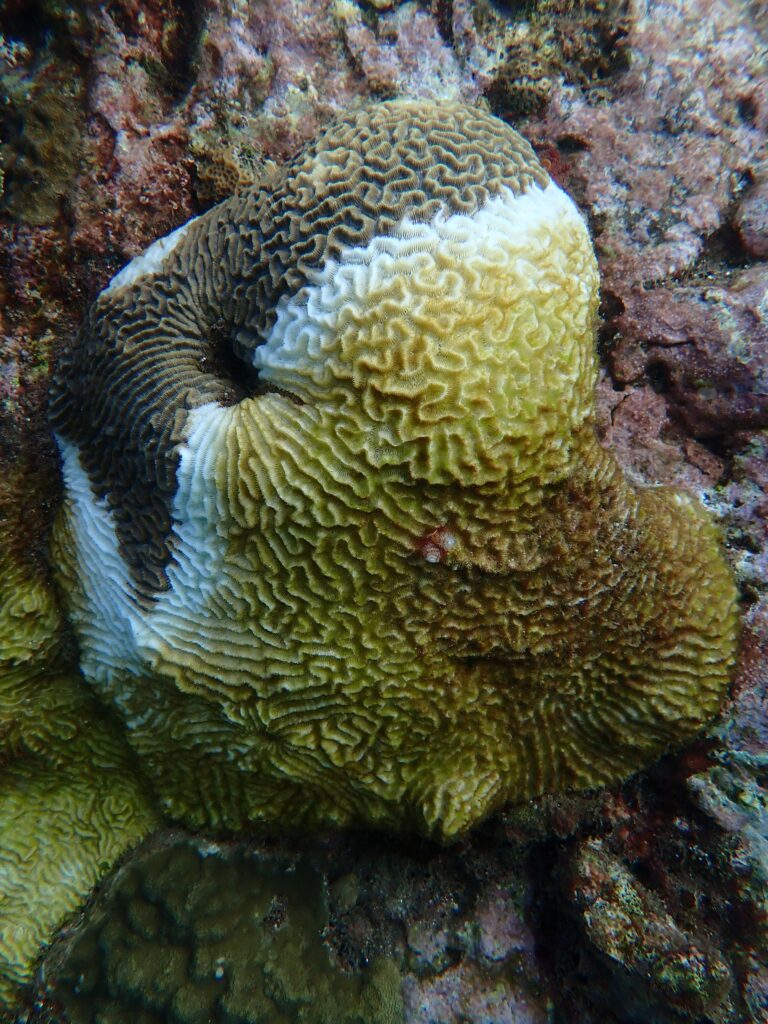
SCTLD transmission was significantly lower at a higher temperature of 31 degrees C (approximately 88 degrees F) compared to a lower temperature of 28 degrees C (approximately 82 degrees F). The discovery suggests that peak summer temperatures may offer temporary relief from disease spread in affected regions. In contrast, elevated nutrient levels — particularly ammonium — did not influence disease transmission, though they did impair the corals growth, especially when combined with high temperatures.
The research, funded by the Florida Department of Environmental Protection, focused on the mountainous star coral (Orbicella faveolata), a key reef-builder in the Caribbean now listed as endangered. Understanding how environmental stressors interact with coral disease is critical for protecting reef systems and guiding recovery efforts.
“The use of robotic automation allowed us to precisely and independently treat coral fragments with different nutrients and diseases, while keeping each fragment in its own precise isolated environment,” said Ana Palacio, the lead author of the study and an assistant scientist at the University of Miami NOAA Cooperative Institute for Marine and Atmospheric Studies (CIMAS) at the Rosenstiel School and the Atlantic Oceanographic Meteorological Laboratory’s Coral Program “This breakthrough ensures reliable, contamination-free results and opens new possibilities for high-replication marine disease research at scale.”
Research on the impacts of multiple environmental conditions on coral’s health will continue as part of the ongoing Florida Regional Ecosystems Stressors Collaborative Assessment (FRESCA) project, a four-year initiative funded by the National Oceanic and Atmospheric Administration. FRESCA aims to identify environmental thresholds for reef resilience under increased stressors including ocean warming, acidification and low oxygen conditions.
The researchers plan to expand this work with future experiments to examine how combined stressors may alter disease dynamics and coral health more broadly.
For more information, visit https://news.miami.edu/rosenstiel/stories/2025/07/high-ocean-temperatures-may-slow-deadly-coral-disease-new-study-finds.html. Banner photo: The Experimental Reef Lab at the University of Miami Rosenstiel School, designed by scientists at AOML and CIMAS, precisely simulates future ocean conditions using custom technology (University of Miami). To see more about the lab, watch the video below.
Sign up for The Invading Sea newsletter by visiting here. To support The Invading Sea, click here to make a donation. If you are interested in submitting an opinion piece to The Invading Sea, email Editor Nathan Crabbe at nc*****@*au.edu.

thank you for making this article very useful and keep up the good work