


By Ivis García, Texas A&M University
Imagine that a hurricane has destroyed your home.
The roof is gone. The floors are flooded. Your family’s belongings are ruined.
When this happens, you can apply for federal disaster aid, hoping for a lifeline. For many low-income families and other people of modest means, funding for that aid is often channeled to the states through the Department of Housing and Urban Development’s Community Development Block Grant Disaster Recovery program.
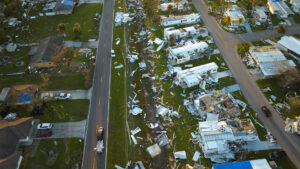
Known as CDBG-DR, this program mainly provides funding to repair and rebuild homes belonging to people of low-to-moderate income who either have no insurance at all or whose coverage falls short of what is needed to making housing safe again.
When homes are damaged beyond repair or located in areas where it’s too dangerous to rebuild because of the likelihood of future bouts of flooding in the same place, the CDBG-DR program can help pay for residents to move somewhere else that is less prone to disasters. In both cases, it covers costs that the Federal Emergency Management Agency does not pay for.
But in 2025, with hurricane season underway, the rules for who gets help and how it’s distributed have changed significantly.
As an urban planner who has researched disaster recovery efforts, I’m alarmed by Memorandum 2025-02, which HUD published on its website in March 2025.
The memo changes the rules for nearly $12 billion in disaster recovery funding approved by Congress for disasters occurring in 2023 and 2024. And HUD is implementing these changes early in the process, before any of this money has been distributed.
What has changed
The memo does away with the civil rights certifications, fair housing assessments, environmental standards and citizen advisory groups
that have long been mandatory for the recipients of disaster recovery funds.
Civil rights certification means that CDBG-DR grantees must verify that disaster aid will be distributed without discrimination based on race, ethnicity, age, disability status, or other characteristics known as “protected classes.” Without this certification, there’s no formal process to ensure disaster aid is distributed fairly.
Fair housing obligations are assessments of whether middle- and lower-income families, people of color or people with disabilities can find safe, affordable housing without facing any discrimination.
In addition, HUD no longer requires detailed demographic reporting on who is applying for or receiving aid. This includes information such as gender, race, age, disability status and the language someone speaks.
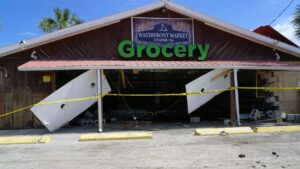
Another change is that HUD’s updated disaster recovery guidelines no longer require economic development funds to emphasize people of modest incomes or their communities. Under the new rules, any business hit by a disaster can get recovery funds. It doesn’t matter how much money the owners make, as long as they can show that the disaster affected them.
And several important environmental protections have been rolled back. HUD previously mandated that disaster recovery projects comply with federal building standards.
Those codes are tougher than the local housing codes. These included rules for building homes higher off the ground to avoid future flooding and using stronger construction methods to withstand extreme weather events. Without them, new construction may be less durable and less safe – especially in areas hit hard by hurricanes or other natural disasters.
Strong energy efficiency standards help keep long-term utility costs low and reduce pressure on power grids during extreme weather events. They also make rebuilt homes more sustainable by reducing greenhouse gas emissions.
Less coordination and communication
HUD has also removed a requirement for the nonprofits, local governments and other recipients of CDBG-DR grants to create and convene citizen advisory groups. That change took effect on March 24.
These groups, which have long made it easier for local communities to have a say regarding federally funded disaster recovery efforts, have played an important role in making sure those efforts reflect the needs and priorities of local residents – especially those most affected.
While eliminating this step may make it easier and faster for local governments to spend the recovery funds allocated for their communities, it also means there’s less opportunity for their own communities to influence how those funds are spent. Without that input, recovery efforts fail to resolve the real challenges people are facing.
Staffing and funding cuts
The White House’s 2026 budget proposal retains the HUD program that distributes disaster recovery grants while eliminating the related Community Development Block Grant program, which helps people experiencing homelessness and also funds everything from child care to services for older people.
I’m concerned about how CDBG-DR grants will be distributed, apart from the program’s changes. HUD’s Office of Community Planning and Development, which administers the CDBG-DR program, is slated to lose 84% of its staff, according to widespread media reports published earlier this year.
The Trump administration is also calling for cutting HUD’s staff, and President Donald Trump’s proposed 2026 budget would cut the agency’s entire budget in half.
In its March 25 HUD memo, the Trump administration framed these policy changes as a way to streamline recovery efforts and provide greater flexibility in the use of federal disaster funds. The memo also asserted that the changes were needed for compliance with executive orders that banned the use of diversity, equity and inclusion criteria and hiring practices that the administration considers to be discrimintory.
But critics of the policy rollbacks, including the National Low Income Housing Coalition, which advocates affordable housing, worry that removing long-standing safeguards could weaken the CDBG-DR program’s core mission of equitably distributing aid and building resilient communities. The standards and community input systems HUD has abandoned, the coalition says, have historically helped ensure that disaster recovery funds reach the people who need them most.
Ivis García is an associate professor of landscape architecture and urban planning at Texas A&M University.
This article is republished from The Conversation under a Creative Commons license. Read the original article. Banner photo: Some of the destruction to homes caused by Hurricane Ian in Florida (iStock image).
Sign up for The Invading Sea newsletter by visiting here. To support The Invading Sea, click here to make a donation. If you are interested in submitting an opinion piece to The Invading Sea, email Editor Nathan Crabbe at ncrabbe@fau.edu.
