


By Alexandra Rasch, Caban Systems, and Marcelo Cataldo, Digicel Group
Much of the world’s infrastructure is proving no match for increasingly severe weather. The Caribbean, in particular, is at a critical connection crossroads, as last year’s Hurricane Beryl proved.
We face increasingly severe weather events that threaten our environment and the infrastructure that supports our vital connection in South Florida, which has the highest number of Caribbean immigrants in the United States.
Telecommunications networks are among the most vital lifelines that will dictate our future — connecting families, businesses, banking, emergency services and governments across the U.S. and the globe.
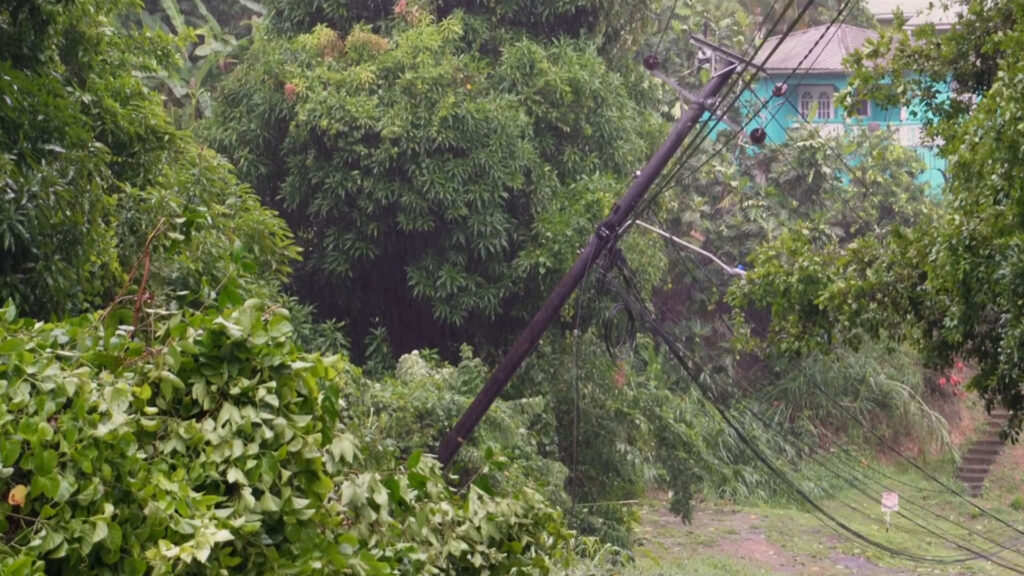
That’s why Caban, a Miami-based renewable energy company, and Digicel, the largest mobile provider in the Caribbean, launched a critical partnership beginning in Jamaica last week that will help address this persistent vulnerability.
Beryl wreaked havoc through the region, including Jamaica’s south coast, leaving hundreds of thousands without power and without running water for extended periods.
But these networks remain highly dependent on fragile power grids that can be easily disrupted by hurricanes and other natural disasters. Globally, at least $21 trillion needs to be invested in the electricity grid by 2050 to support a net-zero trajectory, according to BloombergNEF.
Given these enormous costs, it is imperative that we turn to more efficient, more innovative approaches. And we hope this new partnership can be a model for the entire region.
The goal is to solarize up to 55% of Digicel Jamaica’s cell sites and provide battery backup — a transformative step toward building a system that is environmentally responsible and operationally resilient. This initiative across industries, governments and investors will support economic development while reimagining how critical infrastructure can adapt to climate realities.
The effects of Hurricane Beryl highlighted the importance of strengthening network reliability during crises. In response, Digicel committed to the Jamaican government to invest in renewable energy solutions to enhance service continuity and contribute to a more sustainable energy future.
Caban — founded to help organizations decarbonize their critical systems — will work with Digicel to install solar power packs that include battery storage at 511 of Digicel’s nearly 900 cell sites across Jamaica.
By generating electricity onsite through solar power and storing it for use even when the sun isn’t shining, the cell sites will add protection against outages and lower operational costs associated with diesel generators and unreliable grids, while also significantly reducing greenhouse gas emissions.

This initiative will serve as a blueprint for the wider Caribbean and South Florida region, and as a shared vision of blending technological progress with ecological stewardship.
Caribbean countries bear the brunt of climate impacts despite contributing minimally to global emissions. These partnerships offer pathways to sustainable development that prioritizes resilience, innovation and community empowerment.
We anticipate that the success of this solar rollout in Jamaica will catalyze further deployments throughout our area. It’s an initiative that can be replicated across the region where hardening grids can be cost prohibitive, but mobile technology is imperative.
Together, we can build a resilient, sustainable telecommunications infrastructure that safeguards connectivity even during the most difficult moments.
Alexandra Rasch is founder and CEO of Caban Systems, which designs and manufactures energy storage systems for critical infrastructure, including for the telecommunications industry. She is a native of Guatemala and based in Miami. Marcelo Cataldo is the CEO of Digicel Group, one of the largest telecommunications companies in the Caribbean and Latin America. He is a native of Paraguay and based in Kingston, Jamaica. This opinion piece was originally published by the Sun Sentinel, which is a media partner of The Invading Sea. Banner photo: Hurricane-damaged power lines and transformers (iStock image).
Sign up for The Invading Sea newsletter by visiting here. To support The Invading Sea, click here to make a donation. If you are interested in submitting an opinion piece to The Invading Sea, email Editor Nathan Crabbe at ncrabbe@fau.edu.

What a stellar idea! Finally, someone addresses the Caribbeans电力 grid fragility with a mix of ingenuity and renewable energy. Bringing solar power to cell sites is like giving our networks superpowers – enough juice to keep us connected even when the rest of the island is blackout central. Its a win-win: less reliance on diesel generators and a significant boost to our eco-friendly credentials. Plus, its the perfect example of public-private partnerships turning crisis into opportunity. Who knew hurricanes could lead to a more sustainable future? Heres to hoping this model becomes the new norm across the region!màn hình đếm ngược thời gian