


By Christopher F. Meindl, University of South Florida
“Behold … a vast circular expanse before you, the waters of which are so extremely clear as to be absolutely diaphanous or transparent as the ether.”
Naturalist William Bartram wrote these words in the 18th century as he gazed in wonder at Salt Springs, located in Ocala National Forest in what is now Marion County, Florida.
Springs are points where groundwater emerges at the earth’s surface, and Florida boasts more than 1,100 of them. North and central Florida comprise one of the largest concentrations of freshwater springs in the world.
Many of these springs provide a home to a variety of wild animals and plants. But they are also canaries in the coal mine for Florida’s groundwater system, because they draw upon the same groundwater that many Floridians depend on for drinking water, farm irrigation and industrial use.
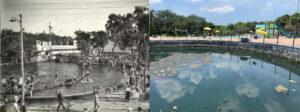
Right now, many Florida springs suffer from reduced flow and habitat loss, as well as excessive algae and heavy pressure from human use. Because most of the state’s springs are not monitored by any research institution or government agency, the full scope of the problem remains unclear.
The state Legislature has designated 30 Outstanding Florida Springs whose health must be protected under the Florida Springs and Aquifer Protection Act of 2016. But 24 of the 30 were impaired by pollution – primarily nitrogen – at the time of this designation, and today, their condition has not improved.
In 2025, 26 of the 30 – the same 24 springs, plus two more – to be impaired.
and my own observation, many other popular springs are impaired by pollution as well. Since 2011, the state of Florida has spent roughly $357 million on springs restoration.
As a geography professor, I study springs in the context of people and their use of water. My research has taught me that Florida’s springs vary based on location and local circumstances. Because of this, I believe reviving their health will require several multidimensional solutions.
Recalling healthy springs
What should a healthy spring look like? The answer to this can be harder to articulate than you might think. Many springs feature a visible boil at the water surface above the spring vent, crystal clear water, submerged grasses waving in the current, and a range of fish, turtles, snails and other aquatic animals hiding in the grasses.
Yet because many springs are changing slowly, changes in flow and water clarity can go unnoticed. Some scientists call this the shifting baseline syndrome: Each generation perceives springs in a slightly more degraded state, but absent prior observations, we assume that what we see is “normal.”
Fortunately, in the case of Florida springs, historical observations from naturalists and area residents give scientists clues going back centuries.
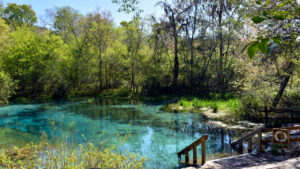
When Bartram visited Manatee Springs near Chiefland and the Suwannee River in the Big Bend in 1774, he wrote that the spring’s flow was “astonishing” and that “it is impossible to keep the boat or any other floating vessel over the fountain.”
Similarly, senior citizens who grew up in North Central Florida in the early 20th century told writer P.C. Zick that spring flow at Ichetucknee Springs was once so strong that they could hear the spring boil before getting close enough to see it.
Both springs’ boils are noticeable today, but they are clearly not what they used to be.
When naturalist John James Audubon visited Volusia County’s De Leon Springs in 1832, he found that “The water was quite transparent, although of dark color.” And Bartram wrote of Salt Springs that the water was so clear, he thought he could reach out and touch fish that were 20 to 30 feet below the surface.
Water clarity in thriving springs fosters plenty of submerged grasses soaking up sunshine, along with a wide variety and large number of fish and other aquatic animals that depend on this vegetation. Bartram wrote that he spotted gar, trout, bream, “the barbed catfish, dreaded sting-ray, skate and flounder, spotted bass, sheeps head and ominous drum” at Salt Springs.
A multifaceted problem
Many Florida springs and their runs now suffer reduced flow, wear and tear from hundreds of thousands of well-meaning visitors, and excess algae.
And while some Florida springs, such as Polk County’s Kissingen Springs, have completely dried up, many more produce less flow than they used to.
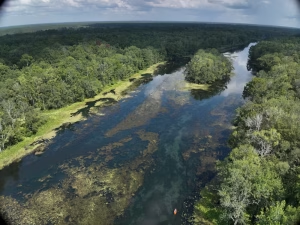
It is easy to assume that bottled water companies are the reason for seriously reduced spring flows, and in at least one case, bottling spring water has raised concerns of overuse.
Yet a state report published in 2021 that found that bottlers were permitted to extract just over 5 million gallons per day from Florida’s springs – a tiny fraction of the 2.3 billion gallons of groundwater pumped each day from the Floridan Aquifer, which provides drinking water for more than 10 million people in the southeastern United States.
The most problematic reductions in spring flow are from significant groundwater pumping for agricultural irrigation, heavy urban, mining or industrial water use, or in some cases a long-term rainfall deficit. Various springs suffer from one or more of these problems.
In addition, as Florida’s population and tourism have grown, so have the number of visitors to the state’s most popular springs. In 2019, Florida springs attracted more than 4 million visitors. During the summer, especially on weekends, some springs are so crowded that staff members have to turn away visitors. And in winter, springs that attract manatees can be equally crowded.
In shallow portions of springs and spring runs, this means thousands of happy feet trample and destroy vegetation. And when submerged grasses disappear, so do the aquatic animals that rely on them for food.
Unwanted algae
Finally, there is the mystery of excess algae. Algae naturally occurs in most springs, but today, many springs have so much that it clouds the water, or they have stringy filamentous algae that blankets the soil and rocks around a spring and along its run. Still others have algae that sticks to submerged aquatic plants, blocking vital sunlight.
The predominant narrative among many springs scientists, advocates and government officials is that rising nitrate levels in springs over the past few decades fuels the growth of excess algae. Nitrate, a form of nitrogen, is a plant nutrient.
Yet other scientists have suggested that reduced spring discharge creates slower-moving water, which loses its ability to push excess algae away.
Another hypothesis is that if dissolved oxygen levels temporarily fall below a certain threshold, it can kill off the snails and other animals that graze on the algae and keep it in check.
A balanced restoration plan
More than two-thirds of state-funded springs restoration projects over the past decade have been for some form of enhanced sewage treatment. This is because excess nitrogen is assumed to be the cause of excess algae in Florida springs, and Florida farmers are presumed to be in compliance with water quality regulations if they implement best management practices.
Enhanced sewage treatment is a good thing, especially in cases where human waste is clearly a pressing problem. In some cases, investing in advanced sewage treatment, shifting landowners from septic systems to sewage treatment plants or even enhanced treatment of storm water before it sinks into the ground clearly benefits springs.
However, shifting people from septic tanks to central sewage treatment is expensive. Based on the evidence and my own observations of various springs within Florida’s landscape, I believe that many springs need more than this single solution.
Some need shoreline stabilization to prevent erosion or rules that reduce human pressure on spring vegetation. Others need algae or sediment removed and native vegetation reintroduced.
In still other cases, it would help to purchase property to prevent harmful development or to retire farmland. And in nearly every case, the springs would benefit from Florida residents and businesses reducing water and fertilizer use.
And, restoring and maintaining the health of Florida’s 1,100 springs will require further study to tailor appropriate interventions to each one.
Christopher F. Meindl is an associate professor of geography at the University of South Florida.
This article is republished from The Conversation under a Creative Commons license. Read the original article. Banner photo: Gilchrist Blue Springs, located about 20 miles northwest of Gainesville, is a popular recreation site known for the clarity of its water. (Christopher Meindl, CC BY).
Sign up for The Invading Sea newsletter by visiting here. To support The Invading Sea, click here to make a donation. If you are interested in submitting an opinion piece to The Invading Sea, email Editor Nathan Crabbe at nc*****@*au.edu.

Meanwhile they systematically destroy every living plant in every living body of water with herbicide spray but y’all don’t know why our waterways are in such grave danger but also direct injection that is been going on for years now that is contaminating the aquifer from below are drinking water level purposeful dumping of chemicals into our natural water below our drinking aquifer contaminating the world’s water