


By Lorna Perez, Moms Clean Air Force
Just over one year ago, Hurricane Milton ripped through the Tampa Bay area. As I waited out the storm from Tampa, I scrolled through my social media feeds in horror as they filled with videos of the wind shredding the roof of Tropicana Field.
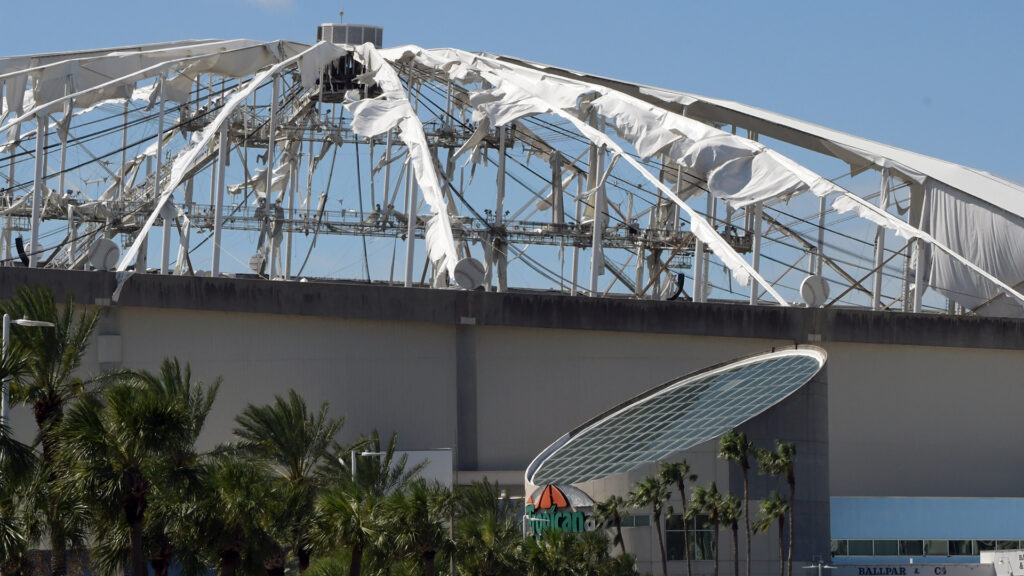
Too many people I knew had just lost everything in Hurricane Helene – a once-in-500-year storm. Barely weeks later, we were bracing for Milton, a once-in-1,000-year hurricane. I wondered what kind of destruction I’d wake up to when it passed.
I instantly thought of my nephew. He’s only 7 years old now. We know that burning fossil fuels is accelerating global warming and making extreme weather events more intense. What kind of storms will he face when he’s my age?
As the Florida organizer for Moms Clean Air Force, I am often reminded of how uniquely vulnerable kids are to environmental hazards. Children aren’t just little adults. They breathe faster and spend more time outdoors, and their developing bodies are especially sensitive to air pollution, extreme heat and stress. Hurricanes make these challenges worse – cutting power, disrupting schools and deepening anxiety for families already stretched thin.
After living in Florida for more than a decade, I can say these storms feel different – and the science confirms it. Both Helene and Milton were supercharged by global warming. Our state generates the vast majority of its energy by burning natural gas, which releases planet-warming pollution and keeps us hooked on a volatile fuel that drives up energy costs. We can’t stop hurricanes from hitting Florida, but we can influence how severe they become by curbing our reliance on fossil fuels.
Florida can protect the health and future of its families by embracing clean energy, which doesn’t produce dangerous pollution. With our famous sunny skies, we’re an ideal place to expand solar power – an energy source that’s good for both our health and our wallets.
Solar power is now the cheapest source of electricity in the U.S., yet Florida utilities still rely heavily on imported natural gas to generate power. That dependence exposes families to price spikes and market volatility.
By increasing investments in utility-scale solar, utilities can hedge against those economic risks and deliver more stable, affordable energy for Floridians. Expanding homegrown solar is an investment in public health, energy independence and household stability.
Clean, homegrown energy also helps shield Florida’s kids from the pollution that worsens asthma, heart disease and other illnesses. According to the American Lung Association, nearly 270,000 Florida children have asthma, meaning ever ton of pollution we prevent is a breath of fresh air for families across the state.
The Sunshine State should live up to its name. If utilities follow through on their solar commitments, Florida can lead the way in delivering cleaner air, lower bills and a safer future for our children.
The choices our utilities make today will determine whether the next generation inherits stronger storms and higher bills, or a Florida powered by the sun.
Lorna Perez is the Florida field organizer for Moms Clean Air Force. Banner photo: An aerial view of a solar farm in North Florida (iStock image).
Sign up for The Invading Sea newsletter by visiting here. To support The Invading Sea, click here to make a donation. If you are interested in submitting an opinion piece to The Invading Sea, email Editor Nathan Crabbe at ncrabbe@fau.edu.
