


By Gisele Galoustian, FAU News Desk
Florida Atlantic University’s Charles E. Schmidt College of Science has received a five-year, $1,427,679 grant from the U.S. Army Corps of Engineers to fund a project titled, “Dry Season Prey Concentrations in the Florida Everglades.”
The project is led by Michelle L. Petersen, Ph.D., assistant research professor in the Department of Biological Sciences, Charles E. Schmidt College of Science, and director of the Environmental Science Program in the School of Environmental, Coastal and Ocean Sustainability. Petersen and her team will collect and analyze critical data on aquatic prey and habitat conditions during the dry season across the freshwater Everglades, providing essential insight into one of the most important drivers of wading bird nesting success.
“This project is incredibly exciting because it allows us to quantify the link between water conditions, fish populations and wading bird nesting across the Everglades,” said Petersen. “By identifying when and where prey concentrations occur, we can better understand what drives nesting success and provide information that directly supports restoration efforts in this unique and vital ecosystem.”
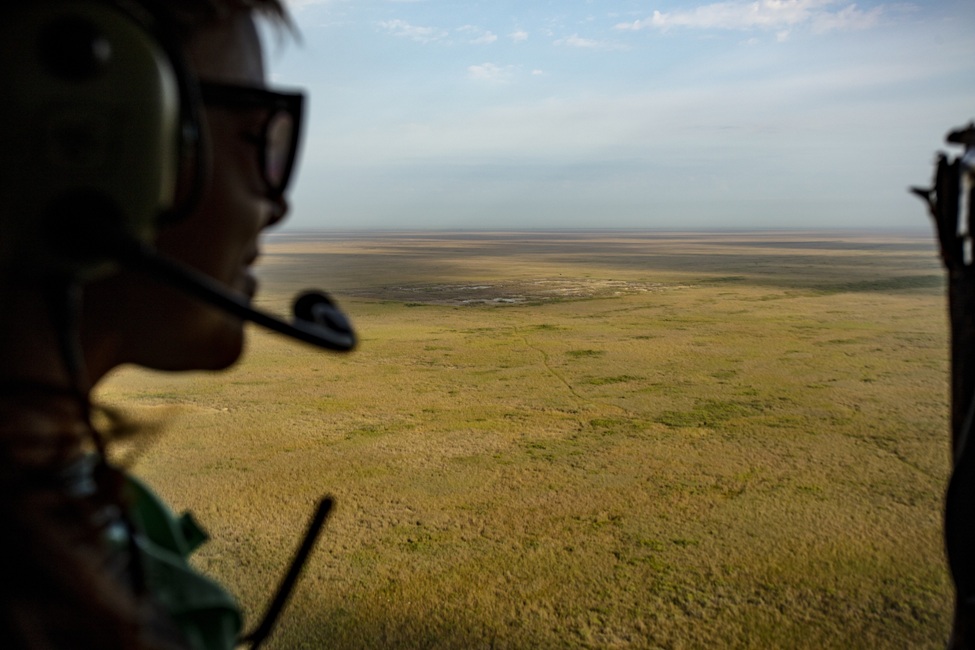
The research directly supports the U.S. Army Corps of Engineers’ Comprehensive Everglades Restoration Plan (CERP), a large-scale effort authorized by the Water Resources Development Act of 2000 to restore South Florida’s ecosystem by modifying water management practices. A vital component of CERP is the Monitoring and Assessment Plan (MAP), which was developed to evaluate ecological responses to restoration, track progress toward restoration goals and guide adaptive management decisions.
“One of the biggest questions we’re trying to answer through this project is how wading birds respond to changes in water levels, especially during the dry season when the concentration of prey can make or break their nesting success,” said Petersen.
Declines in wading bird populations have been linked to reductions in fish and other aquatic prey, particularly when these prey fail to concentrate in small patches that birds can efficiently exploit. Research shows that wet-season prey abundance alone does not predict nesting success; rather, it is the formation of dense prey concentrations in drying wetlands that largely determines whether wading birds can sustain large, successful colonies.
Petersen’s project will provide quantitative data on where, when and how these concentrations occur across the Everglades landscape, including Everglades National Park, the Water Conservation Areas and the C-111 Basin.
The project builds on prior MAP-supported research and will employ a probabilistic, multi-stage sampling framework designed to measure maximum aquatic prey densities and track inter-annual variability in relation to hydrologic conditions. Researchers will also examine how local site characteristics, regional prey populations and microtopography influence prey concentrations. These data will fill a critical knowledge gap: prior to MAP studies, little was known about the location, frequency and ecological importance of fish concentrations in drying wetlands because monitoring traditionally ceased once water levels dropped too low for boat access.
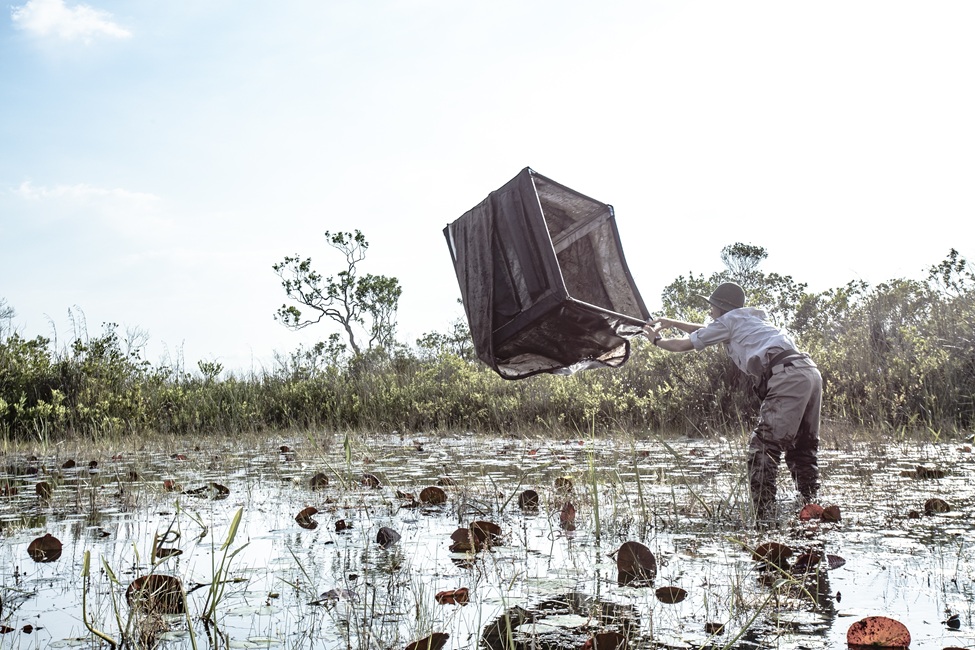
By linking hydrologic patterns, prey availability and wading bird nesting success, the project will strengthen predictive models and support the Army Corps of Engineers’ long-term adaptive management efforts under CERP. The work will also create a robust, long-term database of dry-season prey concentrations, capturing a range of wet and dry years. This information will help resolve lingering questions, such as why wading bird nesting can remain high following droughts even when overall fish populations are low, and how restoration actions can be fine-tuned to maximize ecological benefits.
Beyond its ecological significance, the project contributes to the broader mission of the Cooperative Ecosystem Studies Units by promoting ecosystem-based research, training the next generation of scientists and informing science-based management decisions.
“Dr. Petersen’s work underscores the vital role university-led research plays in driving effective ecosystem restoration and generating studies that inform crucial state and federal agency actions on comprehensive environmental stewardship,” said Valery E. Forbes, Ph.D., dean of the Charles E. Schmidt College of Science. “This grant reflects the excellence of her work and commitment to producing impactful science that will safeguard the Everglades for generations to come.”
Fieldwork will include systematic dry-season sampling using a stratified design to capture prey densities across the Everglades’ complex freshwater habitats. Data collection will focus on shallow sloughs undergoing seasonal drying – areas where prey concentrations are expected to peak – and will employ standardized methods to ensure comparability across sites and years. The results will be used to inform CERP’s restoration strategies and provide managers with the evidence needed to support wading bird populations and overall ecosystem recovery.
“We anticipate this project will greatly improve our understanding of the links between hydrology, prey availability, and wading bird nesting, providing crucial insight into how restoration efforts can most effectively achieve the goals of CERP,” said Petersen. “By combining long-term monitoring with innovative analysis, this work marks an important step forward in both the science and management of one of the world’s most iconic wetland ecosystems.”
This piece was originally published at https://www.fau.edu/newsdesk/articles/everglades-wildlife-grant.php. Banner photo: FAU researchers conduct surveys and fieldwork in the Florida Everglades (Photo by Alex Dolce, FAU).
Sign up for The Invading Sea newsletter by visiting here. To support The Invading Sea, click here to make a donation. If you are interested in submitting an opinion piece to The Invading Sea, email Editor Nathan Crabbe at ncrabbe@fau.edu.
