


By Addison Hall
If you have been keeping up with your local news, you have likely noticed the unusually high number of flash flood warnings threatening Florida’s coastal communities. You may even have experienced the hotter-than-normal temperatures that make it unbearable to engage in your favorite outdoor activities. Climate change is here, and while it shows no signs of magically disappearing, our healthy ecosystems surely do.
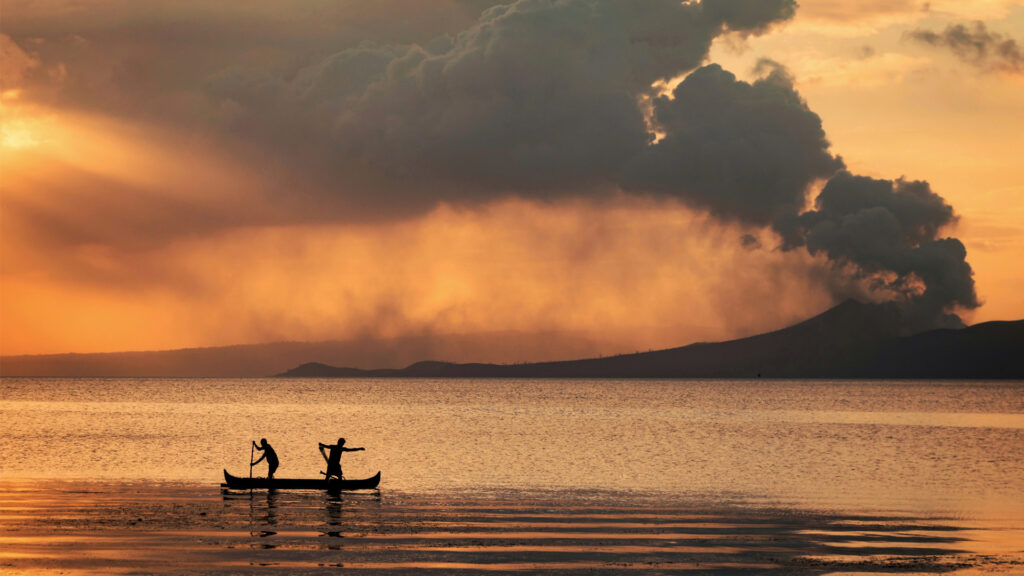
As such, it should come as no surprise that several organizations have emerged to take matters into their own hands and explore the practice of geoengineering, or innovations that intend to manipulate Earth’s climate. One of these innovations is Stratospheric Aerosol Injection (SAI), which aspires to cool the Earth down by sending reflective particles into the stratosphere. This method replicates the widespread cooling effect that follows a volcanic eruption, in which sulfur dioxide compounds accumulate in the atmosphere and reflect sunlight into space, preventing it from reaching the Earth’s surface.
Despite all its promises, SAI can still deplete the ozone layer through these same sulfur dioxide emissions. Since the ozone layer protects us from the Sun’s harmful ultraviolet radiation, tampering with this delicate shield can have adverse consequences, as seen with a similar problem in the past: the chemical compound chlorofluorocarbons (CFCs). As ozone-depleting substances, CFCs led to an increase in skin cancer and severely impacted entire marine habitats. If we follow through with implementing SAI, will the dangers to human health outweigh the benefits to our environment?
The Florida Legislature thinks so if its passing of Senate Bill 56 is any indication. The law, approved earlier this year, prohibits atmospheric geoengineering and any climate modification. Gov. Ron DeSantis expressed specific concern about geoengineering experimentation, suggesting that an underdeveloped understanding of such an approach to climate change poses irrevocable risks.
Mexico concurs with this sentiment, as evidenced by the country’s nationwide ban on geoengineering practices. Mexico’s Ministry of Environment and Natural Resources outlawed any action that seeks to alter Earth’s climate in an attempt to safeguard its citizens from unforeseen, unintended consequences. Such a stance on geoengineering was catalyzed by a company that has set out to use SAI: Make Sunsets.
Founded by Luke Iseman and Andrew Song in 2022, Make Sunsets aims to replicate the cooling effect by releasing balloons filled with sulfur dioxide into the atmosphere. When executed correctly, these compounds emulate “reflective clouds” and offset the concentration of atmospheric carbon dioxide, according to the company.
This approach reinforces the idea that those responsible for this climate crisis are, in fact, ourselves. Human activities, particularly our excessive reliance on fossil fuels, have so altered the integrity of our world that other solutions may not be viable. The Earth already emits sulfur dioxide naturally; we would expedite this release to reap the benefits.
If this reasoning is not compelling enough, consider the company’s assertion that “a gram offsets a ton.” As Make Sunsets explains, one gram of sulfur dioxide has the same potential to cool the global temperature as one ton of carbon dioxide has to warm it. Although these are, of course, just calculations, they offer hope that we may have the power to secure a resilient future.
While Make Sunsets works to mitigate climate change, it aims to ensure that its operations are ecologically benign. This is made possible by using biodegradable latex for their SAI balloons. The innocuous material that composes the balloons, along with GPS trackers, enables the Make Sunsets team to locate balloon remnants for retrieval after they burst, preventing damage to neighboring ecosystems. Their efforts suggest that the adoption of effective, sustainable measures is not an inconceivable feat.

Make Sunsets’ work, however, becomes concerning when considering ambiguity around its efforts. As of April, the U.S. Environmental Protection Agency remains in the dark about where the organization obtains its sulfur dioxide, according to an EPA news release. The EPA especially objects to the use of sulfur dioxide because direct exposure is harmful to the respiratory system and may contribute to acid rain. A lack of transparency by the organization’s end is not a good sign in any respect.
Notwithstanding the complex concerns surrounding geoengineering, it is simply a risk we must be willing to consider. In our present day, we no longer have the luxury of knowing all the answers before springing into action. We are in dire need of precisely what geoengineering would provide us: time.
In combination with adaptive management, technology may be the force necessary to help us dig ourselves out of the hole we have dug so deeply. There is no going back – technology is here to stay. Alas, the time has come to embrace it.
Addison Hall is an undergraduate student majoring in sustainability studies at the University of Florida. Banner photo: Pollution is released from a smokestack (iStock image).
Sign up for The Invading Sea newsletter by visiting here. To support The Invading Sea, click here to make a donation. If you are interested in submitting an opinion piece to The Invading Sea, email Editor Nathan Crabbe at ncrabbe@fau.edu.

Hi Addison and The Invading Sea team,
As a co-founder of Make Sunsets, I’m writing because the piece contains several factual inaccuracies about both Mexico and our work.
Mexico and “bans” on geoengineering
Mexico has not passed a blanket, nationwide law “outlawing any action that seeks to alter Earth’s climate.” The 2023 statement from Semarnat and Conacyt is a precautionary policy aimed at solar geoengineering experiments in Mexico, not a general prohibition on “any action that seeks to alter Earth’s climate,” which would obviously include everyday emissions and existing mitigation efforts. Stratospheric aerosol injection is not “banned” in the sweeping way your article suggests.
EPA and “lack of transparency”
Your article also cites an April EPA news release and concludes that “a lack of transparency by the organization’s end is not a good sign.” EPA sent us an information request; we answered it in detail. You can read our full response here, co-authored with former EPA general counsel staff:
https://cdn.shopify.com/s/files/1/0685/0042/2976/files/epasent.pdf?v=1747419131
Framing this as us keeping regulators “in the dark” is inaccurate and unfair now that this response is public.
Our transparency record
From day one we’ve published our progress, investor updates, and launch data publicly:
https://makesunsets.com/blogs/news
This level of operational transparency is unusual for a small startup, let alone one working in a controversial space like geoengineering.
How to think about SO₂
EPA has a nice phrase about ozone: “good up high, bad nearby.” The same basic logic applies to many substances, including sulfur dioxide: location and dose matter. SO₂ at ground level is a pollutant; tiny amounts injected into the stratosphere form reflective aerosols and mimic a natural process that large volcanoes have been performing for billions of years. That’s the physical basis of stratospheric aerosol injection.
I’d be happy to speak with you or your editor to walk through the technical details and help correct the factual record while keeping the legitimate, nuanced debate about geoengineering front and center.
— Andrew Song
Co-founder, Make Sunsets