


By David Vaina
The national conservation organization American Rivers has named the Suwannee River one of America’s Most Endangered Rivers of 2026, arguing that stronger regulatory oversight, along with increased state funding, is essential to restore the river and protect the more than 300 artesian springs that feed the river.
The Suwannee River, which flows nearly 250 miles from its headwaters in the Okefenokee Swamp in Georgia through Florida before reaching the ocean, joins nine other rivers from around the country on this list.
American Rivers, which partnered with the Florida Springs Institute (FSI) and others, highlighted increasing threats from nitrate pollution alongside excessive groundwater withdrawals that result in lower spring and river flows as key contributors to the Suwannee’s designation.
A December 2025 FSI report sheds light on how dairy farms are affecting water quality in north Florida, especially in the Suwannee Springs Restoration Area. The study estimates that dairy farms in north Florida currently house more than 85,000 cows in total. These farms produce about 20 million pounds of nitrogen waste each year.
Even after this nitrogen waste is treated, Florida’s sandy soils, porous limestone and heavy rains can make it easy for this leftover waste to leech into the Floridan Aquifer system. FSI has estimated that annually 2.1 million pounds of nitrogen seeps into the Aquifer, the underground water source that feeds Florida’s springs and provides drinking water.
This excess nitrogen pollution contributes to the decline of spring and river health and threatens the region’s clean water supply. It is important to note that FSI data estimates may differ from industry calculations.
Criteria for the America’s Most Endangered Rivers of 2026 list was based on three factors: 1) The significance of the river to people, wildlife and nature, 2) A decision in the coming year that will impact the river’s fate, and 3) The magnitude of the threat to the river and its communities, especially in light of climate change and environmental injustice.
As such, political decisions are seen as critical and urgent to restoring the health of endangered rivers like the Suwannee. The Florida Department of Environmental Protection has designated the Suwannee River as one of the state’s Outstanding Florida Waters, a classification that identifies surface waters worthy of special protection due to their exceptional natural attributes and those requiring their existing water quality be preserved without further degradation.
Despite this status, American Rivers and its partners argue the Suwannee River and its springs are becoming more polluted. Runoff from fertilizers and livestock is causing harmful algae to grow, which lowers oxygen in the water and hurts fish and other wildlife. This pollution can also be dangerous for people, increasing the risk of health problems like cancer and birth defects.
American Rivers, FSI and others have called on the Florida state government to be more aggressive by increasing funding for springs restoration and land conservation projects in rural areas as well as maintaining regulatory compliance. Specifically, they are asking the state to allocate $250 million in the 2027–2028 budget to restore the river’s springs and surrounding watershed.

They also want the DEP to fully enforce the Suwannee River Basin Management Action Plan cleanup plan, ensuring that existing water protection rules are actually followed. Finally, they are calling for stronger accountability measures so that polluters are identified and required to reduce pollution and repair the damage they cause.
“The tools are already in place to protect the Suwannee River and its springs,” said Haley Moody, FSI’s director. “We need decisive action by the state of Florida to enforce these protections before it’s too late.”
Moody also points out that current drought conditions in Florida coupled with ongoing groundwater withdrawals mean less water to recharge the Floridan Aquifer. The National Weather Service in Jacksonville has also reported “above normal” temperatures in the region in recent weeks that have contributed to dropping water levels. As Moody notes, water restrictions are largely voluntary and difficult to enforce.
American Rivers is a national conservation organization that advocates for evidence-based solutions and legislative actions to make the 3.5 million American rivers and streams clean and healthy. For more details on American River’s new classification the Suwanee River, please click here.
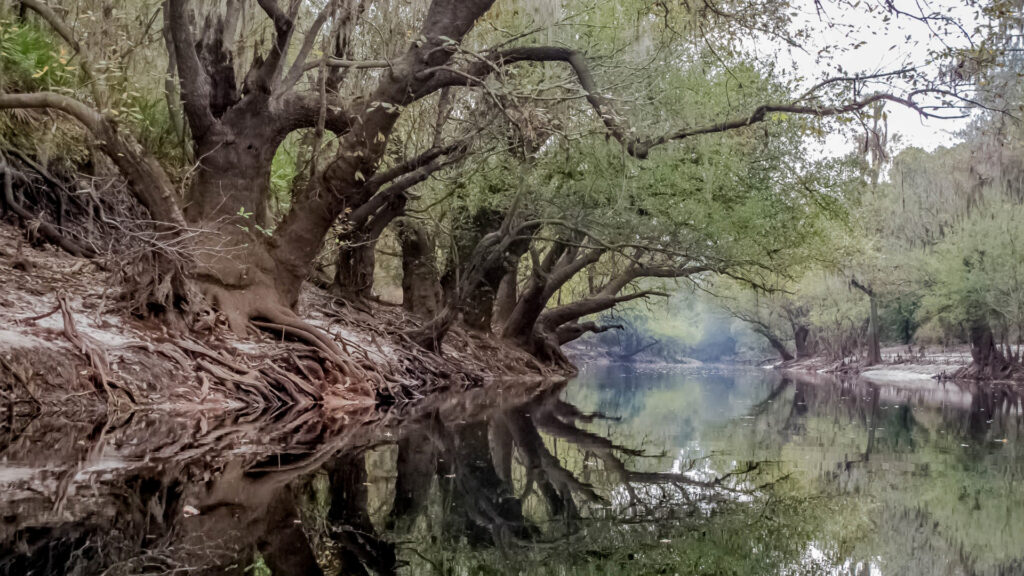
David Vaina holds a Ph.D. in political theory and has published articles on social movements, political theory and climate change as well as a 2024 book (“On Ramps to a New Civil Society: Mutual Aid at the Edge of the Anthropocene,” Rebel Hearts). He lives in rural north Florida. Banner photo: The Suwannee River as seen from Manatee Springs State Park (iStock image).
Sign up for The Invading Sea newsletter by visiting here. To support The Invading Sea, click here to make a donation. If you are interested in submitting an opinion piece to The Invading Sea, email Editor Nathan Crabbe.

This article cited high amounts of nitrogen waste. The previous article I read today in The Invading Sea, “America’s missing climate solution is buried in the dirt” by Rock Aboujaoude cited the cost of “urea – a compound used as a high-nitrogen fertilizer” as threatening Florida’s farmers. It is crazy our waterways are dying from too much nitrogen and yet we are importing nitrogen. This question has been nagging me ever since multiple workers (I think 11?) were killed at nitrogen producing fertilizer plant in Texas several years ago. AGAIN, how can we simultaneously have too much and too little nitrogen?