


By Kay Rasmussen, Defense Support Initiatives Committee
As American citizens and the world have seen U.S. airpower dominate the skies during the war in Iran, it’s worth remembering where the aircraft are tested, where munitions are developed and where our warfighters train: the Eastern Gulf Test and Training Range.
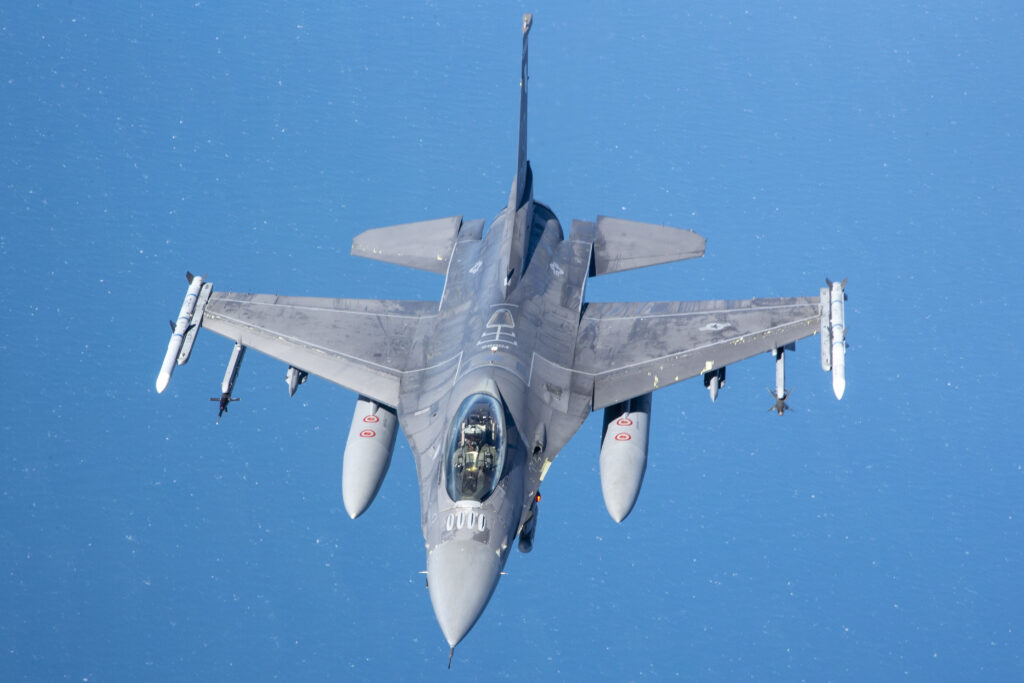
The Eastern Gulf Test and Training Range (EGTTR) is the largest military range in the continental United States, connecting capabilities across the eastern Gulf of America from Northwest Florida to Key West and from Florida’s west coast to the tip of the state’s Panhandle. It supports varying surface and subsurface exercises.
It provides a safe environment for water-to-land transitions, high-altitude supersonic air combat training, air-to-air missile testing, air-to-ground targeting, drone testing and targeting, hypersonic weapons testing and other activities. The EGTTR is vital for developing and testing the next generation of air armaments, and for personnel training in realistic combat-surrogate conditions.
The 96th Test Wing is located at Eglin Air Force Base in Northwest Florida. It is the installation’s host unit and the test and evaluation organization for Air Force air-delivered weapons, navigation and guidance systems, command and control systems, and Air Force Special Operations Command systems.
The weapons being shot from aircraft and hitting their targets with precision were developed and tested at Eglin and in the EGTTR. If America loses the military test and training capabilities of the EGTTR, we lose significant capabilities vital to our nation’s defense.

This is why it is critical to protect the Eastern Gulf Test and Training Range from encroachment by activities such as oil drilling and related infrastructure development. There are other areas available for oil exploration in the United States that do not threaten our military capabilities — and compromise our warfighters’ capabilities.
The Bureau of Ocean Energy Management’s proposed draft plan from November 2025 included a large section of the western portion of the EGTTR. It is imperative that we protect this military range and protect our future warfighting capabilities.
As America awaits the next proposed draft plan, I remain hopeful that the Bureau now understands the relevance of the eastern Gulf to our nation’s security, and chooses to support our warfighters and to provide them with the best that the United States has to offer as they train to defend us all. President Donald Trump executed a memorandum in 2020 to protect this national asset — and that protection needs to continue.
Kay Rasmussen is manager of the Defense Support Initiatives Committee, a military advocacy group in Northwest Florida. Banner photo: A test of the F-15EX Eagle II is conducted over the Gulf in 2022 (U.S. Air Force photo by Tech. Sgt. John McRell via Defense Visual Information Distribution Service).
Sign up for The Invading Sea newsletter by visiting here. To support The Invading Sea, click here to make a donation. If you are interested in submitting an opinion piece to The Invading Sea, email Editor Nathan Crabbe.
